What is Facial Fat Grafting, and How Much Does Tear Trough Filling Cost?.
Facial Fat Grafting (also known as Autologous Fat Transfer) is a rejuvenation method that harvests excess fat from areas such as the abdomen, waist, hips, back, thighs, etc., to reinject into defective areas or areas with volume deficiency on the face, e.g., filling the anterior or lateral cheeks, baby face, forehead area, earlobes, and hands. This procedure fills hollow areas, namely sunken temples, hollows of the lower and upper eyelids. It also fills the natural wrinkles of the face including nasolabial folds and mouth corner folds.
What are the Advantages of Facial Fat Grafting? Is it better than filler?.
- Facial Fat Grafting is currently the leading beauty trend for women because it creates natural contours and rejuvenates the skin. This procedure is safe, does not cause allergic reactions. Furthermore, the facial skin becomes smoother and brighter over time. Once transplanted, fat cells remain permanently.
- In contrast, filler typically lasts only one or two years. If a large volume of filler is required, the cost is significantly higher compared to Fat Grafting. Additionally, filler can cause allergy.
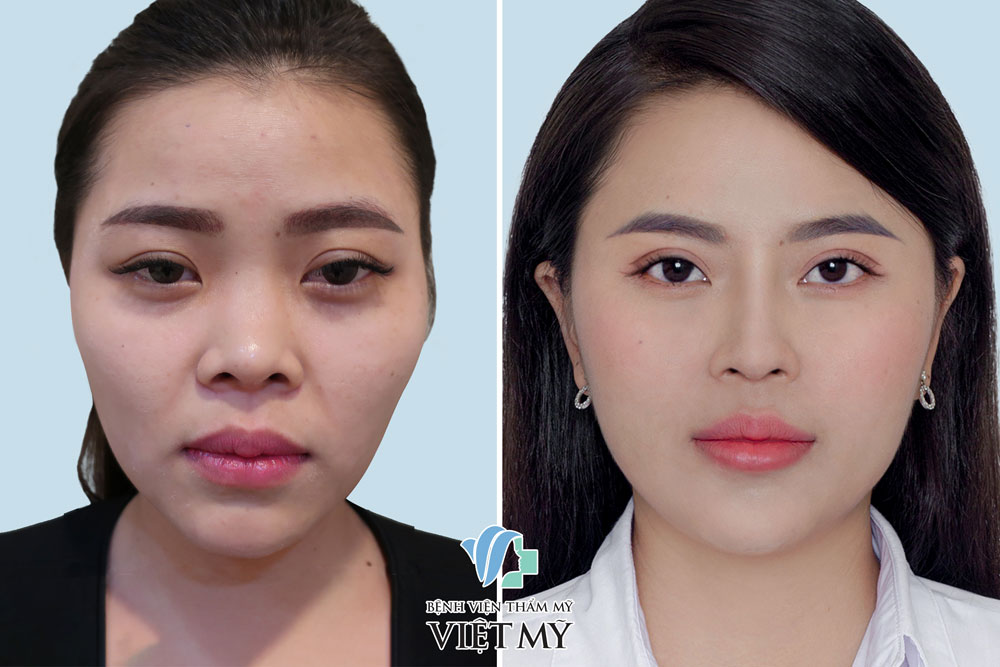
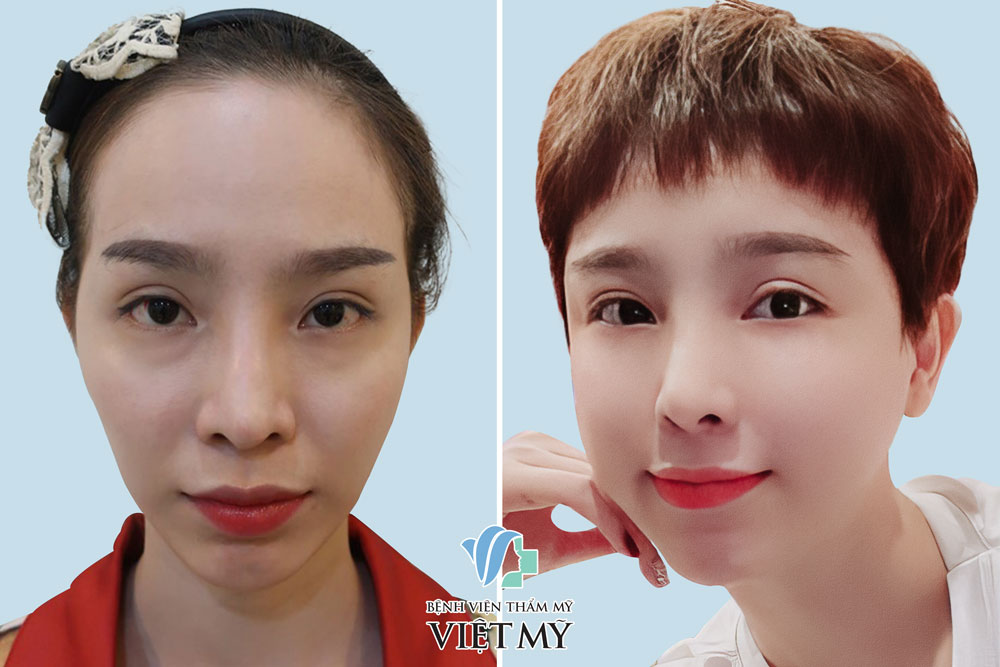
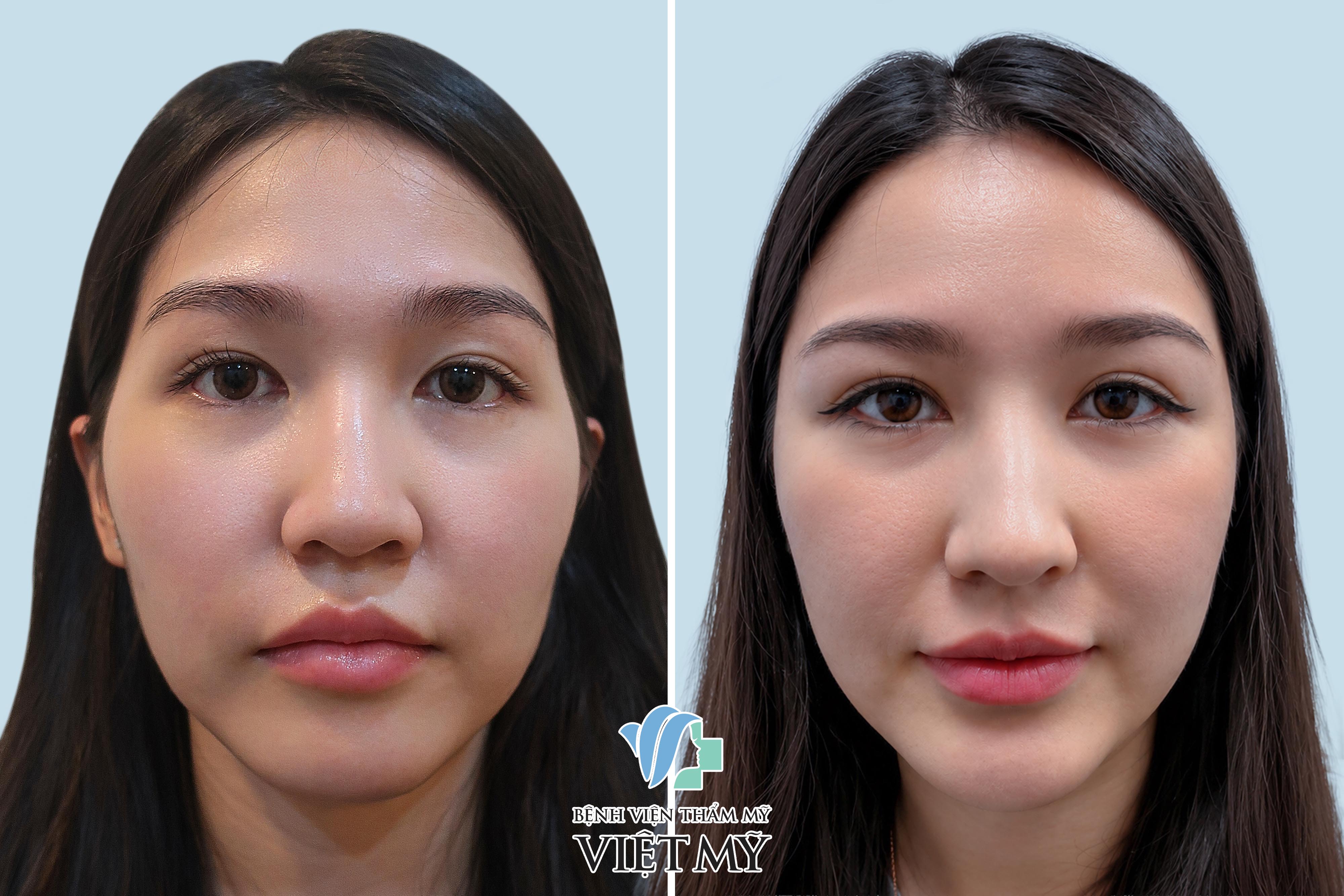
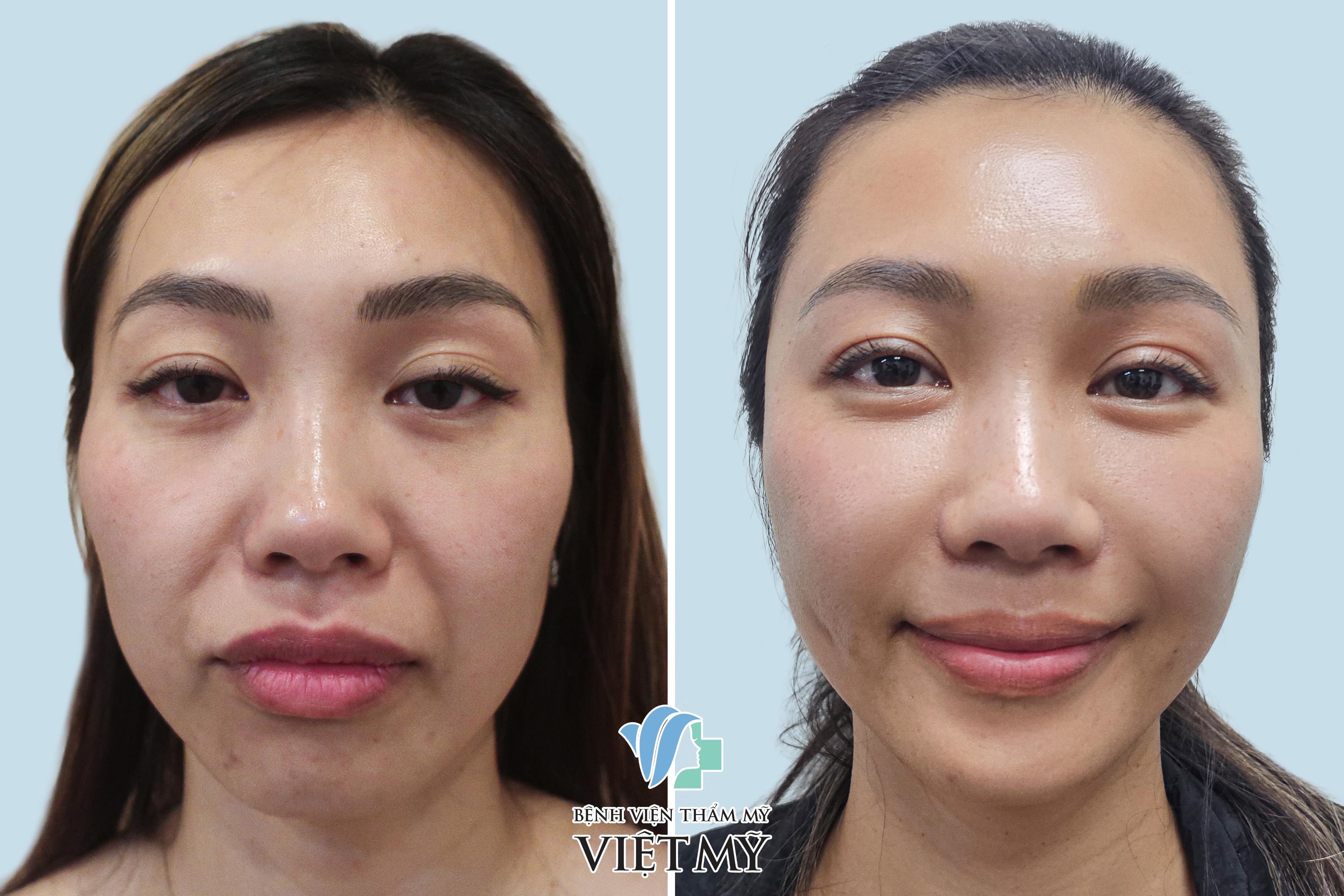
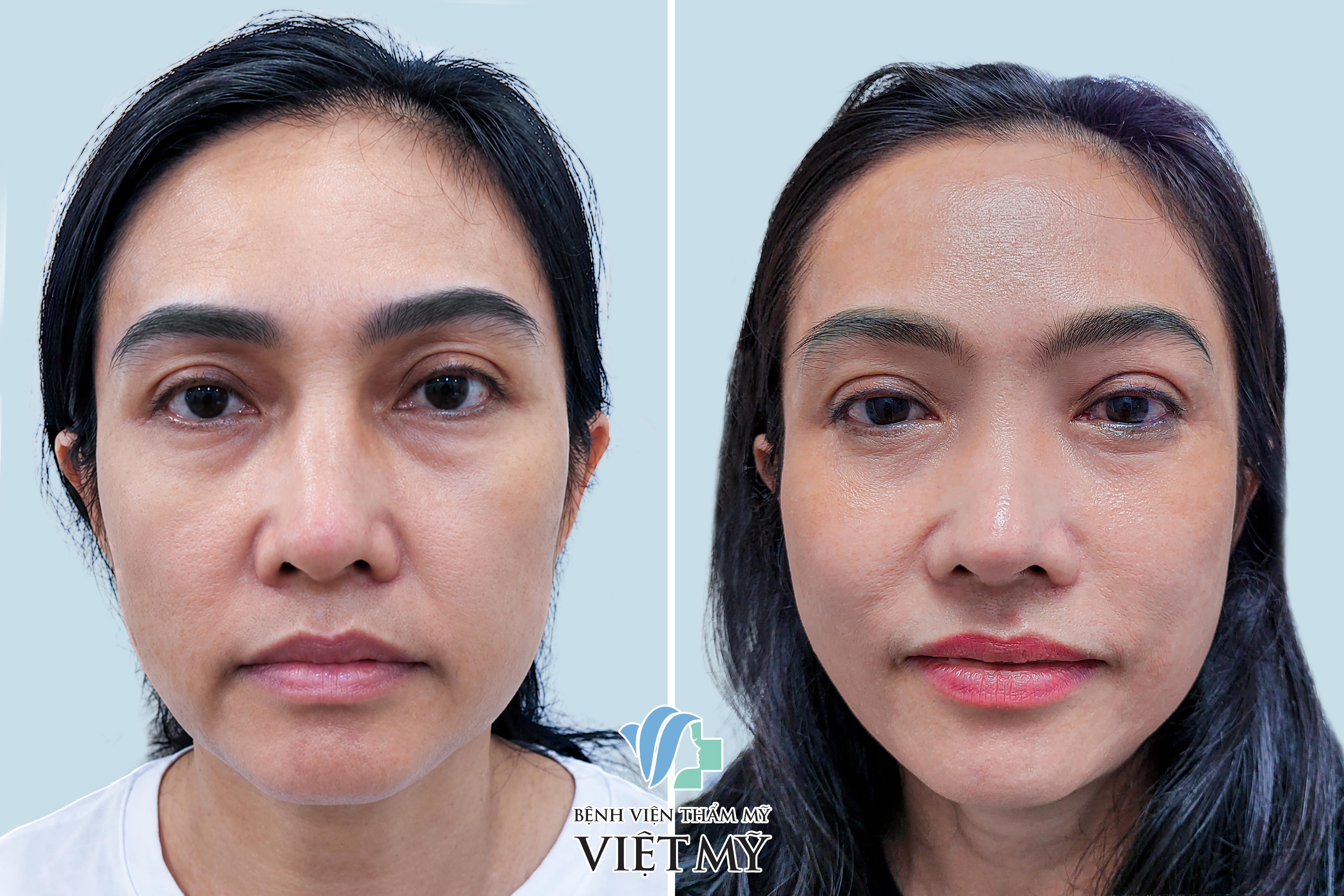
Before and after images of cheek and temple Fat Grafting.
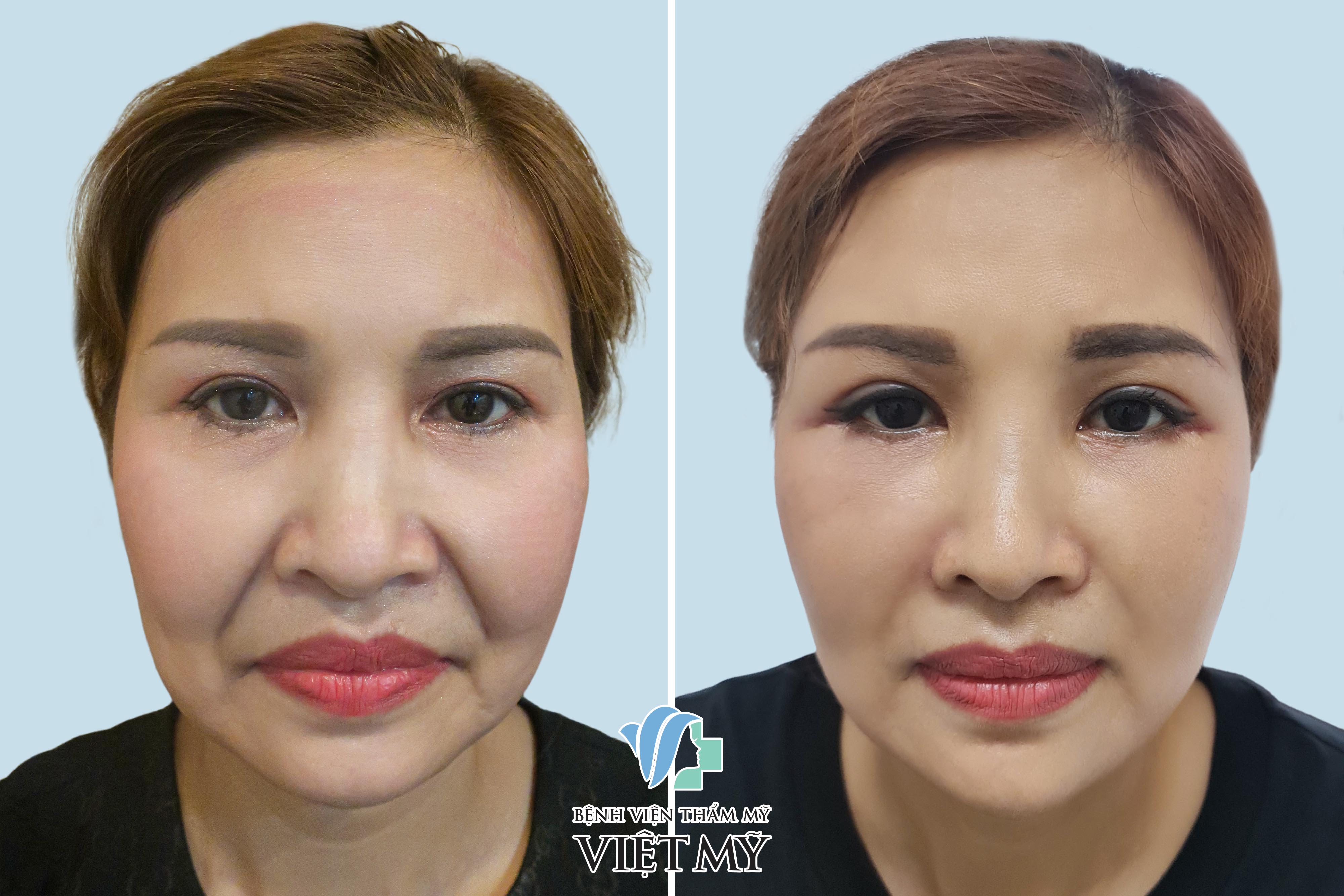
Before and after images of Facial Fat Grafting, alar reduction, rhinoplasty, double eyelid surgery, epicanthoplasty, brow lift.
Before and after photos after 1 month of undergoing Fat Grafting into sunken temples, cheek area, and lower eyelid.
Before and after photos of a client who underwent temple augmentation with autologous fat transfer.
Before and after photos of a client who underwent temporal and nasolabial fold filling using autologous fat.
Before and after photos of a client who received orbital fat injection using their own body fat.
Before and after photos of a client who received orbital fat injection.
Before and after photos of a client who underwent nasolabial fold filling with autologous fat.
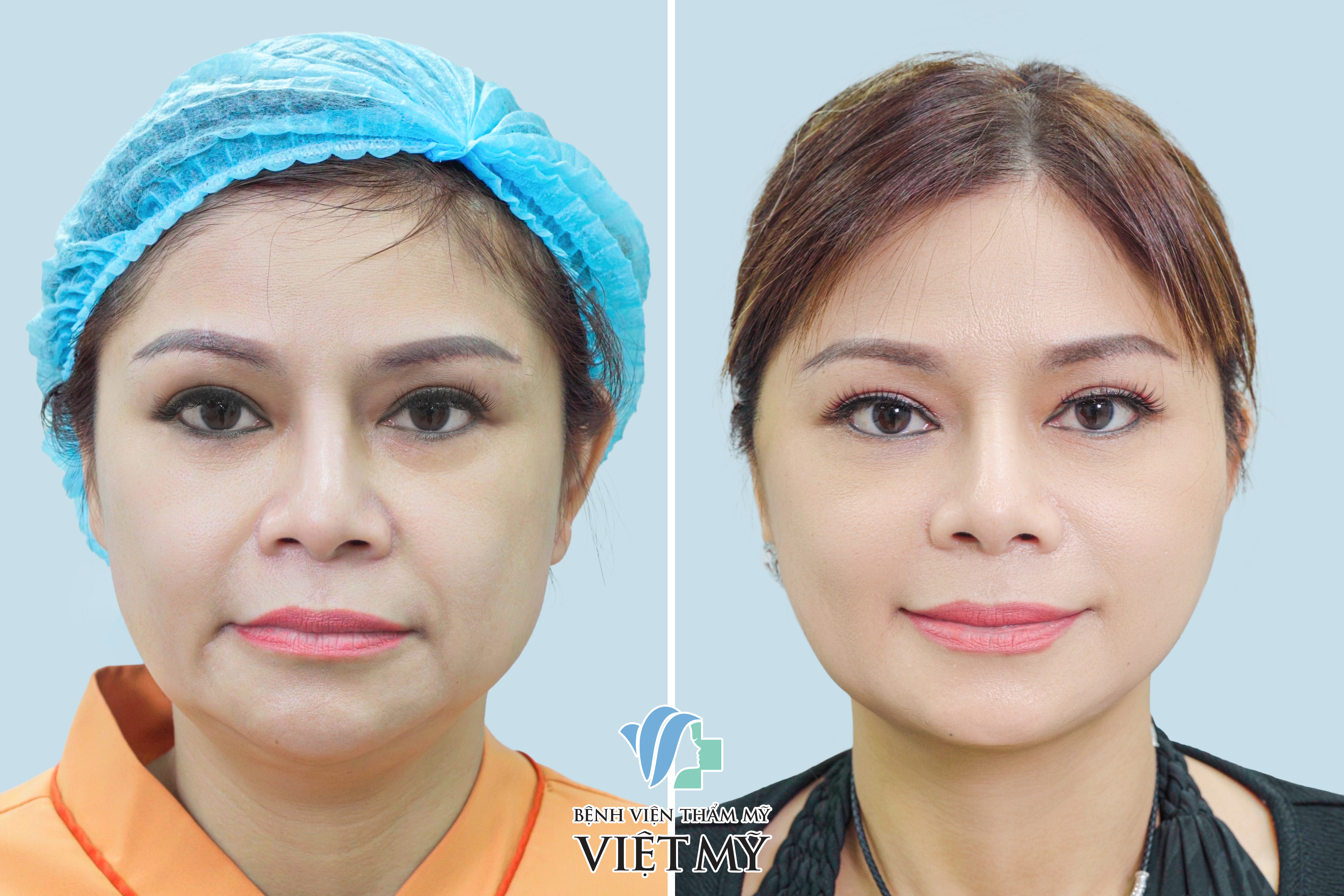
A client in her 40s underwent rejuvenation combo at Viet My Plastic Surgery Hospital
Before and after photos of a 60-year-old client undergoing facelift with double eyelid surgery, lower eyelid surgery and fat grafting for nasolabial folds.
Collagen Thread Lift – Safe Rejuvenation with Dr. Thai at Viet My Plastic Surgery Hospital
Who is Suitable for Facial Fat Grafting?
- Patients with excess fat in areas such as the abdomen, waist, hips, back, thighs, etc., who also wish to increase volume or correct hollow areas in the buttocks, are excellent candidates for this procedure.
Who is Unsuitable for Facial Fat Grafting?.
- Patients with very low to no excess fat or those who have undergone multiple liposuctions.
Technical Procedure for Facial Fat Grafting.
1. Anesthetic method.
- General anesthesia or local anesthesia (should only be performed in hospitals equipped with modern medical facilities).
2. How to perform filler injection.
- Before surgery, the doctor will precisely mark out the donor areas and the facial areas that need fat grafting.
- A micro-incision of 2 - 4mm is made at the area where the scar can be hidden to remove excess fat.
- The collected fat is then processed using high-speed centrifugation to extract the purest, highest-quality fat cells. This ensures the maximum survival rate and best aesthetic results.
3. How Facial Fat Grafting is Performed.
- The surgeon utilizes a specialized fat grafting gun to ensure the injected fat is evenly distributed across multiple layers. This technique maximizes the survival rate of the fat tissue compared to previously used simple manual syringes. This specialized fat injection gun has transformed fat grafting methods, allowing the transferred fat to remain permanently. This advancement ensures that grafted fat remains permanently.
Post-Operative Care.
- The donor areas will be covered in elastic bandages for 1 week. The patient must wear a belly-band for 2 weeks to reduce edema, fluid accumulation and slimming the abdomen, the buttock area also tightens.
- The facial area will be secured with medical adhesive tape for 2 days to stabilize the grafted fat.
- The patient can walk immediately after surgery.
- Swelling will subside after 1 week. The results will be visible immediately after the procedure.
- The patient should not massage the buttocks for the first 6 weeks. Doing so could decrease the fat retention rate after transplant.
- During the first 3 months, the patient should maintain a normal diet and avoid excessive dieting to prevent the grafted fat from being absorbed. After 3 months, if the grafted fat cells survive, they will remain permanently.