I. What are Prominent Ears?
Prominent ears (protruding ears) are a condition in which the auricle extends outward, making the ears more noticeable when viewed from the front. Clinically, prominent ears are typically defined when the distance between the auricle and the mastoid bone exceeds 2 cm. This condition can affect facial harmony and overall aesthetics, and in some cases, may also impact self-confidence.

Before (left) and after (right) prominent ear correction
II. What Causes Prominent Ears?
According to clinical research, there are two primary causes for protruding ears:
- Underdevelopment or incomplete formation of the antihelical fold, resulting in a weak or absent antihelix.
- An overly deep conchal bowl
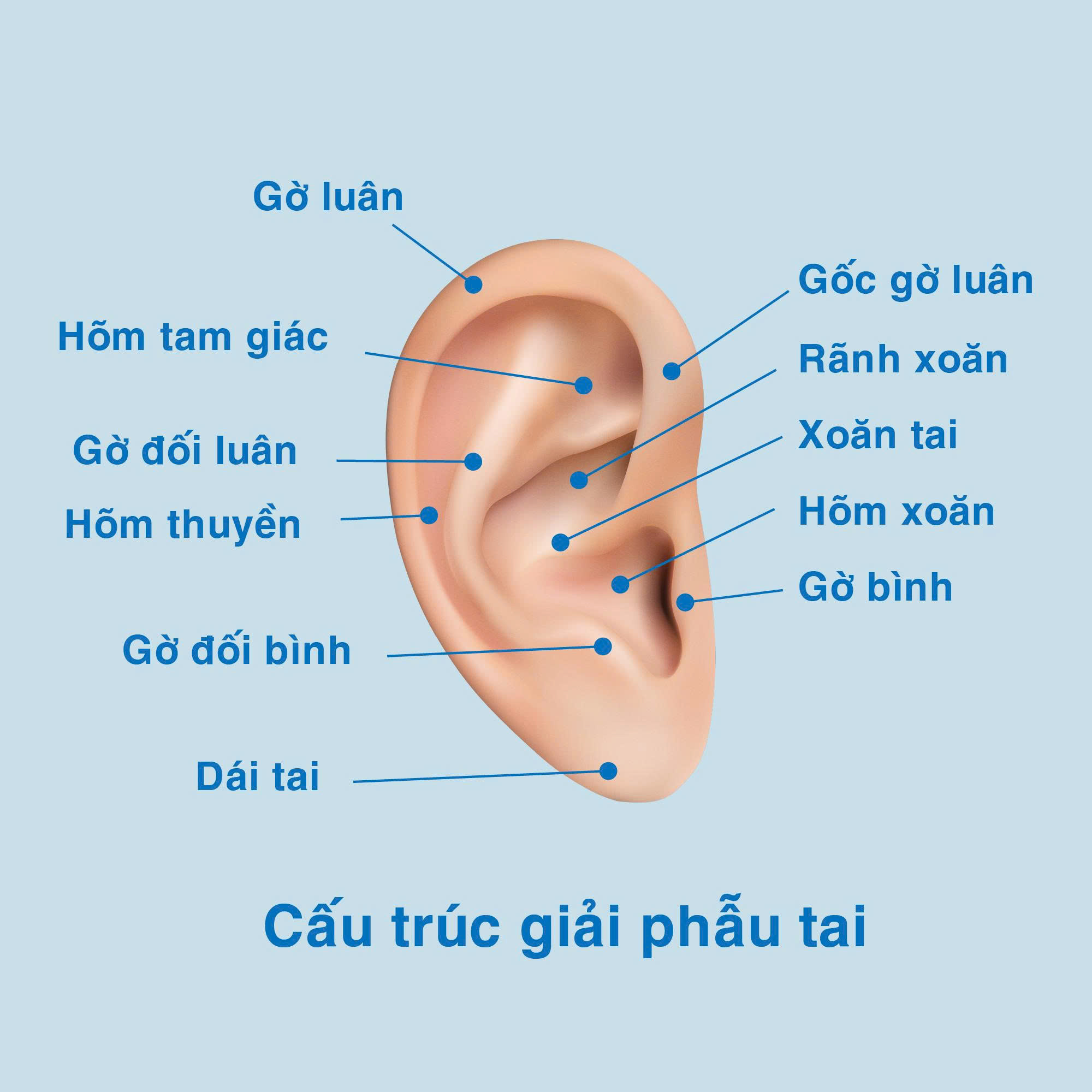
Anatomy of the external ear
However, underdevelopment of the antihelical fold accounts for up to 70% of cases. Therefore, most treatment approaches focus on recreating or enhancing the definition of the antihelical fold.
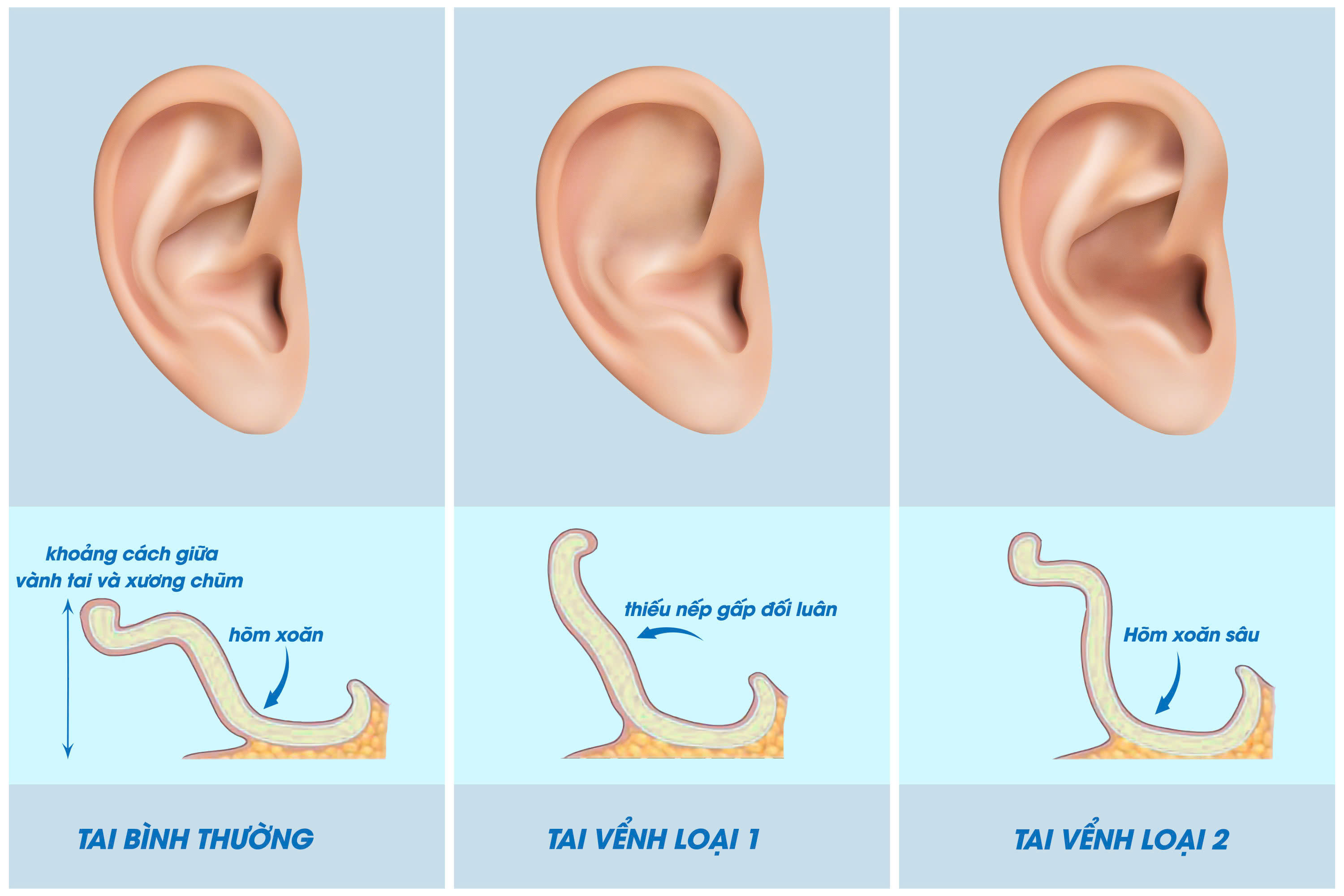
Comparison between prominent ears types and normal ears
III. Indications for Prominent Ear Correction (Otoplasty)
1. Otoplasty is suitable for:
- Individuals with congenital prominent ears.
- Patients seeking improved facial balance and symmetry.
- Those experiencing psychological discomfort or low confidence due to ear shape.

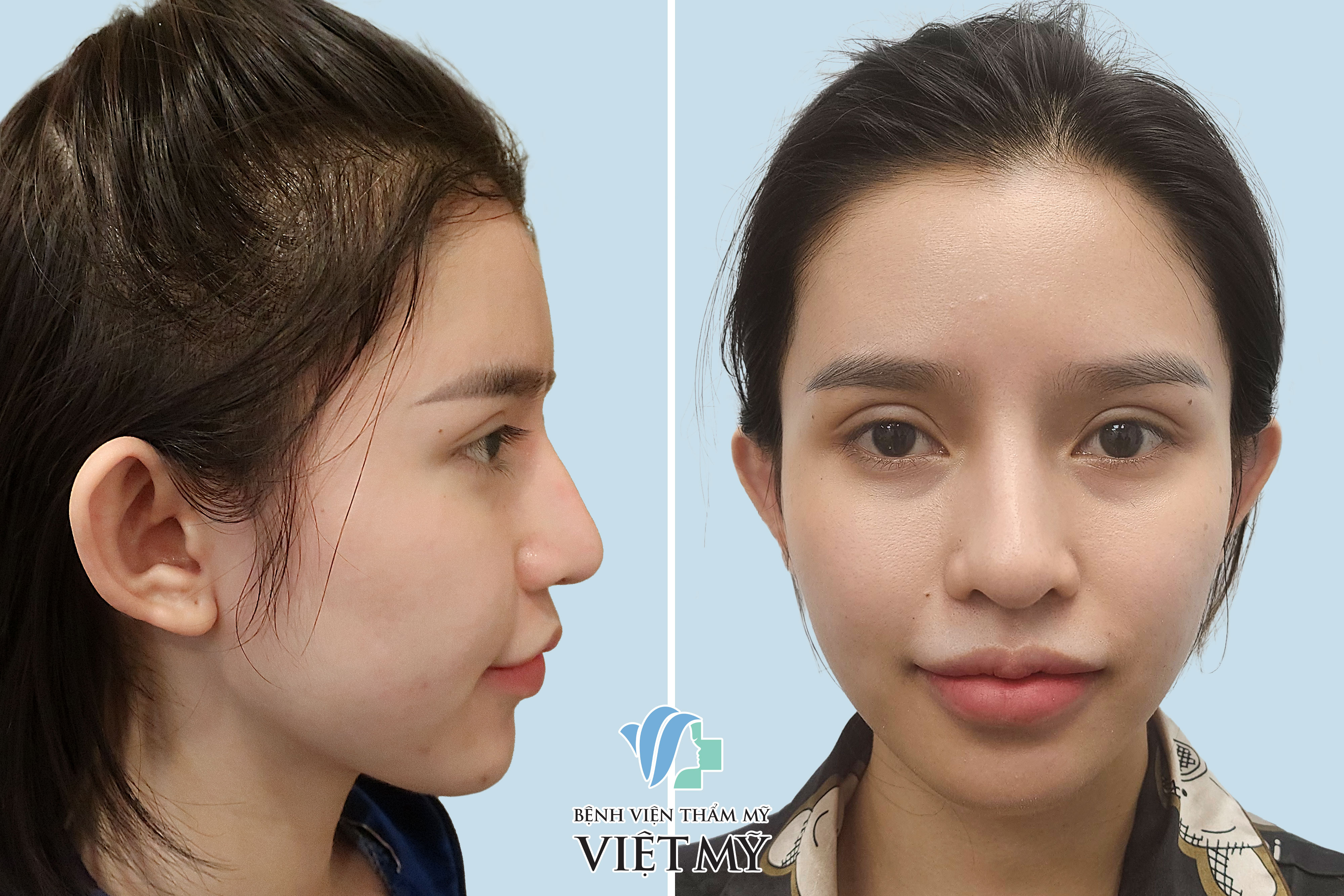
Patient before and after undergoing Prominent Ear Correction (Otoplasty)
2. Not recommended for:
- Children under 15 years of age since their ears may not be fully developed.
- Patients with certain medical conditions such as cardiovascular disease or diabetes, which may affect the recovery process.
IV. Benefits of Prominent Ear Correction
Prominent ear correction (otoplasty) helps create a more balanced and proportionate ear shape in relation to the face, significantly enhancing overall appearance. In many cases, improved aesthetics also contribute positively to the patient’s psychological well-being and self-confidence.
There are several surgical techniques for ear reshaping, with 3 main approaches:
1. Antihelical Fold Creation with Sutures: The doctor uses sutures to recreate a natural antihelical fold. This is the simplest technique with a relatively short recovery time. However, results may not always be long-lasting, as sutures can loosen over time, potentially leading to re-intervention.
2. Traditional Otoplasty Technique: A small incision is made behind the ear, opposite the antihelix. Through this incision, excess cartilage, skin, and soft tissue are removed to reduce ear projection, followed by suturing to close the incision.
3. Cartilage Framework Placement Combined with Conchal Reshaping: Similar to the traditional method, the surgeon removes a portion of cartilage and excess tissue in the conchal area, combined with structural reshaping techniques to achieve optimal ear contour and long-term stability.
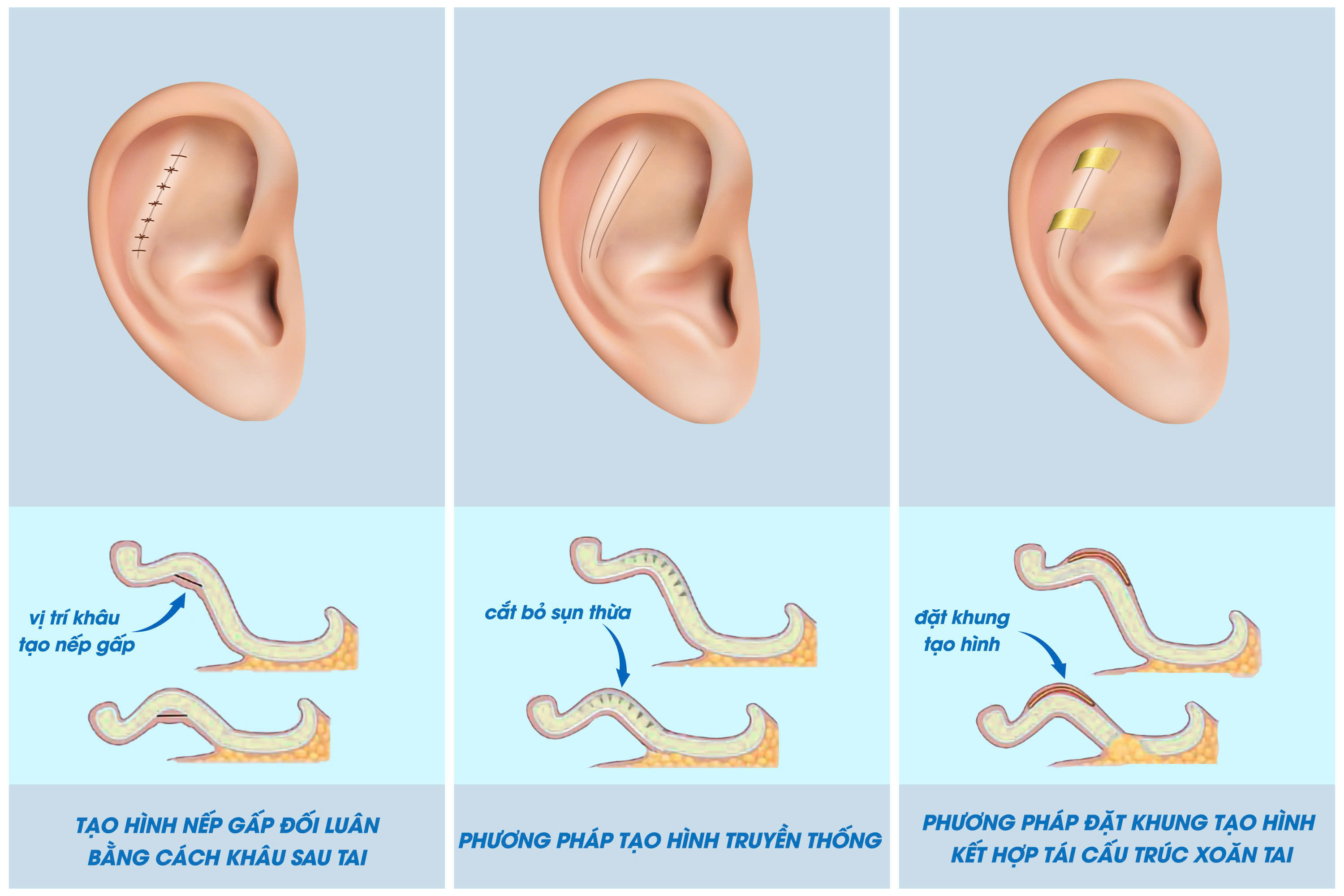
Three main approaches for ear reshaping
VI. The Procedure of Prominent Ear Correction
1. Pre-operative preparation
- The doctor conducts a comprehensive examination, reviews the patient’s medical history, and performs necessary health assessments and laboratory tests.
- The patient’s expectations are discussed, and a personalized treatment plan is developed.
- Pre-operative instructions are provided, which may include temporarily discontinuing blood-thinning medications that could affect healing.
2. During surgery:
- Performed under local anesthesia or sedation
- The surgeon applies the selected otoplasty technique
-
- Incisions are closed with sutures and covered with sterile dressings
3. Post-operative care and recovery:
Recovery occurs in several stages:
- In the first few days after surgery, mild swelling and bruising are common.
- Sutures are usually removed after 7–10 days.
- Most swelling typically subside within approximately 2 weeks.
To ensure optimal recovery process and results, patients should carefully follow postoperative care instructions, which include:
- Maintain proper wound hygiene
- Avoid touching or applying pressure to the surgical area; limit the use of glasses, headphones, or any accessories that may affect the ears
- Avoid direct sun exposure; use protective coverings
- Refrain from strenuous activities during the recovery process
VII. Risks of Otoplasty
Although otoplasty is generally safe, potential risks may include:
- Common surgical complications such as bleeding and infection.
- Discomfort or numbness in the ear (rarely occur)
- Unsatisfactory aesthetic results.
These risks are largely related to the complexity of the ear structure, which consists of thin skin with a dense network of nerves and blood vessels. However, such risks can be significantly minimized when performed by an experienced doctor in a fully equipped medical facility.
* The result achieved also depends on each individual's physiology.