1. What Is a Gummy Smile?
A gummy smile is a condition in which an excessive amount of upper gum tissues are visible when smiling, affecting overall smile aesthetics. This condition is relatively common, affecting approximately 6% of men and 14% of women.
Clinically, a smile is considered “gummy” when more than 2mm of gum exposure is present. It is typically categorized into three levels:
- Mild: 2–4mm
- Moderate: 4–8mm
- Severe: Over 8mm

An ideal smile should reveal no more than 2mm of gum tissue.
2. Benefits of Gummy Smile Treatment
Treating a gummy smile helps achieve a naturally beautiful smile by revealing more of the bright, white upper teeth. At the same time, procedures that reposition or remove excess gum tissue reduce the surface area where bacteria can accumulate, improving the patient's overall oral hygiene.
Gummy smile correction helps create a more balanced, attractive smile by improving the ratio between teeth and gum display. Key benefits include:
- Enhances smile aesthetics and facial harmony
- Improves confidence in communication
- Reduces areas prone to bacterial accumulation
-
- Supports better oral hygiene and gum health
3. What Causes a Gummy Smile?
A gummy smile may result from one or a combination of the following factors:
- Excessive Upper Jaw Growth (Skeletal Cause): Causes excessive gum exposure and facial imbalance
- Overactive Upper Lip Muscles: The upper lip elevates excessively when smiling
- Short Upper Lip: Insufficient lip length fails to adequately cover the gums
- Tooth–Gum Disproportion: Enlarged gum tissue or delayed gum recession Creates an imbalance between tooth size and gum coverage.
4. Gummy Smile Treatment Methods
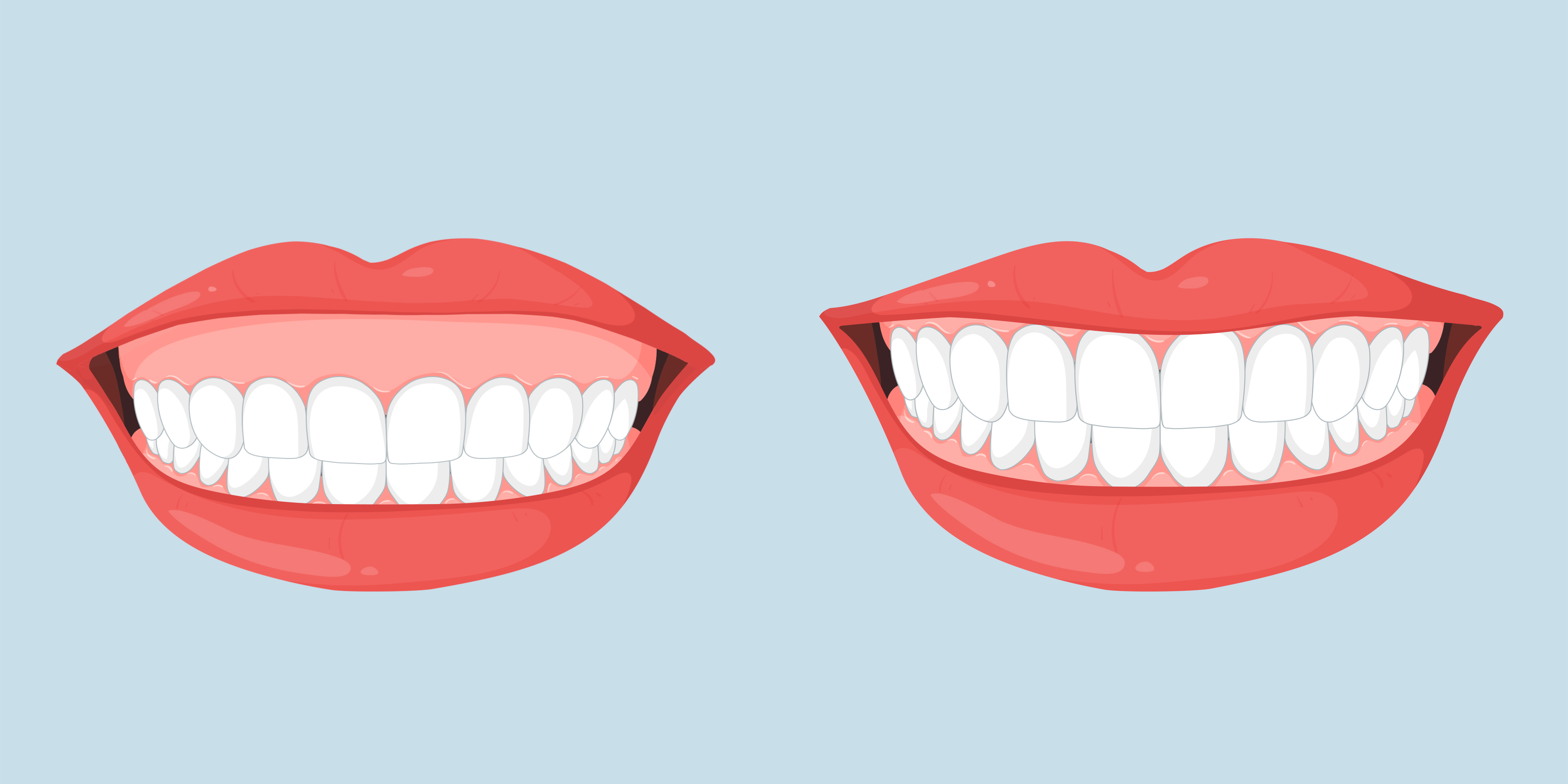
Illustration of the benefits of gummy smile treatment
To ensure the most optimal results, the doctor will identify the primary cause and recommend the corresponding treatment:
- For Skeletal Causes (Maxillary Excess): Overbite correction surgery or orthognathic surgery (jaw surgery) is recommended to correct jaw position and reduce gum exposure.
- For Overactive Lip Muscles: Botox injections are administered to temporarily relax the muscles reducing excessive lip elevation.
- For Short Upper Lip: Lip Repositioning surgery is performed, limiting upward movement of the upper lip when smiling
- For Excess Gum Tissue: Gingivectomy (gum contouring surgery) removes excess gum tissue to improve tooth visibility.
5. The Procedure of Lip Repositioning Surgery
Lip repositioning surgery is a technique that reduces the distance between the upper lip and teeth, thereby limiting gum exposure. This method preserves the gums while delivering a natural, balanced smile.
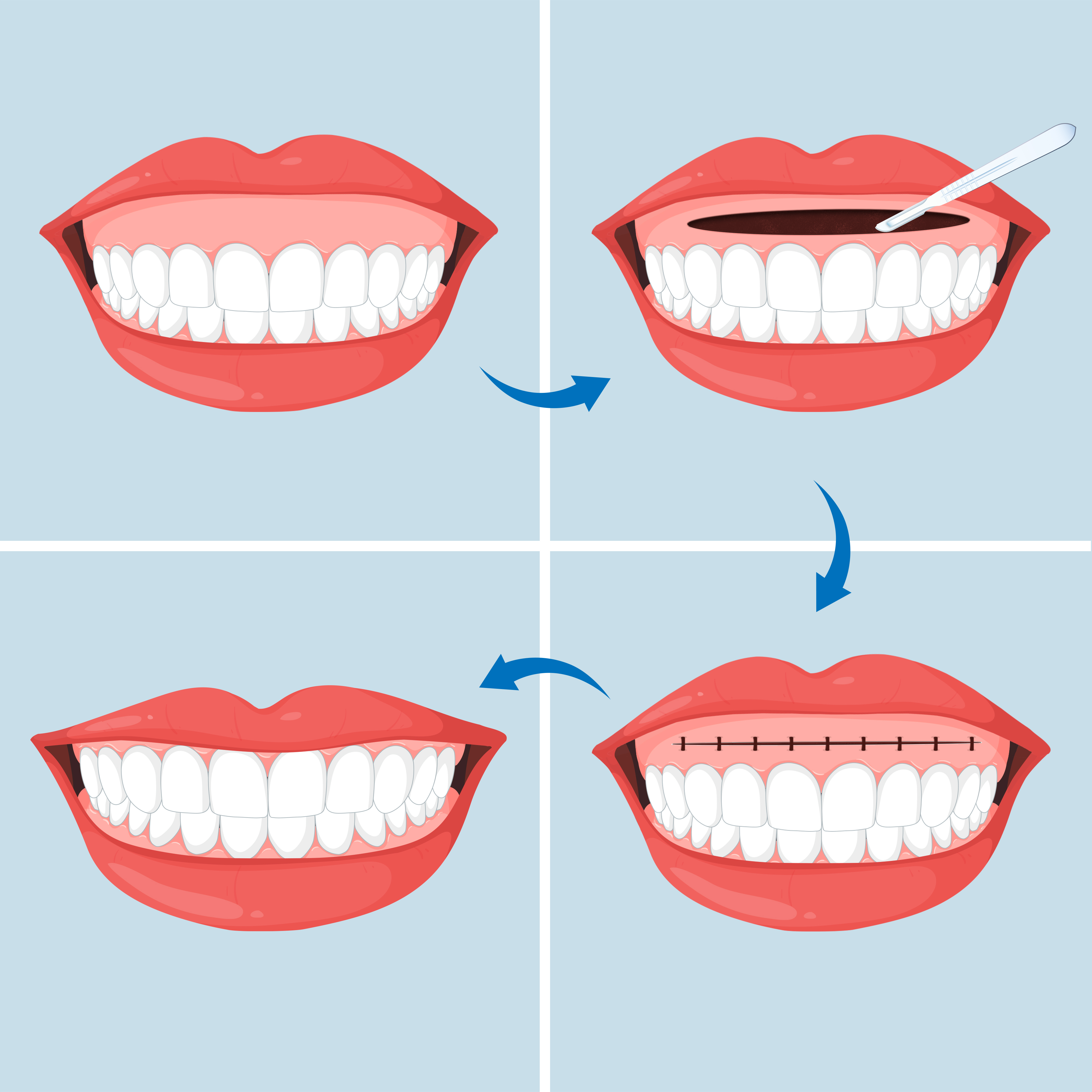
Illustration of upper lip lengthening surgery
Step 1: Incision planning:
- The doctor evaluates the extent of gum exposure and determines the amount of mucosal tissue to be removed.
- Typical measurements include:
- Horizontal length: From one premolar to the opposite side
- Vertical height: Approximately double the amount of desired lip lowering
- Based on these parameters, the doctor marks the incision lines:
- Lower incision: Along the mucogingival junction (1–2mm higher or lower depending on the case)
- Upper incision line: At the vestibular base (within 10–12 mm above the lower incision)
Step 2: Performing the procedure:
After designing the incision lines, local anesthesia is administered to ensure the comfort throughout the procedure.
The doctor makes incisions along the marked lines, then separates the mucosal layer. This is a procedure requiring high expertise, adhering to the following principles:
- Preserve the vermilion border of the lip
- Maintain at least 2–3 mm of attached gingiva around the teeth
- Ensure that post-surgical vestibular depth does not interfere with oral function
The incision is closed using absorbable sutures, effectively shortening the lip-to-tooth distance.
6. Post-Operative Care and Recovery
The recovery period is relatively short, typically lasting 1–2 weeks depending on the individual case. Patients may experience:
- Mild swelling and discomfort
- Feeling of tightness when smiling immediately after surgery
-
- These symptoms gradually improve over time.
Patients should strictly adhere to medical instructions for optimal results:
- Maintain oral hygiene: Avoid vigorous brushing; use prescribed mouthwash instead.
- Avoid touching the treatment area.
- Follow a soft or liquid diet during the initial recovery period.
- Take all prescribed medications as directed.
- Apply cold compresses within the first 48 hours to reduce swelling.
* The result achieved also depends on each individual's physiology.