Breast Augmentation for Male-to-Female (MTF) Transgender Patients
I. What Is Male-to-Female (MTF) Breast Augmentation?
Male-to-female (MTF) breast augmentation, also known as transgender breast augmentation, is a gender-affirming surgical procedure performed using principles similar to conventional breast augmentation. However, it requires more advanced and individualized planning due to anatomical differences between male and female chest structures. The goal of the procedure is to create full, round, and natural-looking breasts, helping transgender women achieve a more feminine and harmonious body contour.
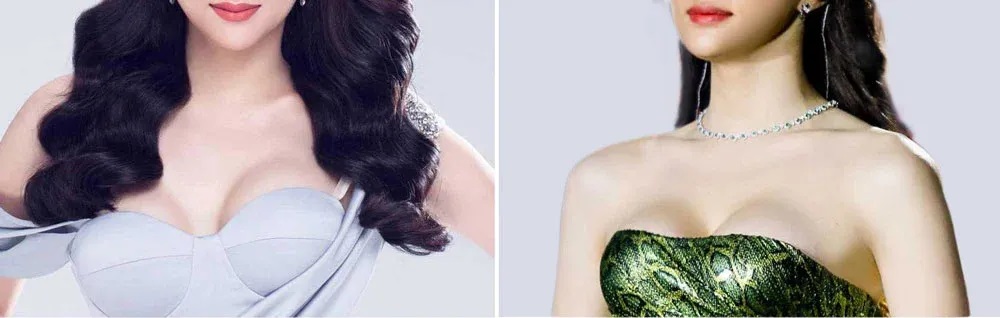
Miss Huong Giang underwent subglandular breast augmentation in Thailand, which resulted in visible implants and an unnatural appearance.
Miss Huong Giang underwent revision breast augmentation with submuscular implant placement at Viet My Plastic Surgery Hospital.
Miss Huong Giang underwent breast revision surgery with teardrop-shaped implants.
Miss transgender Tran Dai underwent Endoscopic breast augmentation
1. Why Hormone Therapy Alone May Not Be Enough?
Estrogen therapy plays an important role in breast development during transition. However, results are often limited and unpredictable:
Around 50% of patients do not achieve an AAA cup size
Only a small percentage (approximately 3%) reach an A cup
Therefore, breast augmentation with implants, combined with autologous fat grafting if needed, is considered the most effective and reliable solution.
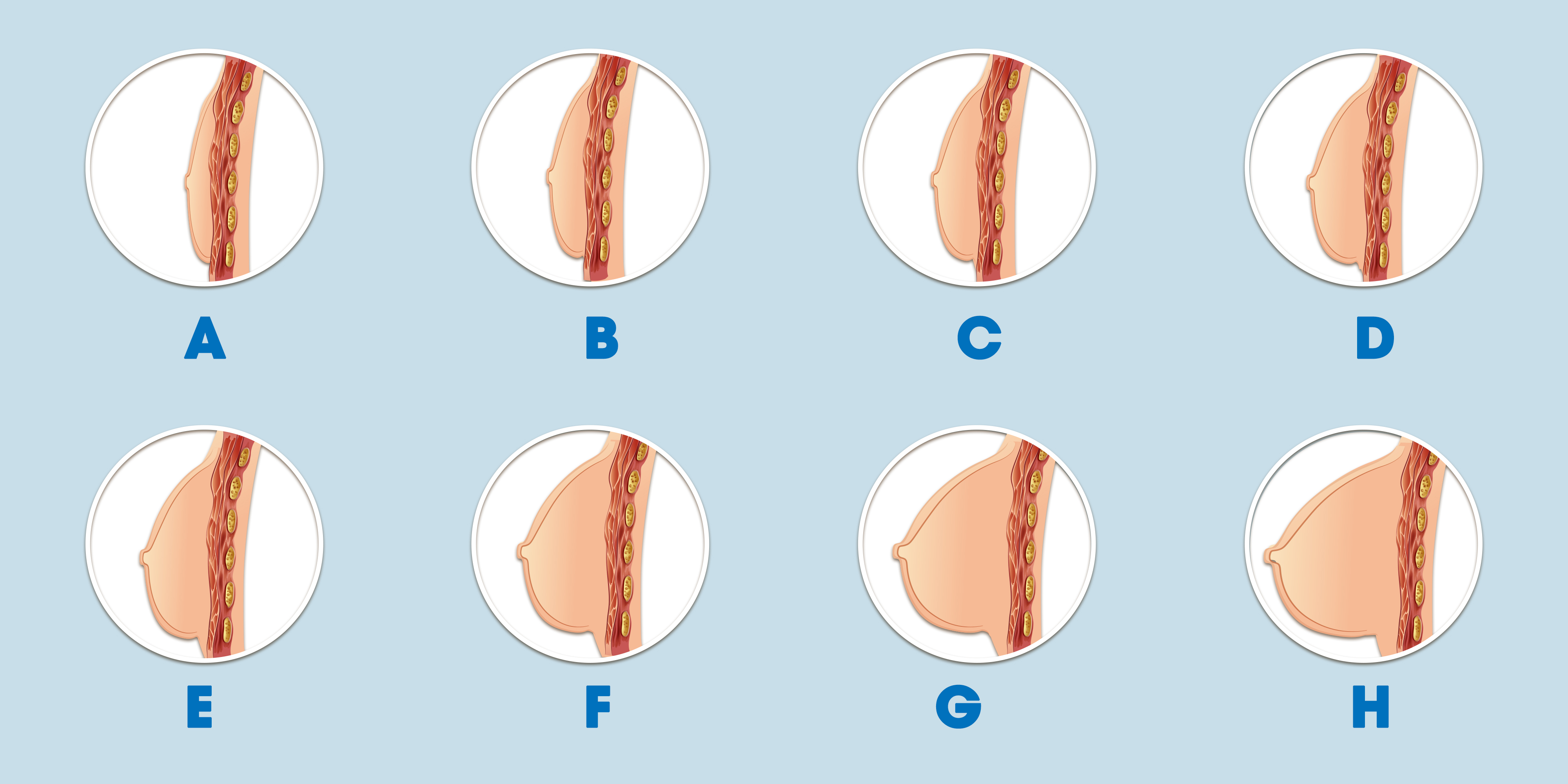
Comparison between different breast sizes
2. Anatomical Challenges in Transgender Breast Augmentation
Achieving a desirable breast shape depends on multiple factors. However, the male anatomical characteristics can present unique structural challenges.
Anatomical differences between male and female breast.
Ideal Characteristics
Pre-operative Anatomy
Surgical Solution
Natural upper pole slope, with soft and rounded lower contour
Limited breast tissue, higher risk of implant visibility if placed above the muscle
Implant placement under the muscle (partial or complete)
Adequate projection
Lack of natural projection
Use of larger implants
Natural lower pole proportion (~0.63 ratio)
Wider chest with shorter lower pole (~0.4 ratio)
Creation of a new, lower inframammary fold
Well-defined inframammary fold
Poorly defined or absent fold
The upper pole is more prominently projected, with an upper-to-lower pole ratio of 55:45
The inframammary fold is positioned high, and the area above the nipple is broad and flat.
Proper areola position and projection
Typically positioned lower, and the distance from the suprasternal notch to the nipple is approximately 2 cm longer than in women
Elevate and reposition the areola closer to the center of the breast
Ideal cleavage (~9 cm nipple-to-midline distance)
Wider spacing (~11.7 cm)
These factors make it more challenging to achieve natural breast shape, cleavage, and projection. As a result, MTF breast augmentation requires a highly individualized surgical approach and a surgeon with extensive expertise in anatomical customization.
II.Doctor Expertise – The Key to Natural Results
There is no universal technique for transgender breast augmentation since each patient requires a personalized treatment plan. A skilled doctor must carefully evaluate individual anatomy and design the most appropriate strategy within anatomical limitations. The key considerations include:
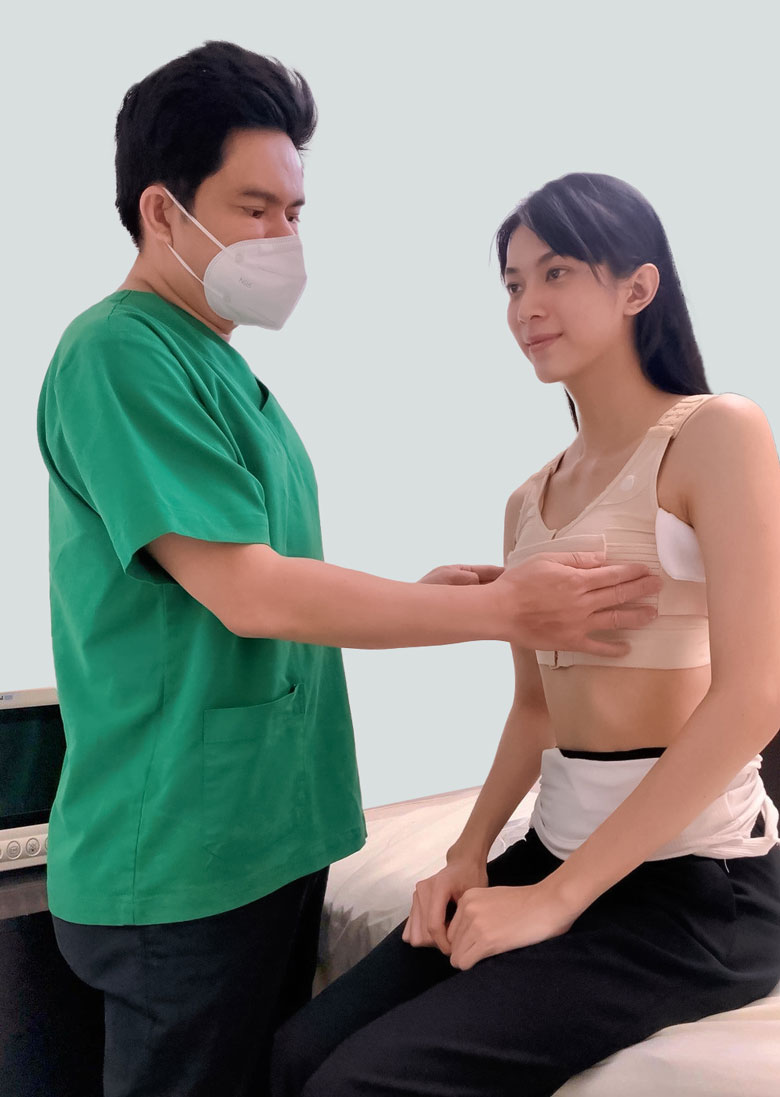
Dr Chiem Quoc Thai examined transgender super model Mong Thuong
The transformation of transgender model Mong Thuong after breast augmentation
1. Balancing Cleavage Formation and Areola Position
Due to the typically wider nipple-to-nipple distance in male anatomy, the doctor must address a key aesthetic trade-off: “An implant cannot simultaneously create narrow cleavage while maintaining perfectly centered nipple positioning on the breast mound.”
If the implant is placed directly beneath the nipple, the breast appears balanced and natural, but cleavage may be wider
If the implant is positioned more medially to enhance cleavage, the nipples may appear more laterally positioned (“east-west” orientation), resulting in a less natural appearance
As a result, patients often need to choose between a more natural breast shape when unclothed, or enhanced cleavage for aesthetic appearance in clothing, particularly without supportive bras.
Illustration of the nipples positioned too far apart due to east-west breast shape
2. Incision Selection and Implant Placement
There are several implant placement options, classified based on incision location and implant position.
Incision
Suitability
Explanation
Periareolar incision
Not suitable
Limited glandular tissue increases risk of sensory loss
Inframammary fold (breast crease) incision
Highly suitable
Used to create a new breast fold and implant pocket simultaneously.
Endoscopic transaxillary (armpit) incision
Highly suitable
Better aesthetic outcome and faster recovery
For patients with sufficient tissue, type 1 dual plane breast augmentation may be applied to enhance lower pole fullness, improve nipple elevation, and achieve a more feminine breast contour.
III. Conclusion
Due to anatomical differences, MTF breast augmentation requires a more complex and customized approach compared to traditional breast augmentation. Selecting a highly skilled and experienced surgeon is essential to balance the multiple variables involved and achieve optimal, natural-looking results.
* The result achieved also depends on each individual's physiology.