Hollow temples refer to a loss of volume in the area between the forehead, eye socket, and cheekbone, creating a visible depression on one or both sides of the face. When viewed from the front or side, hollow temples can make the cheekbones appear more prominent and give the face a thin, angular, tired, or aged appearance.
In younger individuals, temporal hollowing may be related to the natural structure of the bones, muscles, and fat tissue. Over time, it may become more noticeable because of aging, soft-tissue volume loss, or changes in the temporalis muscle.
The temporal region has a relatively complex anatomy consisting of multiple tissue layers, blood vessels, and nerve branches. Therefore, temple augmentation should be carefully planned according to the severity and cause of the hollowing, soft-tissue thickness, and the patient’s overall facial contours.
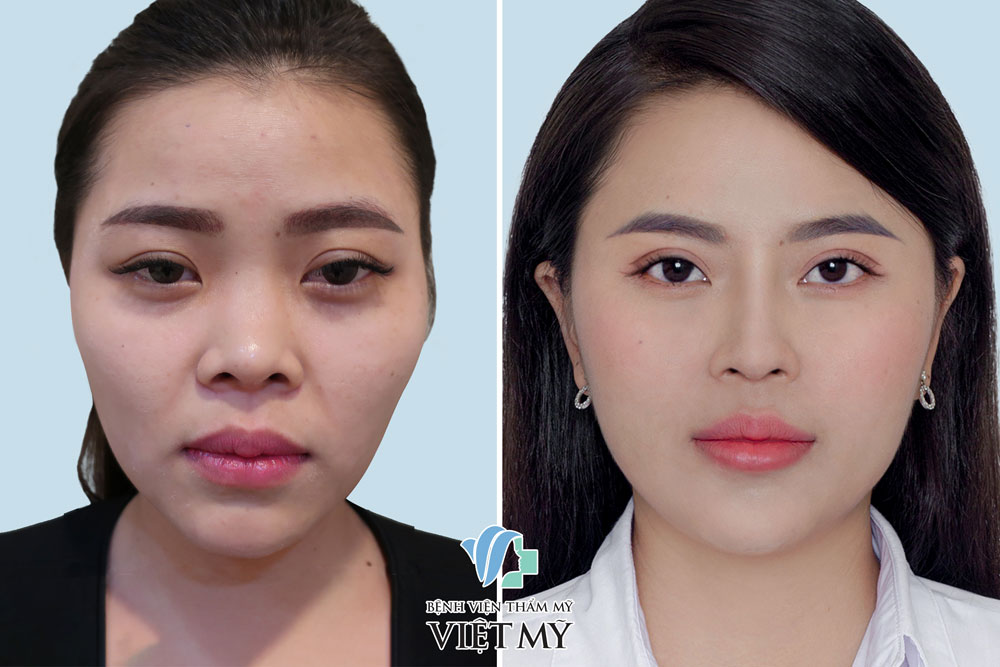
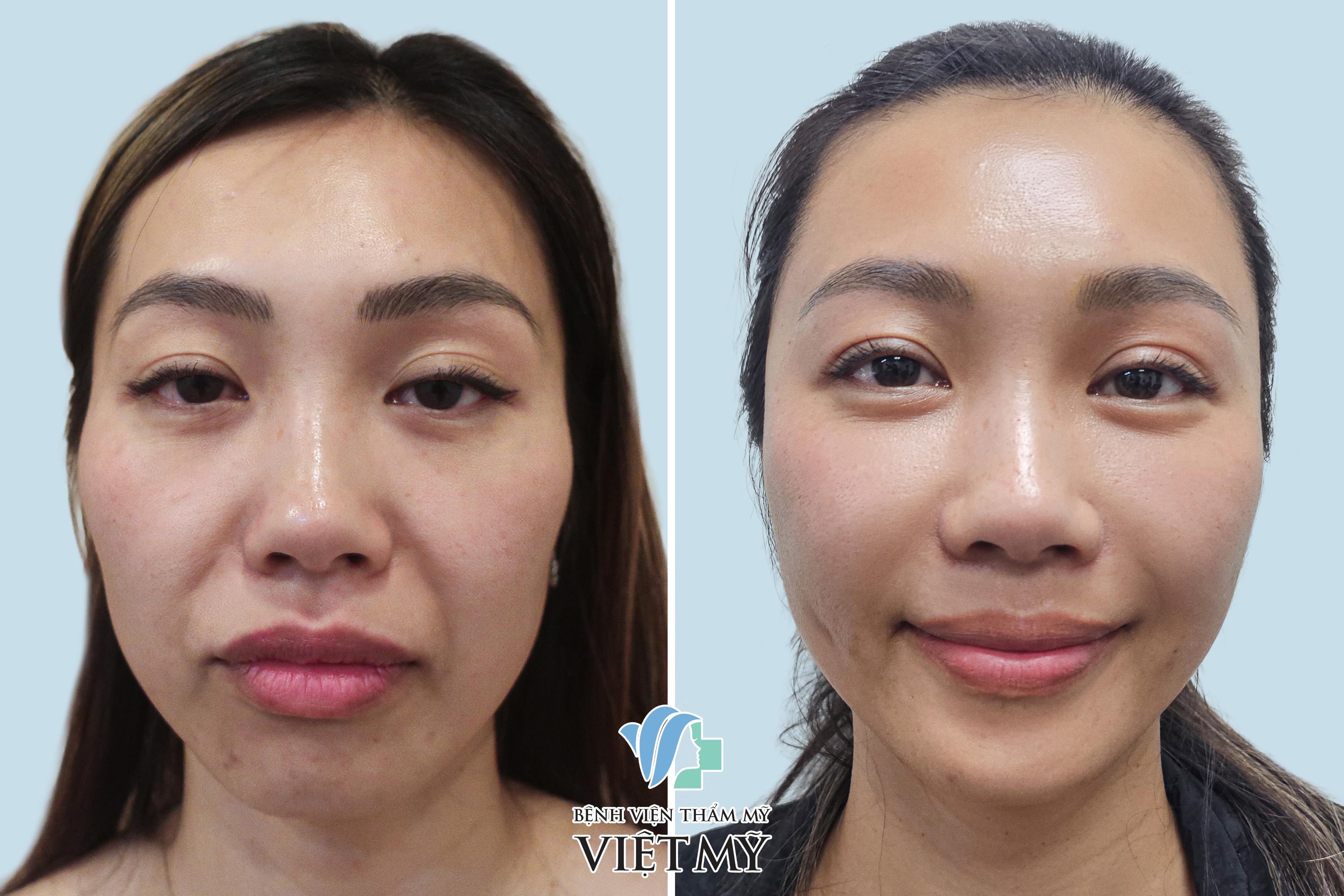
Before-and-after images following temple augmentation with autologous fat, facial volume restoration, alar reduction, rhinoplasty, epicanthoplasty, and brow lift.
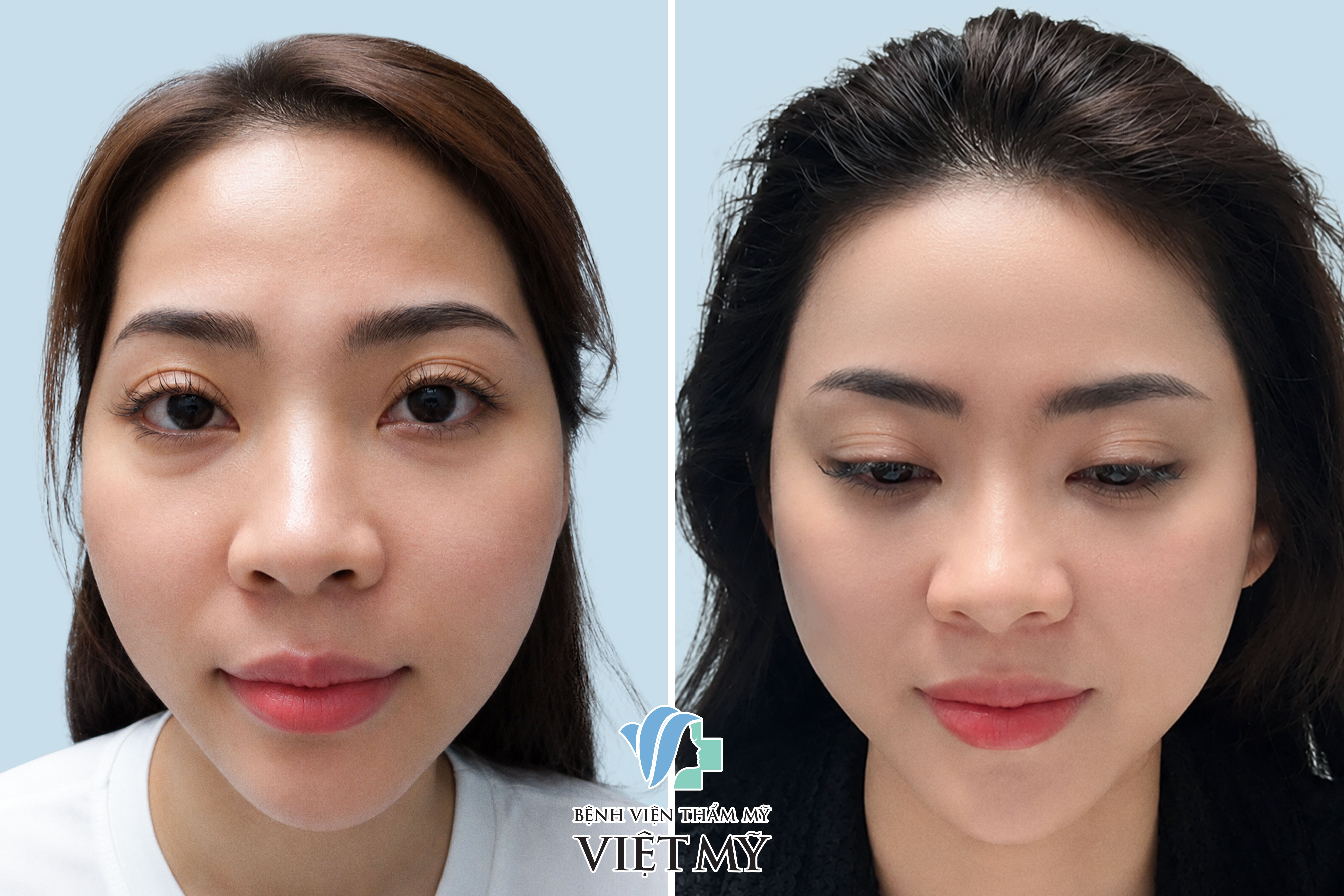
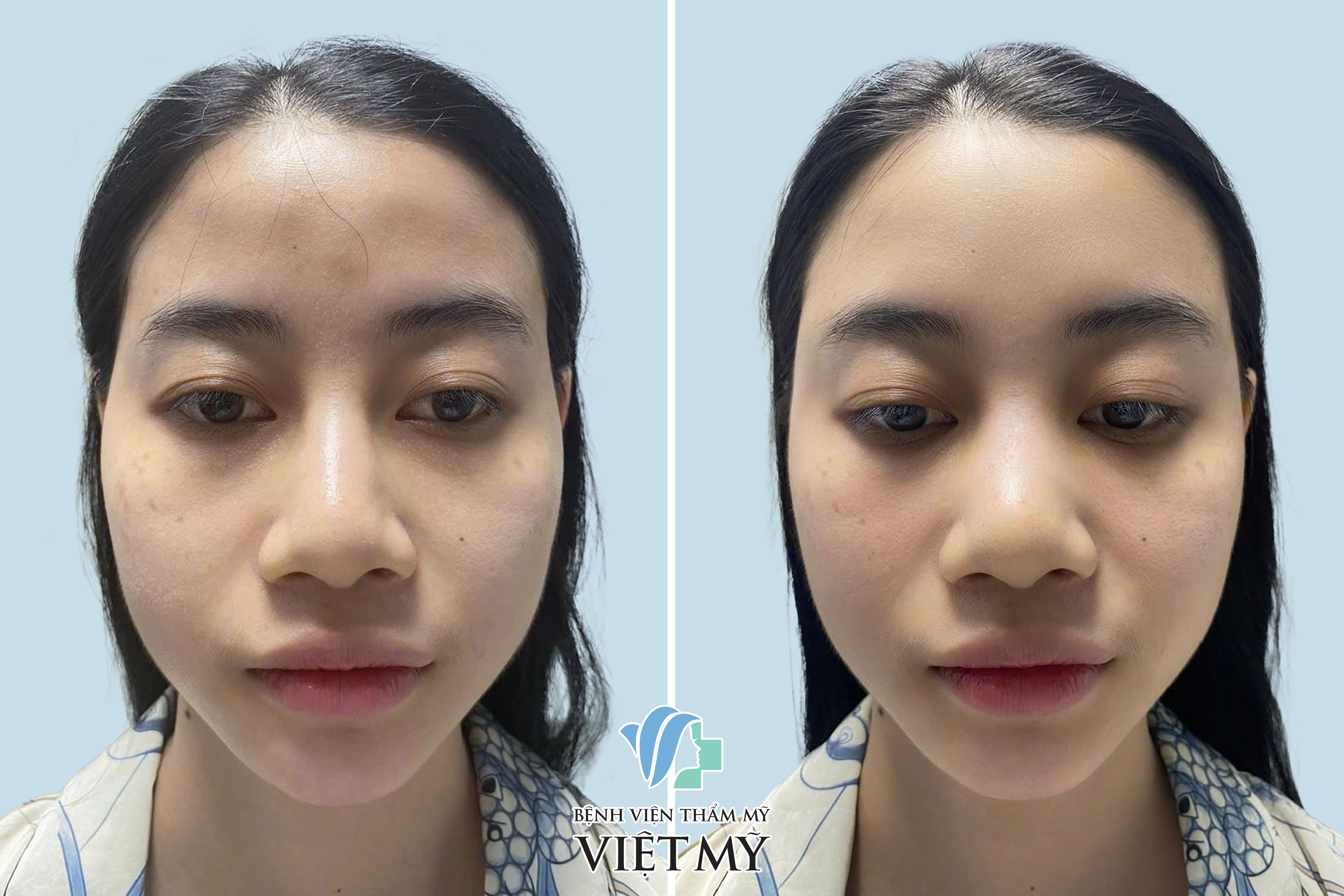
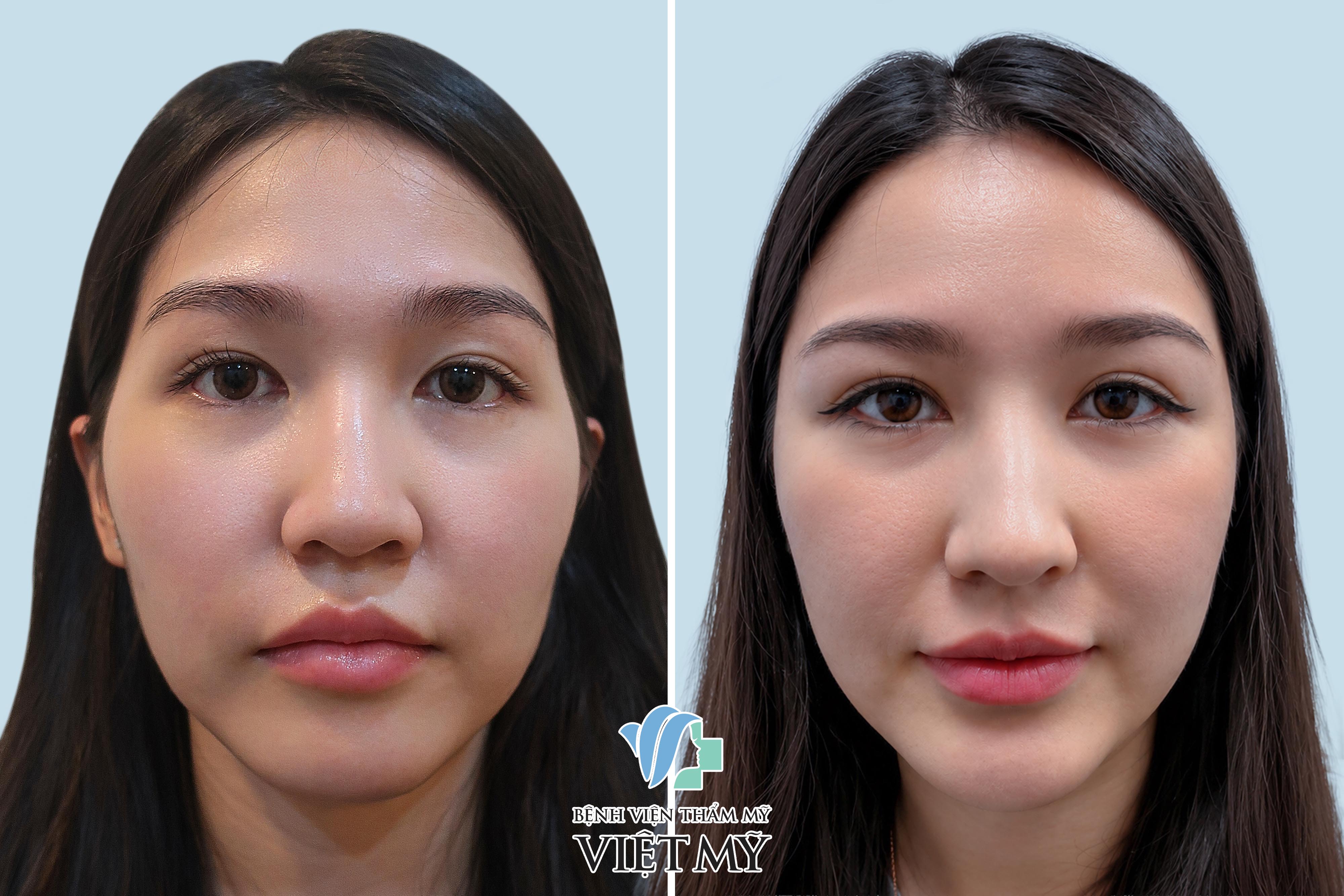
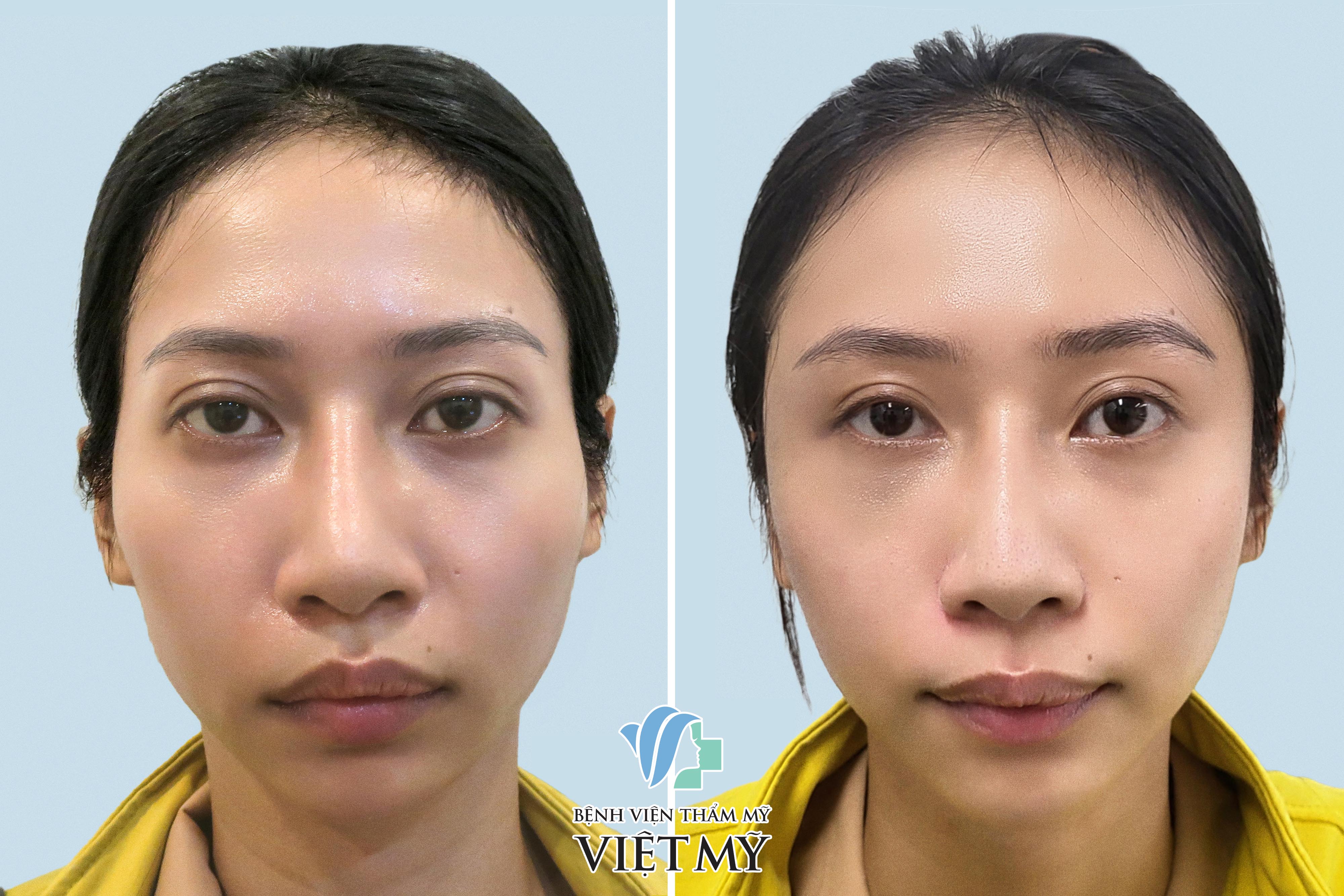
Before-and-after images following temple and cheek fat grafting.
Causes for Hollow Temples
Temporal hollowing usually does not result from a single factor but develops because of a combination of changes involving the bones, muscles, fat, and soft tissues in the temporal region.
1. Congenital Facial Structure
Some people naturally have hollow temples from a young age because of the shape of the temporal bones, the thickness of the temporalis muscles, or a relatively small amount of subcutaneous fat. The hollowing may affect both sides of the face or appear more pronounced on one side.
2. Aging Processing
As a person ages, the facial fat compartments may lose volume or shift position. The skin also gradually loses collagen and elastin, causing the soft tissue to become thinner and reducing its ability to support the facial contours.
These changes can make the bone contours around the outer eye socket, temples, and zygomatic arches more visible. As a result, the face may appear thinner and older than before.
3. Significant Weight Loss
Rapid weight loss or the loss of a substantial amount of body weight may reduce facial fat volume. As the layer of fat covering the temporal region becomes thinner, the temples may begin to look hollow or become more noticeably sunken.
4. Trauma or Surgery in the Temporal Region
Temporal hollowing may occur after trauma, craniofacial surgery, or procedures involving tissue dissection in the temple area. Possible causes include injury, atrophy, or this placement of the temporalis muscle and surrounding soft-tissue layers.
A systematic review examining the causes, classifications, and treatments of temporal hollowing found that medically or surgically induced hollowing was commonly reported in published studies. However, this finding may also reflect the fact that many studies have specifically focused on temporal hollowing following surgery.
5. Muscle Atrophy or Facial Asymmetry
Certain medical conditions, nerve injuries, or muscle atrophy may reduce the volume of the temporalis muscle. Natural differences in bone structure and soft tissue between the two sides of the face may also cause one temple to appear more hollow than the other
Non-Surgical Treatment Options
For mild to moderate temporal hollowing, non-surgical treatments can help restore volume and improve the transition between the forehead, temples, and cheekbones without requiring surgical incisions.
1. Temple Augmentation with Dermal Fillers
Patient before and after temple augmentation with dermal fillers.
Patient before and after temple augmentation with dermal fillers.
Filler injection involves injecting a dermal filler into appropriate tissue layers to replace lost volume in the temporal region. Hyaluronic acid fillers are commonly used because they can restore volume and create softer, smoother facial contours.
Advantages: The treatment does not require surgery, can be performed relatively quickly, and may be suitable for mild to moderate temporal hollowing.
Disadvantages: Results generally last approximately 12–18 months, depending on the type of dermal filler used. Repeat treatment may therefore be required to maintain the result. The temporal region also contains several important blood vessels. Therefore injections should be performed by a qualified doctor with detailed anatomical knowledge and appropriate clinical experience.
Surgical Treatment Options
1. Temple Augmentation With Autologous Fat
1-month results after undergoing facial fat grafting for hollow temples, cheeks, and eyelids.
Patient before and after undergoing temple augmentation with autologous fat.
Patient before and after undergoing temple and nasolabial fold fat grafting.
Autologous fat graftinguses the patient’s own fat tissue to restore volume in the temporal region. Fat is usually harvested from the abdomen, waist, thighs, or another area with sufficient fat, then processed before being transferred to the area requiring augmentation.
This procedure may improve temporal hollowing and create a smoother transition between the forehead, eye sockets, and cheekbones. Because the treatment uses the patient’s own tissue, the portion of fat that survives and stabilizes may integrate naturally with the surrounding tissue.
Advantages: The procedure uses tissue from the patient’s own body, creates a soft and natural feel, and can be combined with fat grafting to several facial areas. The portion of transferred fat may survive permanently.
Disadvantages:The patient must have a sufficient amount of fat available for harvesting (in the abdomen, thigh, etc.). In most patients, a portion of the transferred fat may provide permanent volume. However, some of the fat may gradually be absorbed by the body, and a revision fat-grafting session may be necessary.
2. Temple Augmentation With Synthetic Implants
Before-and-after images of a patient who underwent temple augmentation.
Temple augmentation with synthetic material is a surgical procedure that uses a medical implant to restore volume in a hollow temporal region. The implant is placed within a pocket created by the doctor at an appropriate anatomical layer, providing soft-tissue support and improving the contour of the temples.
This method may be considered when temporal hollowing is relatively pronounced, when volume needs to be restored across a broad area, or when the patient wants a more stable result than filler injections can provide.
Materials used for facial contouring may include medical-grade silicone, Surgiform, and other types of implants.
The choice of material should be based on the shape of the hollow area, the thickness of the overlying tissue, the contouring properties, placement, and the doctor’s clinical experience. Not every facial implant material is suitable for use in the temporal region.
Advantages:
Provides relatively stable volume restoration in the temporal region.
The implant can be selected or shaped according to the degree of hollowing in each patient.
Suitable for relatively broad areas of volume deficiency.
Does not depend on fat-survival rates, unlike autologous fat grafting.
The implant can be surgically removed or replaced when medically indicated.
Disadvantages:
The patient must undergo surgery and requires 7 days of initial recovery.
In 1% of cases, foreign-body reaction to the implant material may lead to infection and implant removal.
Over time, the edges of the implant may become visible or palpable.
Temple Augmentation at Viet My Plastic Surgery Hospital
At Viet My Plastic Surgery Hospital, each patient is personally examined by a doctor to determine the cause and severity of temporal hollowing. The consultation does not focus solely on the hollow area. The doctor also evaluates its relationship with the forehead, eyebrows, eye sockets, cheekbones, and overall facial contour.
Depending on the individual case, the doctor may recommend temple filler injections, autologous fat grafting, temple augmentation with synthetic implants, or a combination with other facial rejuvenation treatments. The implant size and shape are selected according to the patient’s facial structure, soft-tissue thickness, and the degree of volume deficiency.
ContactViet My Plastic Surgery Hospitalfor an examination and personalized advice on the most suitable temple augmentation option for your condition.
* The final result depends on each individual's physiology.