Hairline Lowering Surgery - Forehead Reduction Surgery
1. What is Hairline Lowering Surgery?
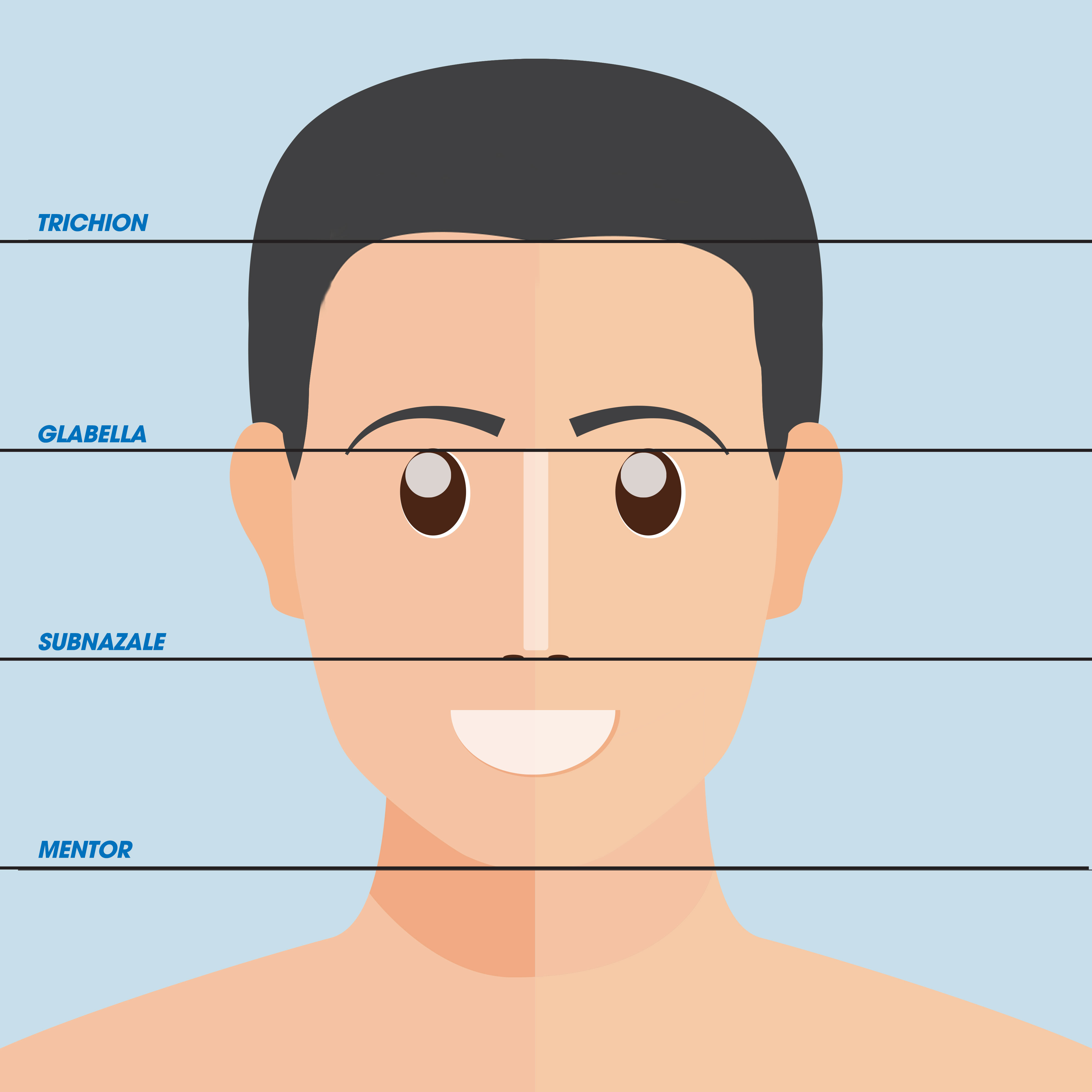
Hairline lowering surgery, also known as forehead reduction surgery, is a cosmetic procedure designed to shorten the height of the forehead—measured as the distance between the hairline and the eyebrows. By reducing forehead height, this technique helps create harmonious facial proportions, where the forehead, midface, and lower face are ideally balanced.
In addition, for individuals with a receding hairline, this procedure can also contribute to overall facial rejuvenation and a more youthful appearance.
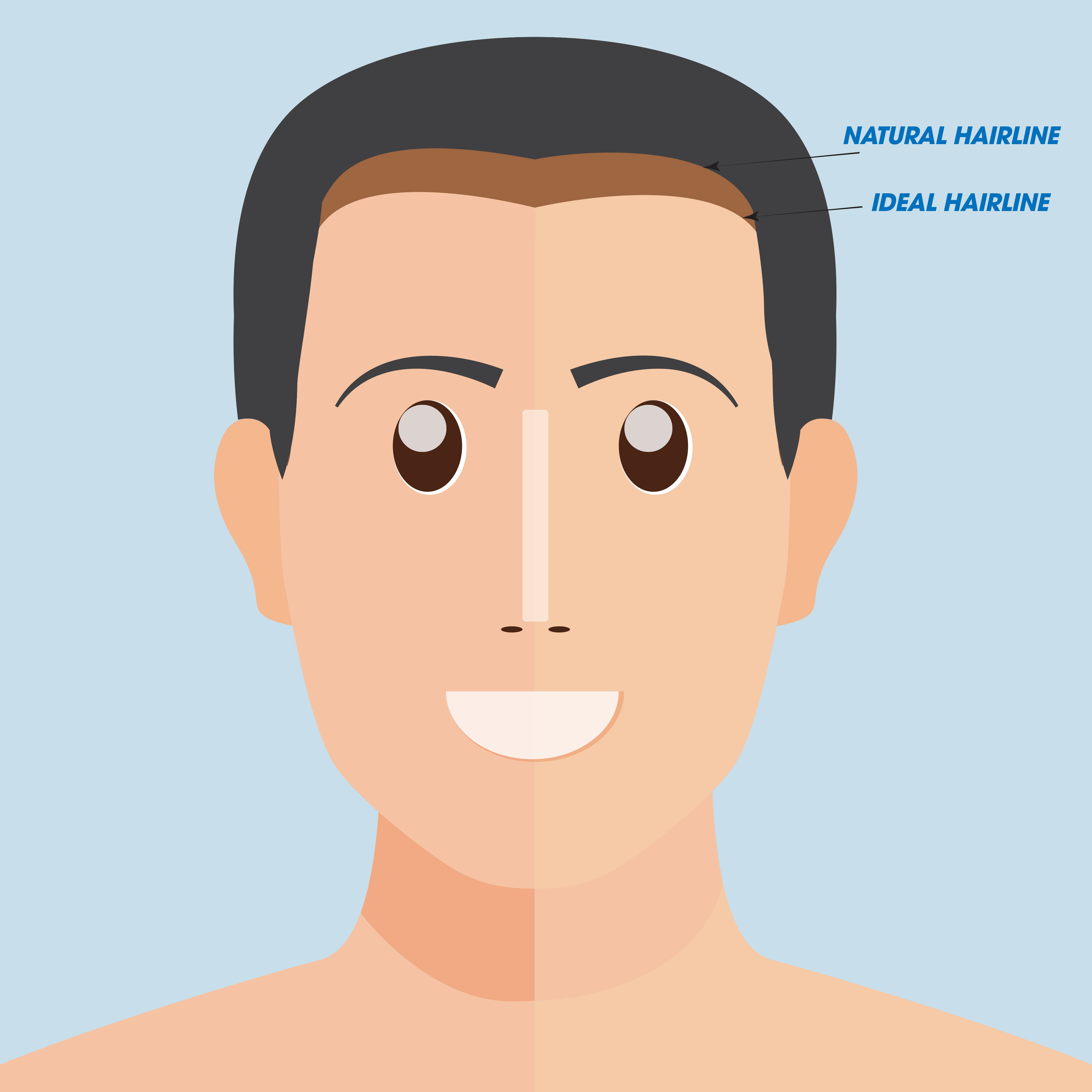
Simulation diagram comparing natural vs. ideal hairline distance
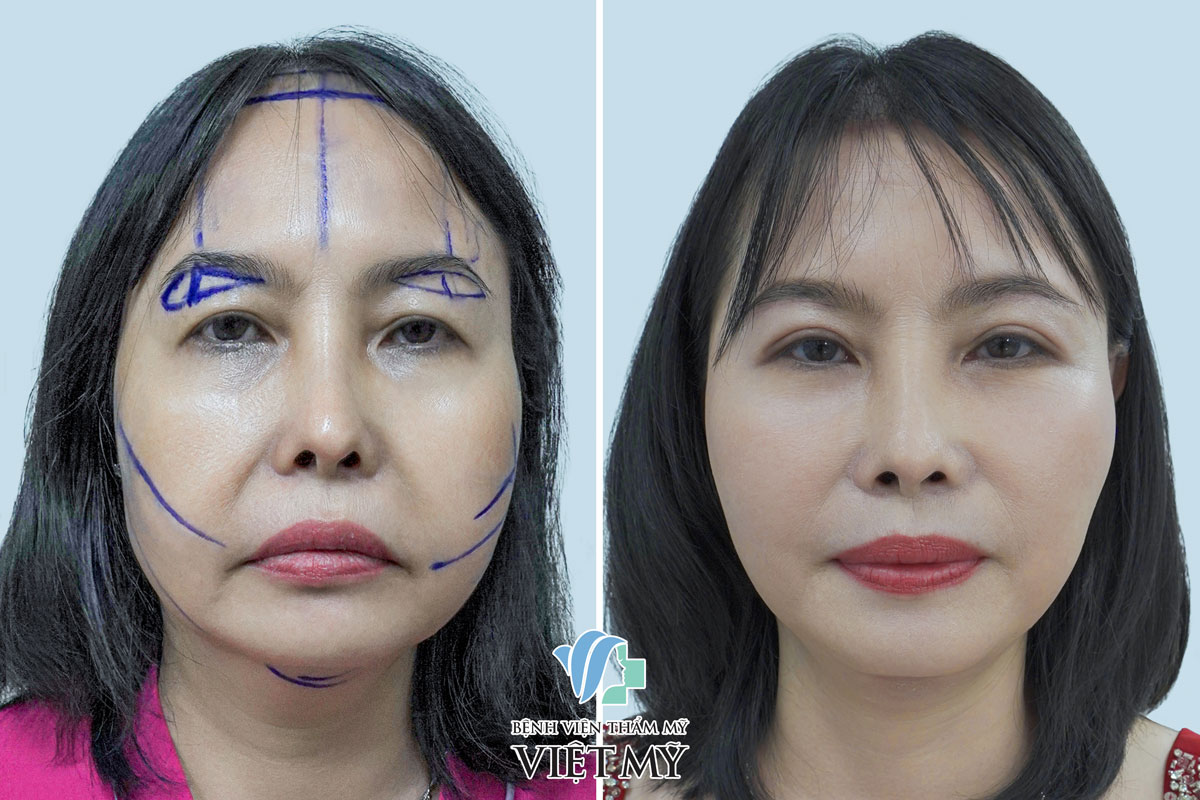
Patient in their 60s undergoing hairline lowering, endoscopic facelift, brow lift, and lower eyelid surgery
2. Benefits of Hairline Lowering Surgery.
Hairline lowering reduces forehead height and enhances facial harmony. Specific benefits include:
Helps improve facial balance and symmetry
Allows customized hairline design based on individual preferences. This is ideal for correcting high, uneven, or M-shaped hairlines
Saves time and long-term costs compared to temporary solutions such as wigs or concealment methods
Scientific golden ratio of facial proportions
3. Indications for Hairline Lowering Surgery
Suitable candidates for hairline lowering surgery typically include:
Individuals with a naturally high or prominent forehead
Patients with adequate scalp laxity and elasticity
For individuals with a high forehead but limited scalp elasticity, or those who prefer non-surgical options, direct hair transplantation may be a more appropriate alternative.
Additionally, in cases where the forehead appears longer due to brow descent with aging, a brow lift may be performed either in combination or as an alternative to achieve better facial balance.
4. The Procedure for Hairline Lowering Surgery
The procedure typically takes 1–2 hours and is performed under sedation or general anesthesia, including the following steps:
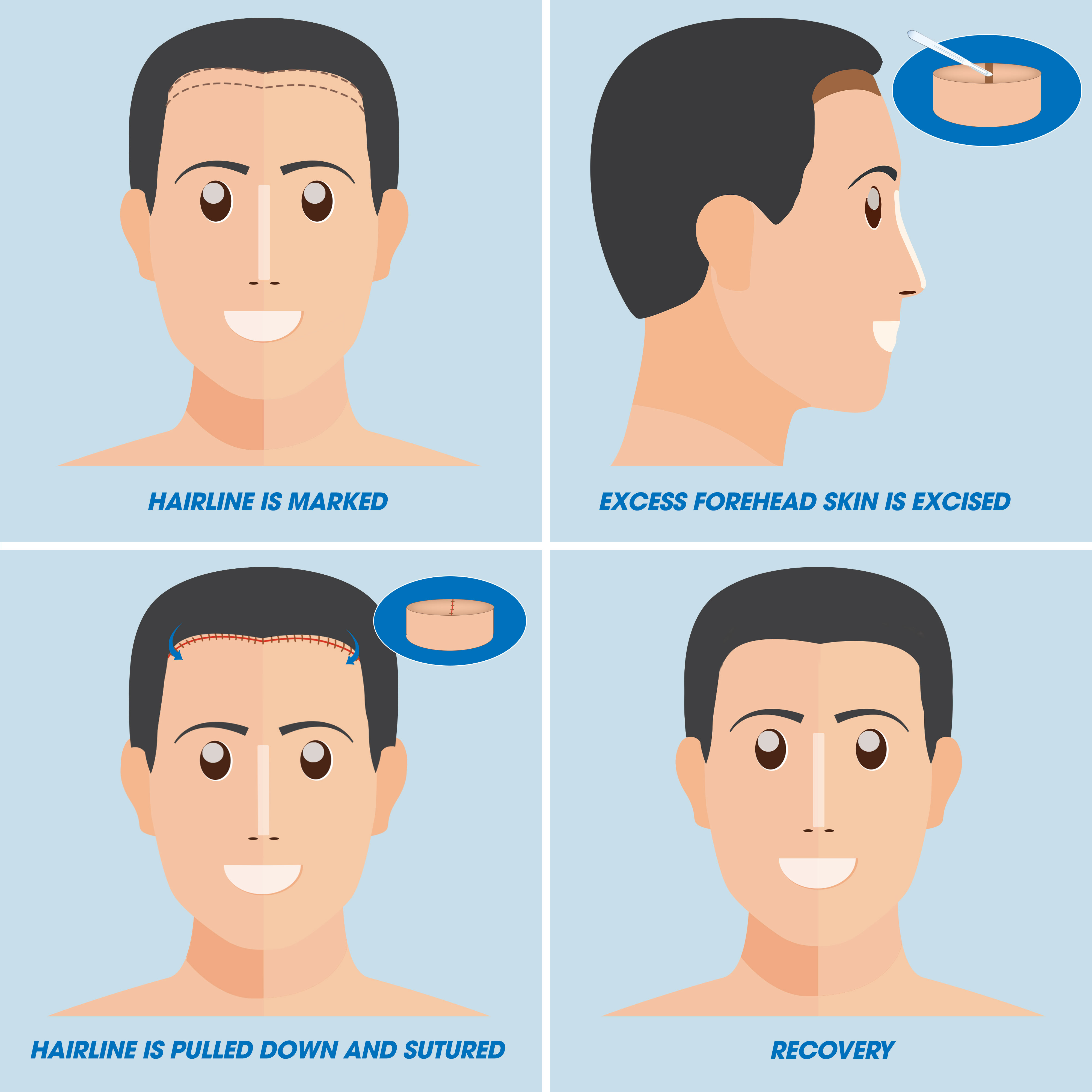
Surgical planning: Based on the desired hairline position, the doctor marks the incision line and identifies the area of excess forehead skin to be removed. The incision is often designed in a zigzag pattern rather than a straight line to mimic the natural hairline.
Incision creation: Precise incisions are made along the marked hairline. These require a high level of accuracy to avoid damage to hair follicles and surrounding nervous system.
Tissue preparation (scalp flap): Additional local anesthesia may be administered to the forehead. The doctor then carefully separates the scalp from the underlying tissue.
Removal of excess forehead skin: A strip of forehead skin is removed, with the width determined by the desired degree of reduction and scalp elasticity.
Advancement of the scalp: The scalp with hair is gently advanced forward to meet the lower incision line.
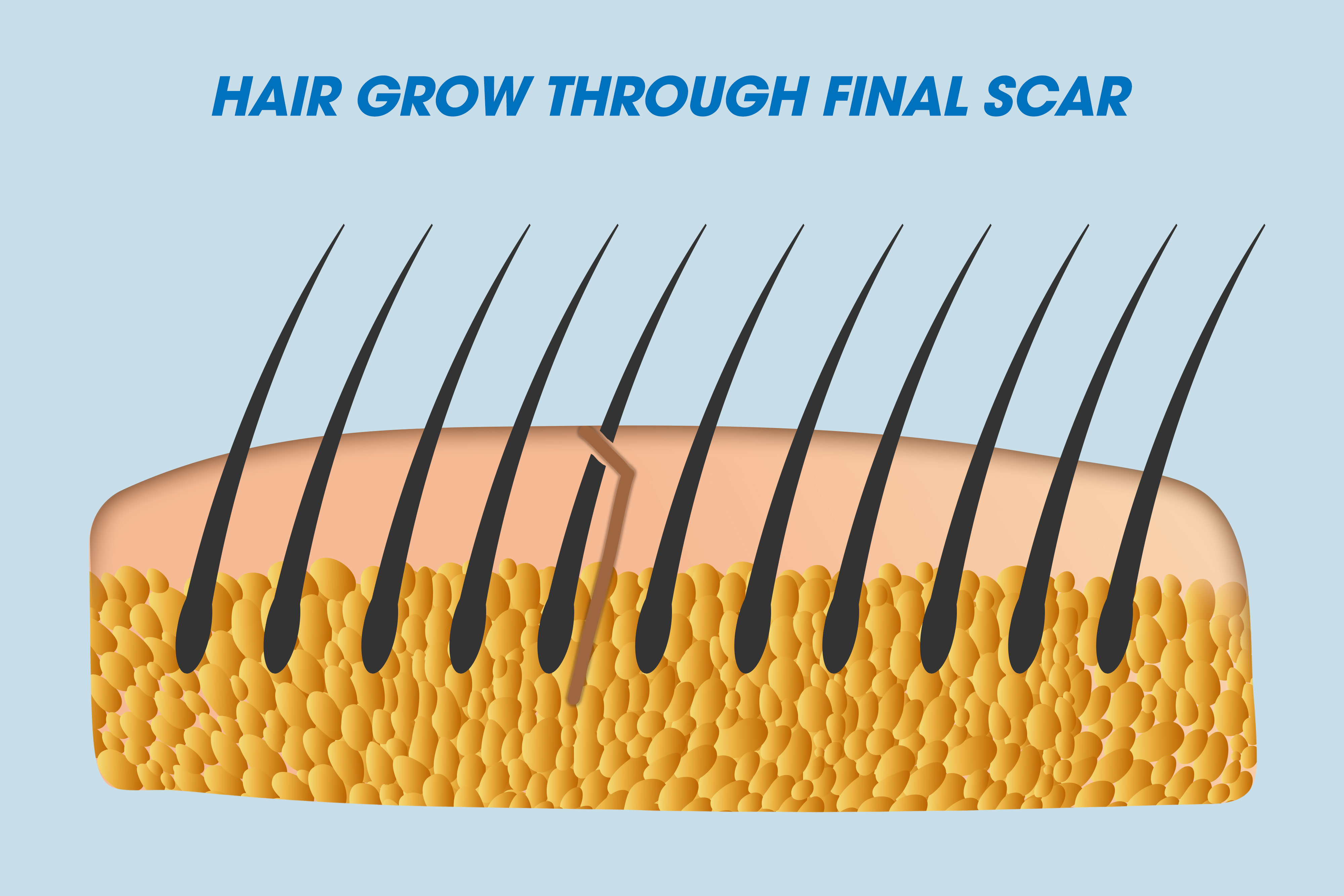
Incision closure: A trichophytic closure technique (scar-concealing method) is used. One edge of the incision is beveled to allow hair to grow through the scar, effectively camouflaging it after healing.
Hairline Lowering Procedure
Due to the complexity of this procedure, choosing an experienced surgical team and a well-equipped medical facility is essential.
5. Recovery and Post-Operative Care
The recovery process occurs in several stages:
- In the first few days, swelling and bruising around the treated area are common but gradually subside. Sutures are typically removed 10 days after the surgery.
- Although the new hairline is visible immediately after surgery, full recovery and optimal results may take 3–6 months.
To ensure a smooth recovery, patients should follow these guidelines:
Take prescribed medications to reduce the risk of bleeding, infection, and swelling during the recovery process.
Clean the surgical site as instructed.
Avoid touching or scratching the surgical area.
Refrain from strenuous activities and heavy lifting for at least 2 weeks.
Avoid sun exposure; use protective measures when going outdoors to prevent scar pigmentation
Sleep with the head elevated
Attend all scheduled follow-up appointments for monitoring and evaluation