I. What is Direct Hair implantation (DHI)?.
Direct Hair Implantation (DHI) is one of the most advanced hair transplant techniques available today. This method is performed using the FUE (Follicular Unit Extraction) technique and can be combined with a specialized implantation device known as the CHOI pen, allowing precise control over the angle, depth, and direction of each implanted hair follicle.
Advantages.
- Provides natural-looking results with optimal hair density
- Minimizes the risk of scarring and scalp psoriasis
- Significantly reduces bleeding in the recipient area
- Causes less trauma to grafts, promoting healthier and stronger hair growth
- Fast recovery time, allowing patients to quickly return to daily activities
Ideal Candidates for DHI.
- Individuals (male or female) experiencing hair loss and over 18 years of age
- Patients with adequate hair density
- Those seeking hair restoration for the scalp, eyebrows, beard, or mustache
II. Characteristics of DHI and FUE Method for hair transplant.
- Uses a micro-motor drill or specialized surgical steel blade for extraction
- Extracted grafts are preserved in a specialized solution
- Grafts are implanted directly into the recipient area, helping to reduce overall procedure time (could be supported by CHOI pen)
- Achieves a density of approximately 45–60 grafts per cm²
- In FUE, the total number of grafts can reach up to 4,000 grafts
- Full shaving may or may not be required; however, the donor area is typically shaved
III. The Procedure of DHI Treatment.
1. Consultation.
- The dermatologist conducts a comprehensive evaluation, including cause and pattern of hair loss, likelihood of progression, hair characteristics (thick or thin), patient expectations, age, gender, and medical history.
- During this stage, the hairline is carefully designed to match the patient’s natural features. The recipient area is determined based on the number of grafts required and the availability of donor hair. Depending on the severity of hair loss, the patient may or may not be suitable for the DHI technique.
2. Preparation.
- Pre-operative screening tests such as HIV, Hepatitis B, and Hepatitis C are conducted. The patient’s hair is then trimmed or shaved, depending on the number of grafts required. In cases with fewer grafts, shaving may not be necessary. After sterilization, the patient is prepared for local anesthesia.
3. Local anesthesia.
- The surgeon administers local anesthesia into donor areas before extracting hair follicles.
4. Hair follicle extraction.
- Hair follicles are carefully extracted from the donor area using a micro-motor drill.
5. Loading grafts into the CHOI pen.
- The extracted follicles are preserved in a specialized solution to maintain their viability. If the CHO implantationI pen is required, each follicle is individually loaded into the device. This allows for precise implantation without the need for traditional tools such as forceps or tweezers.
6. Implantation into the scalp.
- The surgeon creates recipient sites in the target area, typically using a Sapphire blade. This technique helps increase hair density, ensure even distribution and achieve a natural growth direction and thickness.
- Each follicle is then carefully implanted according to the pre-designed hairline and treatment plan.
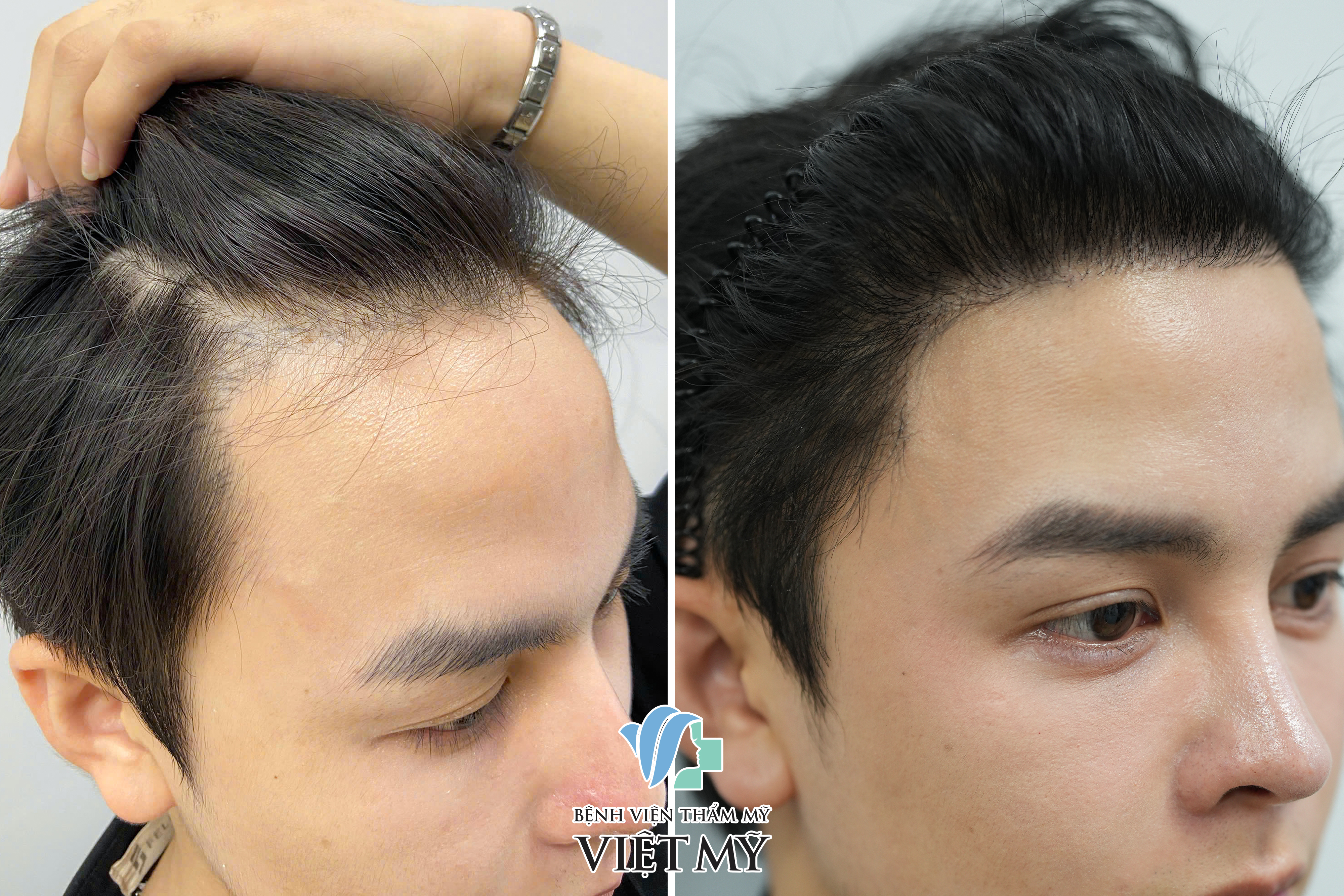
Before and after photos of a male client who underwent a hair transplant one year prior.
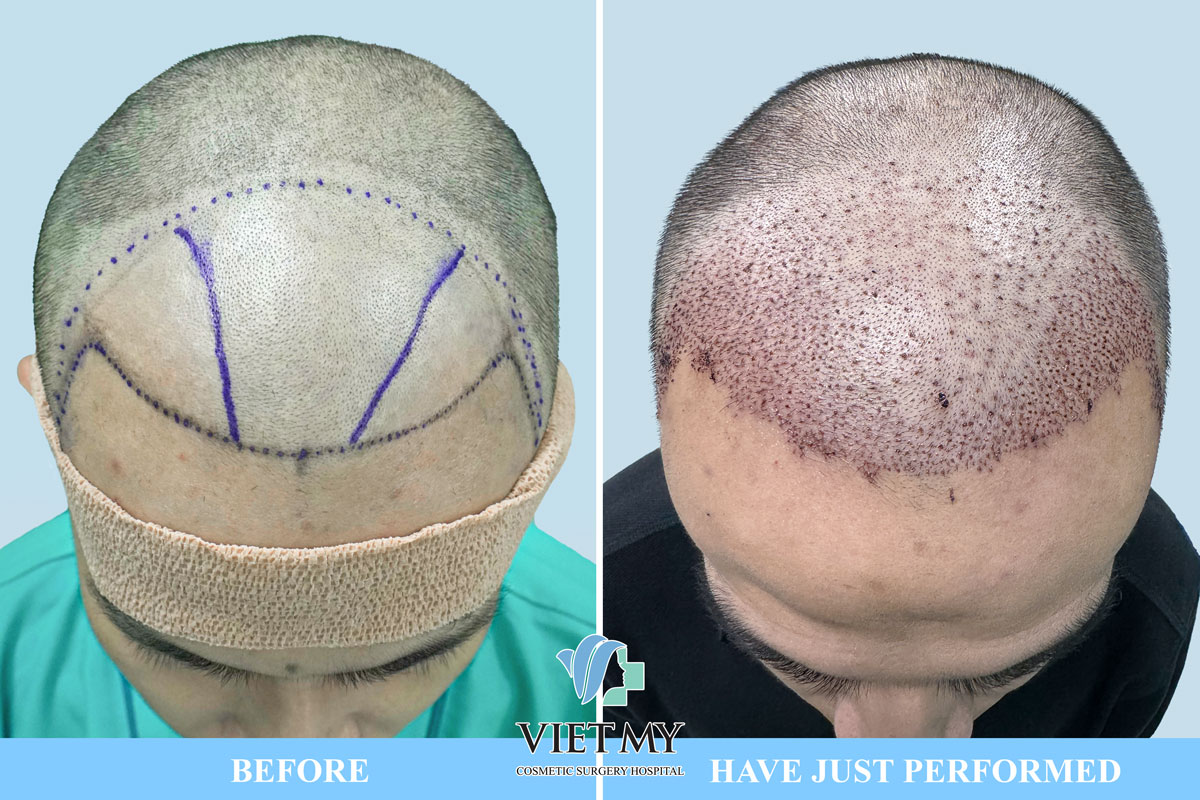
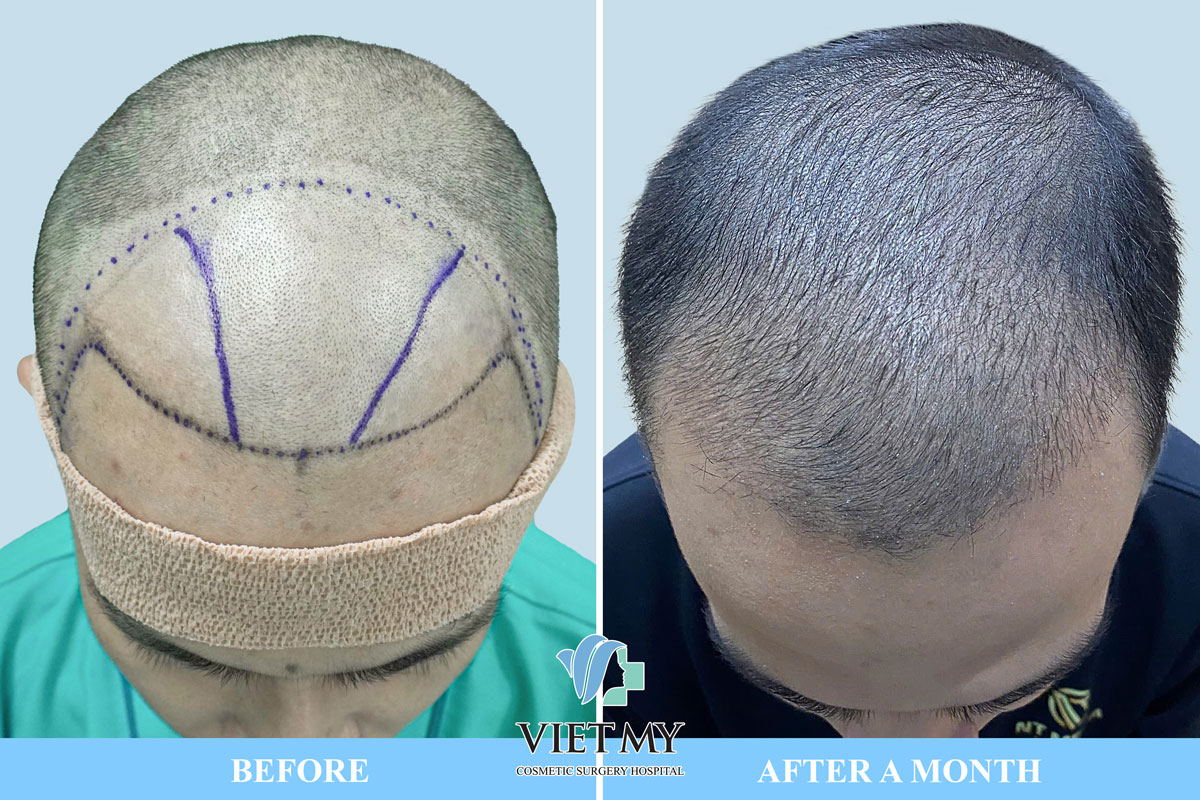
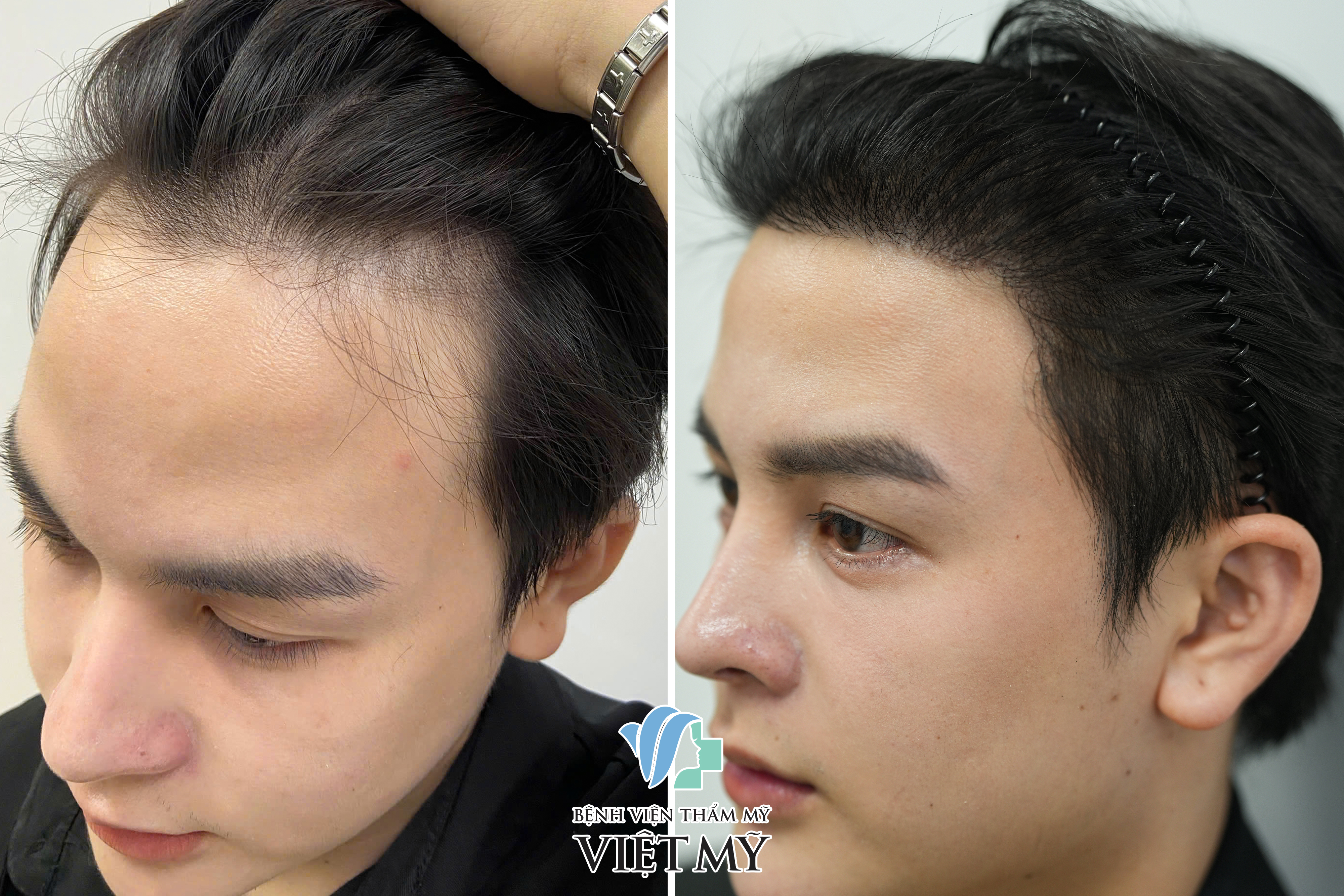
25-year-old male customers before and after undergoing robotic hair transplant.
7. DHI hair transplant results.
- For individuals experiencing frontal hair loss, the DHI (FUE) hair transplant method delivers highly natural and effective results. The doctor will recommend the most appropriate treatment plan based on each patient’s individual condition to ensure optimal outcomes.
| Hair Transplant Price |
| Manual Direct Hair Implantation (DHI) (40.000vnd/follicle) (50% off) |
20.000 vnd/follicle |
| Robotic hair transplant (100.000vnd/follicle) (50% off) |
50.000 vnd/follicle |
| Hairline lowering surgery |
50.000.000 vnd |
*Upon arrival at the hospital, clients will undergo a personalized consultation and examination with a specialist. The doctor will then assess the recipient area, evaluate and determine the exact number of grafts required for optimal results.
*The total cost of the hair transplant procedure is calculated based on the number of grafts needed multiplied by the price per follicle. |
More on the topic:
+ Robotic hair transplant
+ Robotic hair transplant using AI
+ Plastic surgery price list
* The final result also depends on each individual's physiology.