Structural rhinoplasty is an advanced comprehensive nose reshaping surgery that focuses on reconstructing and reinforcing the entire nasal framework, while improving aesthetic appearance (shape, height) and nasal function.
Complications after undergoing rhinoplasty in Korea - Advices for Dr. Chiem Quoc Thai
Runner-up Kieu Loan after structural rhinoplasty and comprehensive cosmetic surgery
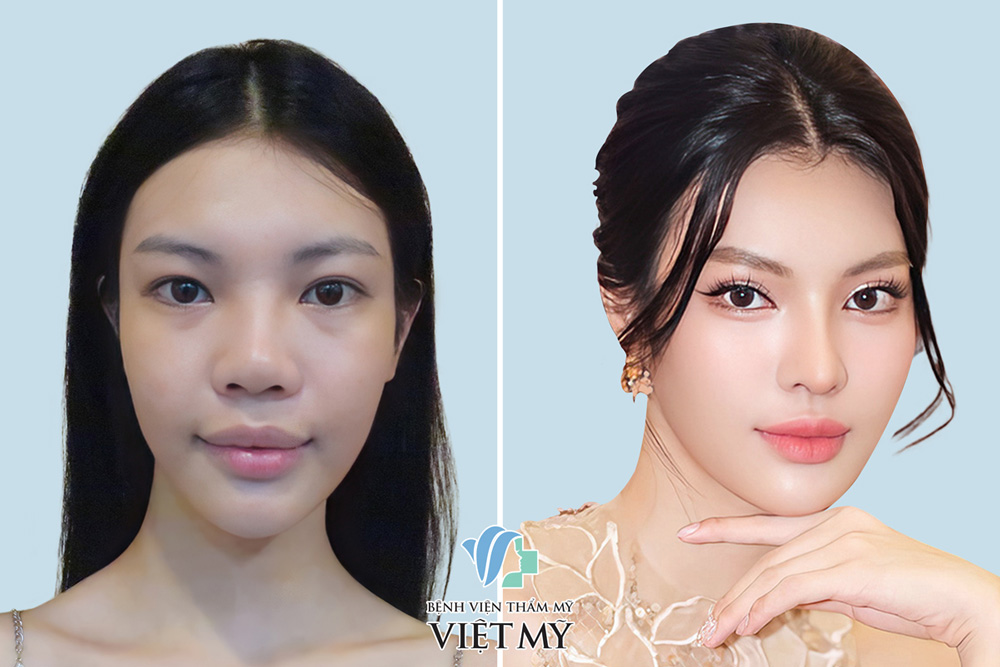
Lily Luta before and after undergoing comprehensive facial cosmetic surgery (chin augmentation, eyelid surgery, S-line structural rhinoplasty, facial contouring, and lip reshaping).
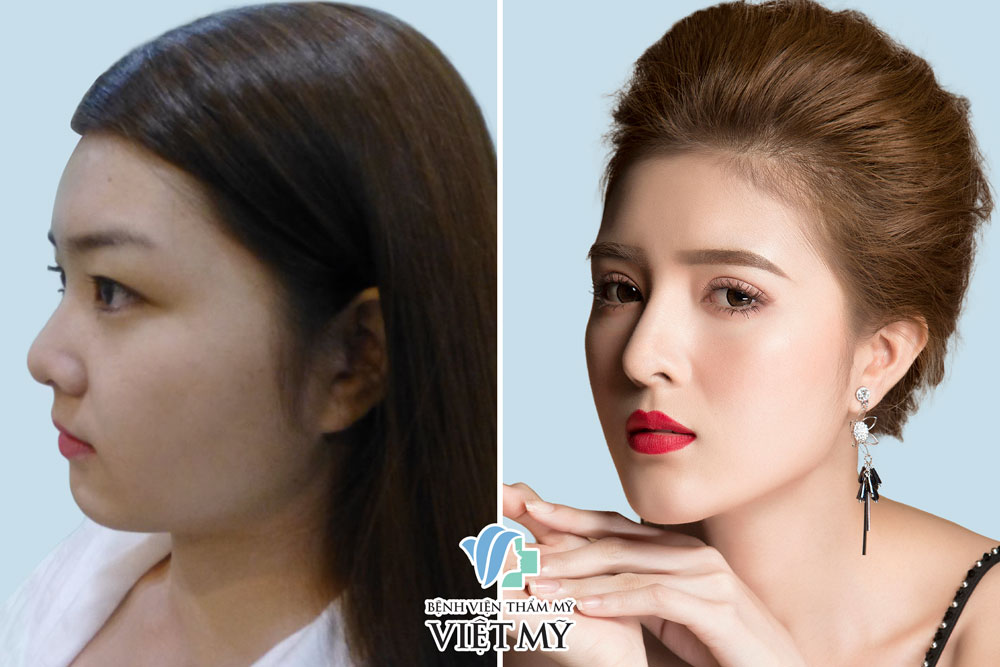
Miss Grand Vietnam 2024 First Runner-up Hanh Nguyen before and after undergoing structural rhinoplasty.
Miss queen runner-up Tuong San before and after undergoing comprehensive cosmetic surgery.
Her nose was slightly wide with a low bridge, so she underwent structural rhinoplasty to achieve better facial proportion and a more refined look.
Miss Phuong Khanh before and after undergoing structural rhinoplasty revision and comprehensive cosmetic surgery.
2. When Should You Choose Structural Rhinoplasty?
Conventional methods such as dermal fillers or implant-only rhinoplasty typically address minor concerns and are not suitable for complex nasal deformities such as:
a. Nasal Bridge Deformities
Crooked nose (C-shape or S-shape deviation)
Poorly defined nasal contours
Saddle nose (sunken bridge) deformity
Inverted V deformity
Dorsal hum
=> Structural rhinoplasty provides comprehensive correction and reconstruction.
b. Nasal tip abnormalities
Bulky or rounded nasal tip lacking a refined triangular definition
Over-rotated (upturned) or drooping tip (downturned)
Imbalanced tip (ideally ⅔ of nasal bridge length)
c. Columella & Nasal base issues
Deviated or asymmetrical septum/columella
Wide or imbalanced nasal base (ideally equals the intercanthal distance and ~1/5 of facial width)
d. Revision rhinoplasty & complex cases
Previous rhinoplasty complications: deviation, infection, or necrosis
Requires removal of old implants and full reconstruction
e. Patients allergic to synthetic implants
Thin nasal skin with risk of implant visibility
History of sensitivity or complications from synthetic materials
Preference for fully natural, biocompatible solutions
3. Benefits of Structural Rhinoplasty
Structural Rhinoplasty not only enhances aesthetics similar to regular rhinoplasty but also addresses more complex deformities in a comprehensive manner. Moreover, this technique completely eliminates all risks of allergic reaction and ensures long-lasting and stable results.
4. The Procedure of Structural Rhinoplasty
3D simulation of structural rhinoplasty
Step 1: Consultation and Treatment Planning
The doctor evaluates the nasal anatomy, analyses deformities, and develops a detailed and personalized surgical plan.
For revision or previously infected cases: The doctor will develop a treatment plan and monitor the patient’s condition. Pre-treatment may include removal of existing implants and appropriate treatment before proceeding with reconstruction.
Step 2: Anesthesia
The procedure is performed under general anesthesia or sedation to ensure a comfortable and pain-free experience.
Step 3: Incision Creation
The procedure is performed under general anesthesia or sedation to ensure a comfortable and pain-free experience.
Step 4: Structural Reconstruction
The surgeon harvests autologous cartilage (ear cartilage, septal cartilage, or rib cartilage) to reconstruct and reshape the nasal tip and columella.
Correction of septal deviation
Refinement of the nasal tip
Narrowing of the alar cartilage with sutures when necessary
Step 5:Nasal Bridge Augmentation
Depending on the case, augmentation may involve:
Option 1: Synthetic implant wrapped in cartilage
Option 2: Autologous rib cartilage for full reconstruction
Source
Advantages
Disadvantages
Indications
Septal Cartilage
Straight, strong.
Can be harvested during the procedure, no external incision
Limited in revision cases
Mild to moderate corrections
Ear Cartilage
Easy to harvest and contour.
Similar to the alar cartilage
Shape and quantity ideal for tip shaping.
Requires small ear incision.
Required a moderate amount of cartilage, especially in nasal tip or alar refinement
Rib Cartilage
Abundant quantity of cartilage
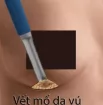
Small hidden scar at the inframammary fold
Required a large amount of cartilage (complex or revision cases)
Step 6: Incision Closure
After achieving the desired outcome, the doctor closes the incision, applies sterile dressing, and places a nasal splint to maintain stability.
5. Recovery and Post-Operative Care
Recovery occurs in stages, and strict adherence to medical instructions is essential for optimal results.
The First 10 Days:
Swelling and bruising are expected but gradually subside
Apply cold compresses regularly to minimize swelling during the first 48 hours
Most swelling improves within 7–10 days (may persist longer in some cases)
Sutures are typically removed within 10 days
Additional Guidelines:
Sleep with your head elevated
Swelling continues to decrease, with more refined results visible after 2–4 weeks
Avoid bending forward during the first 2 weeks
Avoid strenuous exercise and heavy lifting for the first 2 weeks
Avoid pressure or impact on the nose for approximately 6 weeks