How Are Breast Lift and Breast Reduction for Sagging Breasts Performed?
Breast lift for breast ptosis at Viet My Plastic Surgery Hospital utilizes state-of-the-art techniques. These procedures can help restore a firmer, more attractive breast shape, improve body contours, and create a more youthful-looking appearance.
The breasts contribute significantly to a woman’s feminine appearance. Therefore, changes in breast shape may cause some women to feel self-conscious or less confident about their femininity and attractiveness. Like other areas of the body, the breasts can change over time due to factors such as genetics, aging, pregnancy and breastfeeding, weight gain or weight loss, and hormonal changes.
Breasts that were once firm and well-shaped may gradually sag, making the overall figure appear less youthful. A breast lift for sagging breasts can help restore a firmer, more attractive breast shape, improve body contours, and create a more youthful appearance.
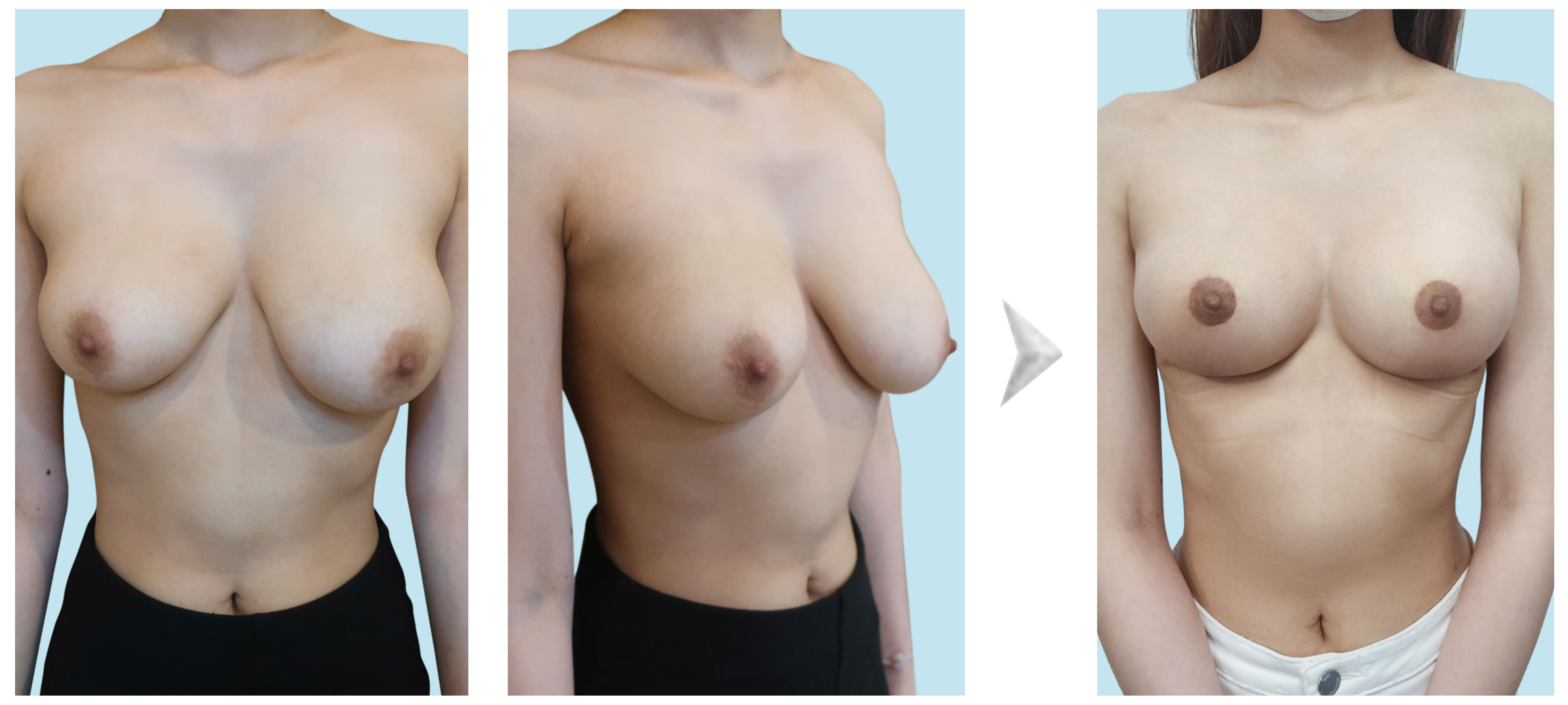
Before-and-after images of a patient with grade 2 breast ptosis, treated with a periareolar skin excision.
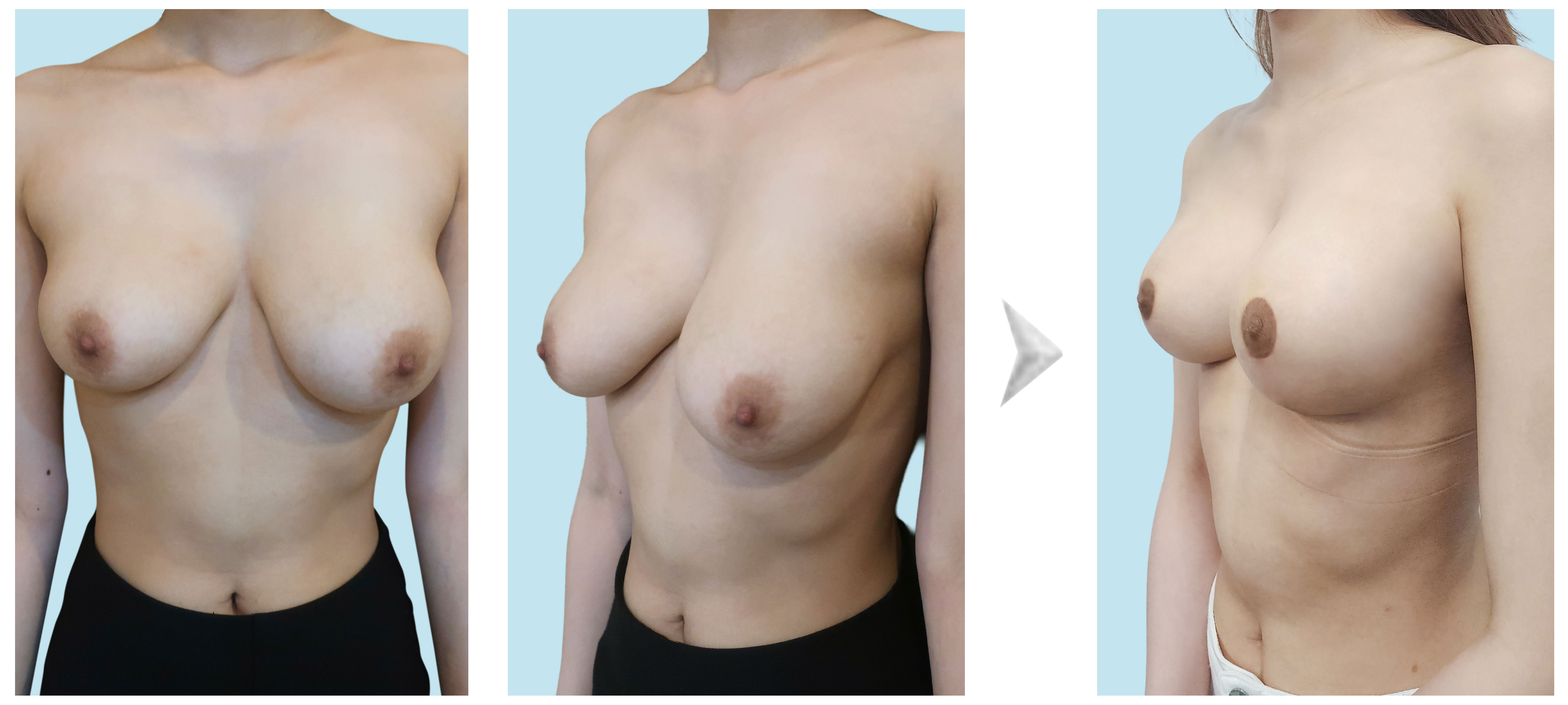
Before-and-after images of a patient with grade 2 breast ptosis, treated with a periareolar skin excision.
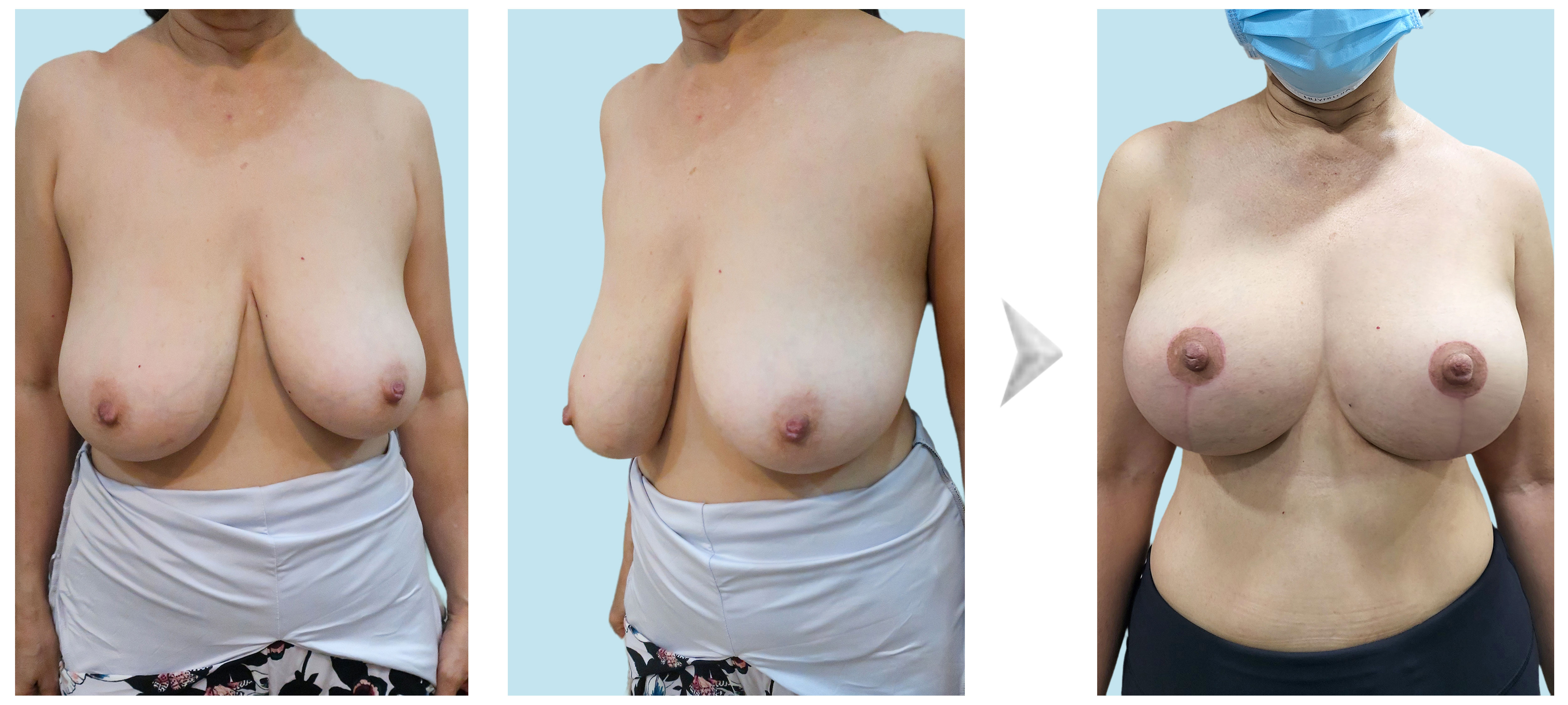
Before-and-after images of a patient with grade 2 breast ptosis greater than grade 2, treated using a vertical scar (lollipop) technique.
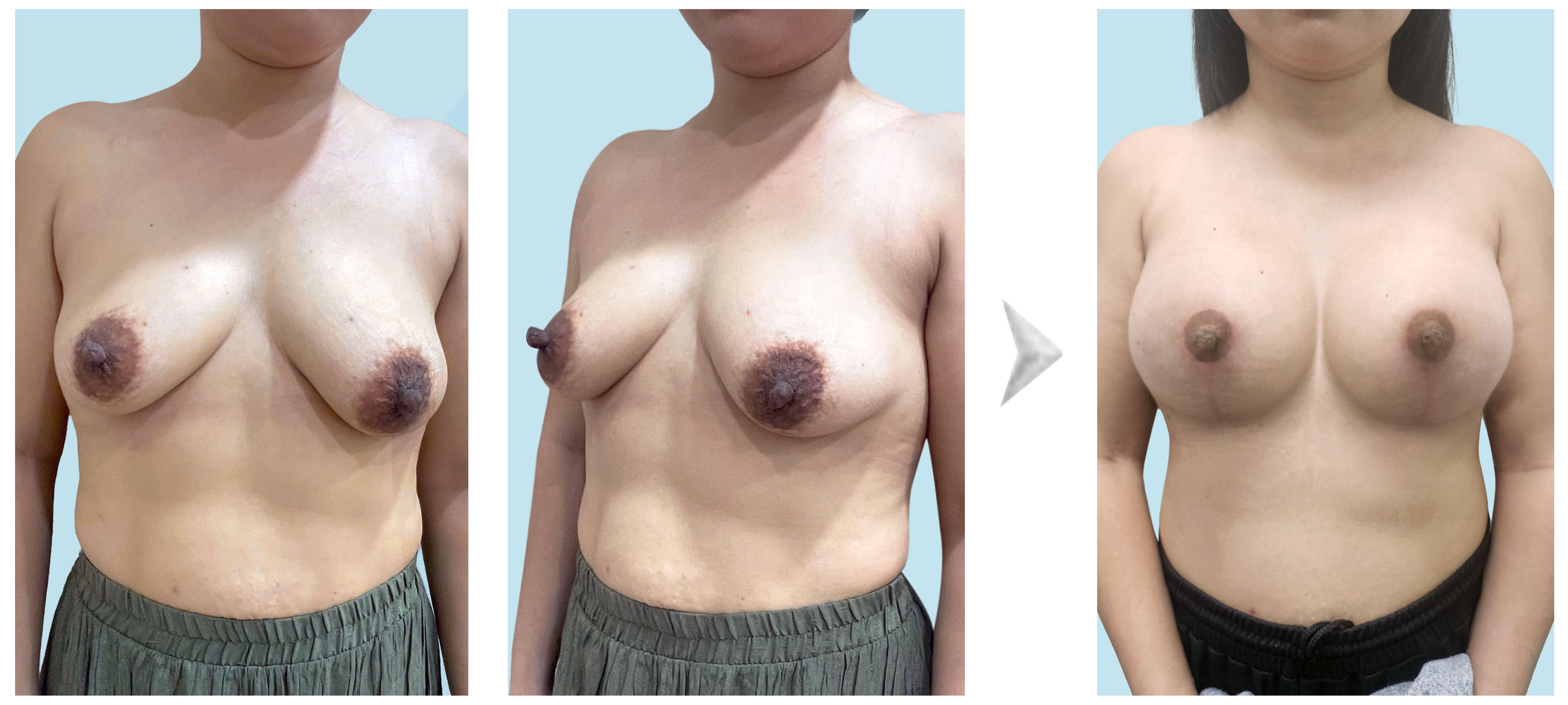
Before-and-after images of a patient with grade 2 breast ptosis, treated using a vertical (lollipop) breast lift technique.
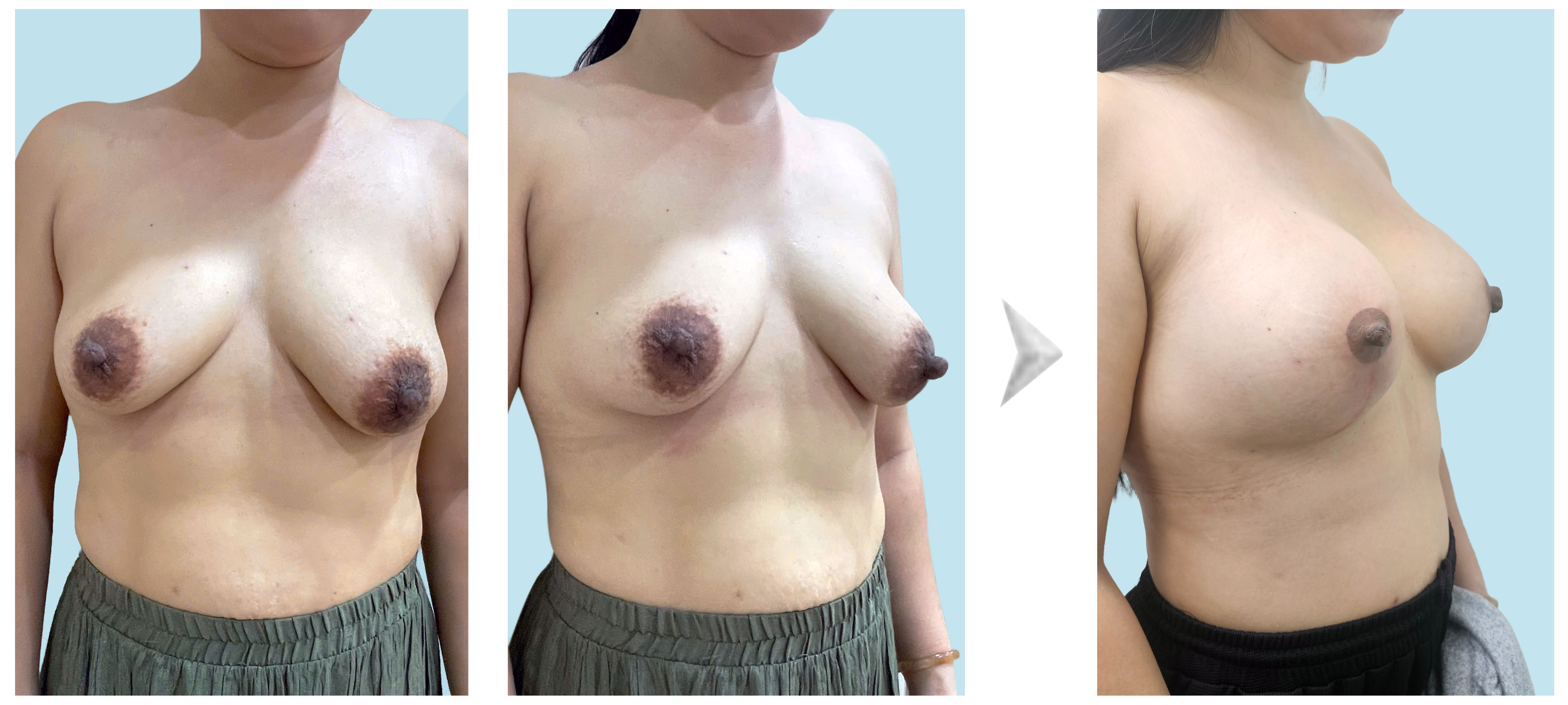
Before-and-after images of a patient with grade 2 breast ptosis, treated with a vertical (lollipop) skin excision technique.

A patient with grade 3 breast ptosis underwent breast lift surgery combined with nipple reduction, shown 1 month after surgery.

An Australian patient with grade 4 breast hypertrophy and ptosis underwent an anchor-pattern skin excision, shown 2 weeks after surgery.

An American patient with grade 4 breast ptosis underwent an anchor-pattern skin excision.

An American patient with grade 4 breast ptosis underwent an anchor-pattern skin excision.
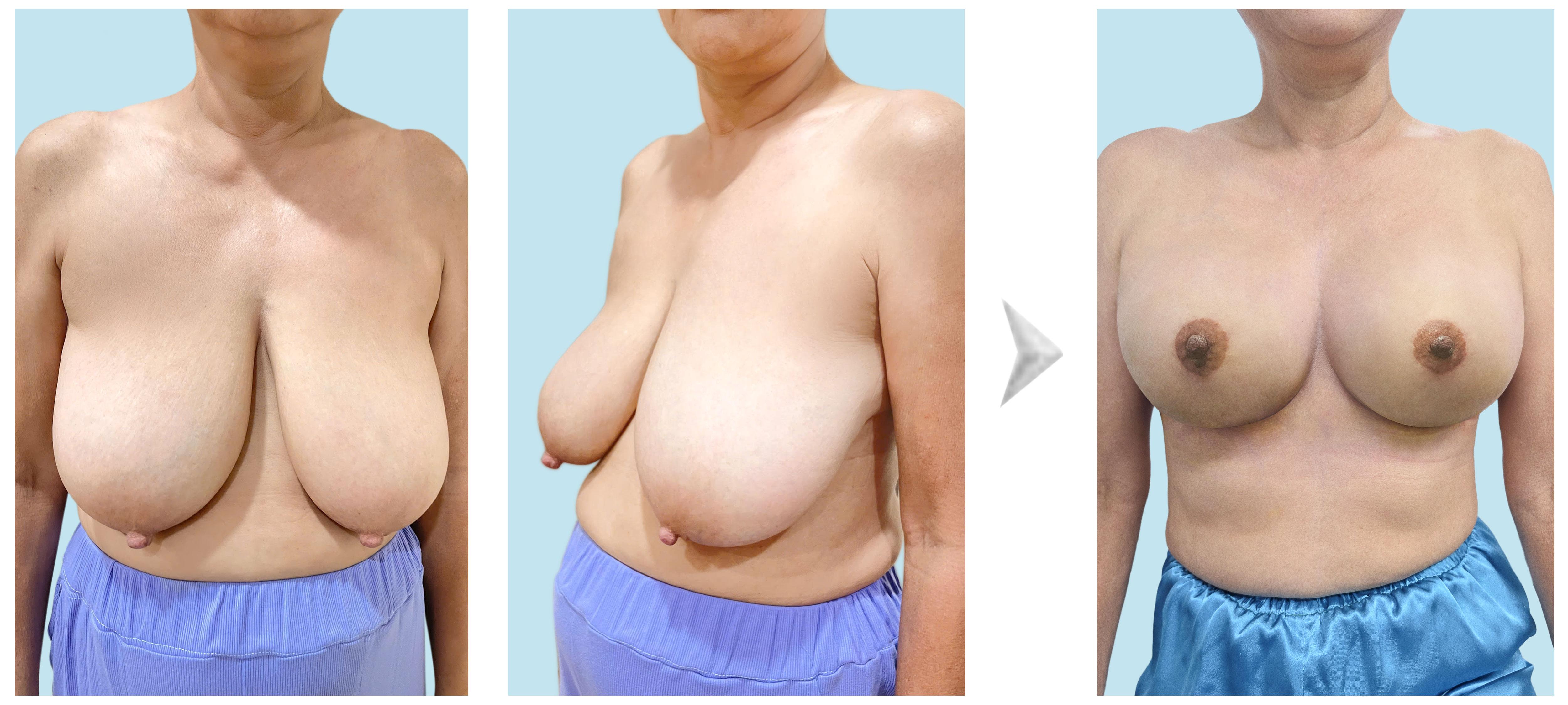
Before-and-after images of a patient with grade 4 breast ptosis, treated without a vertical scar.
Anatomy of the breasts.
Before learning about procedures details, it is crucial to understand the breast anatomy. The breast is composed of various types of tissue: glandular tissue, fatty tissue, and fibrous tissue. Glandular tissue consists of lobes and milk ducts which are responsible for producing and delivering milk to the nipple respectively. The glands inside the breast are surrounded by a layer of fat, which helps form the breast shape and provides softness. Ligaments made of fibrous tissue and connective tissue wind together between these parts and help attach the breast into the chest wall.
Video of doctor Thai performed breasts lift for American customer.
Breast lift - Saggy breast reduction - Dr Thai - Viet My Plastic Surgery hospital
Cause Factors of breast sagging.
1. Aging process.
Many factors can contribute to sagging breasts, but aging and gravity play the most significant roles. Just like facial skin, the skin around the breasts gradually loses its elasticity as the underlying support structure make from collagen and elastin broken down and weakened.
Additionally, gravity also stretch and weaken the ligaments tissue.
2. Pregnancy.
The breasts enlarge during pregnancy and breastfeeding, causing the skin to stretch. When the breasts return to their original size after these periods, the previously stretched skin does not retract accordingly, leading to sagging.
Finally, fluctuations in weight and even hormonal changes also have the similar effects. The combination of these factors can lead to drooping and sagging.
A breast lift will help improve these conditions, enhance the patient's silhouette and help restore their youthful figure.
Techniques Used for Breast Lift and Reduction of Sagging Breasts
During a breast lift procedure, excess and sagging skin is removed, while the remaining skin is tightened.
The procedure helps improve the overall shape of the breasts and raises them to a new, higher position. The doctor will assess the degree of breast sagging to determine which technique is most appropriate for your breasts. Breast ptosis is generally classified into different grades based on the position of the nipple relative to the inframammary fold.
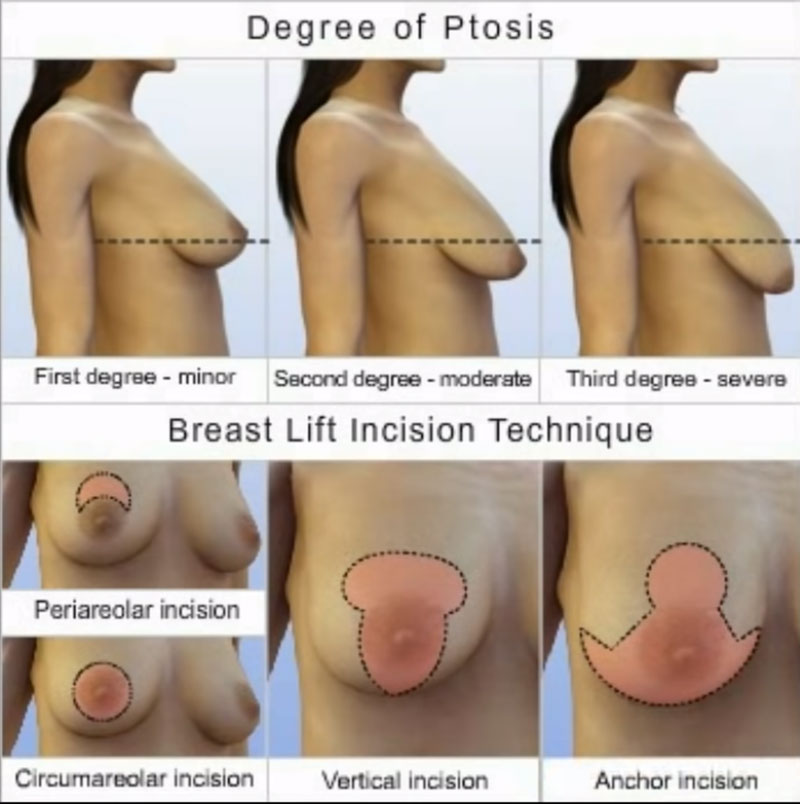
- Grade 1–2 breast ptosis: Sagging is considered mild when the nipple is positioned at the level of the inframammary fold.
- Grade 2 breast ptosis: The areola is positioned 1–2 cm below the inframammary fold
- Grade 3 breast ptosis: The areola is 2–3 cm below the inframammary fold.
- Grade 4 breast ptosis: The areola is positioned more than 3 cm below the inframammary fold.
Depending on the degree of breast ptosis, the doctor will select the most appropriate breast lift technique.
- Grade 1–2 breast ptosis: The doctor may use a crescent breast lift through an incision above the areola or a periareolar breast lift using a circular incision.
- Grade 2 breast ptosis: A vertical breast lift technique may be used.
- Grade 3 breast ptosis: An anchor breast lift (Anchor Mastopexy) may be appropriate.
- Grade 4 breast ptosis: An anchor breast lift or a breast lift without a vertical scar may be considered.
Crescent/Periareolar Technique for Postpartum Breast Ptosis
The crescent breast lift technique used for reducing sagging breasts involves making a crescent-shaped incision around the upper portion of the areola. This is a minimally invasive breast lift technique that provides a relatively limited degree of lifting. Therefore, it is generally suitable for patients with smaller breasts or mild breast sagging.
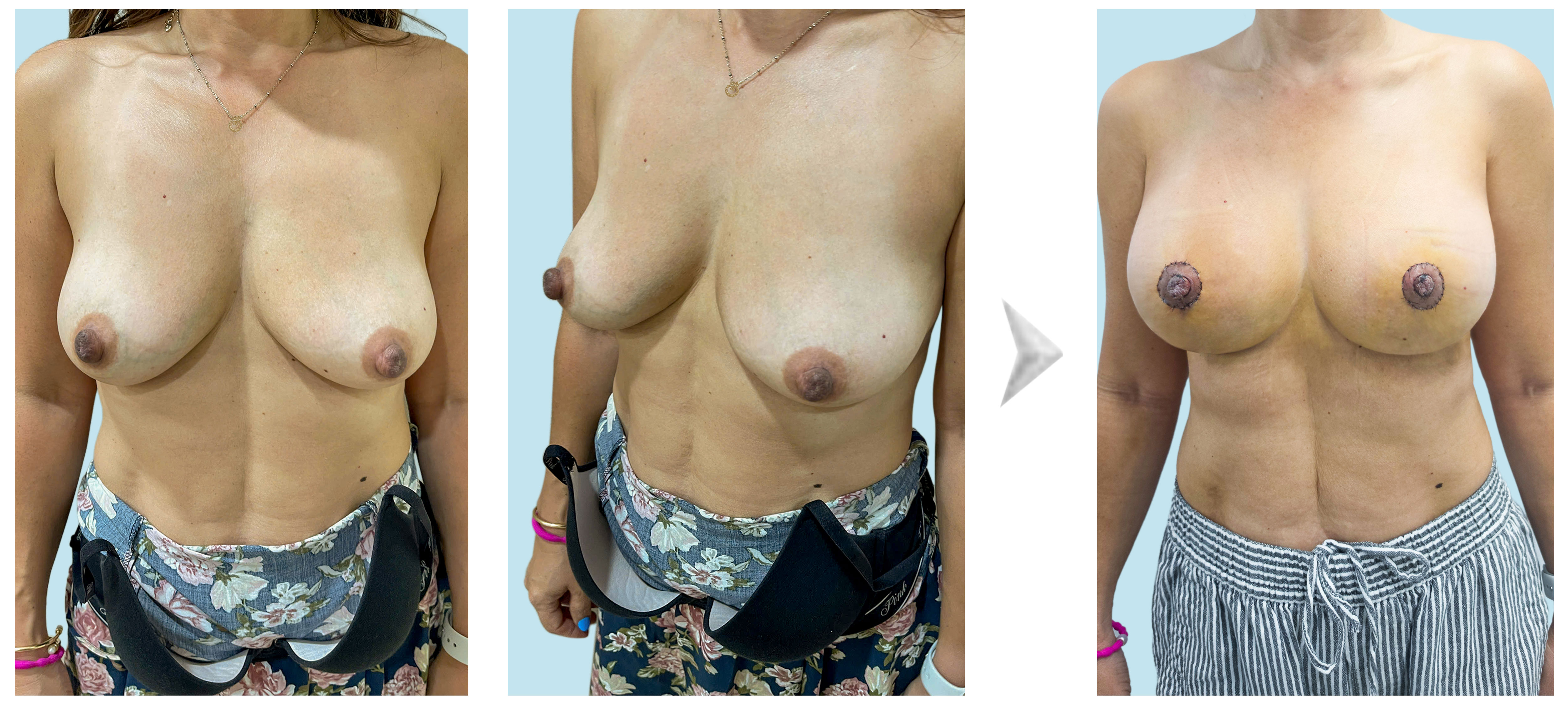
Before-and-after images of a patient who underwent skin excision and breast lift, shown 1 day after surgery after suture removal.
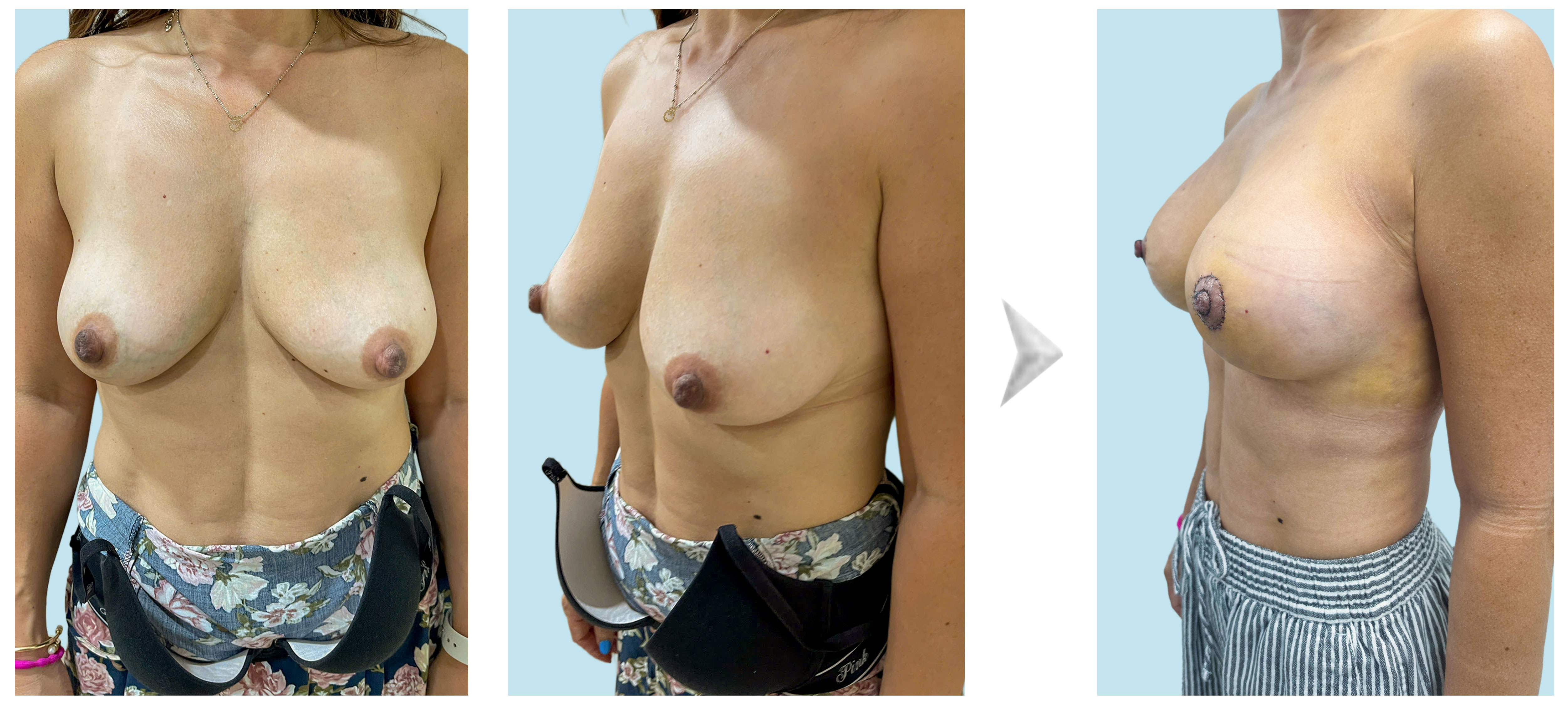
Before-and-after images of a patient who underwent skin excision and breast lift, shown 1 day after surgery before suture removal.
Periareolar (Circular) Technique for Postpartum Breast Ptosis
This breast lift technique is used for Grade 1–2 breast ptosis. The procedure involves making a circular incision around the areola. It is a minimally invasive technique that provides a relatively modest lifting effect. Therefore, it is generally suitable for patients with smaller breasts or mild breast sagging.
Vertical Technique: The vertical technique involves an incision extending around the upper portion of the areola and continuing downward along the vertical midline of the breast. Although this technique involves a relatively limited degree of tissue intervention, it can provide a greater lifting effect. Therefore, it may be suitable for patients with larger breasts and moderate to significant breast sagging.
Vertical Technique, Also Known as a Periareolar Incision Combined With a Vertical Scar
This breast lift technique is used for Grade 2 breast ptosis. The procedure involves making an incision around the areola combined with a vertical incision extending straight downward from the areola to the inframammary fold.
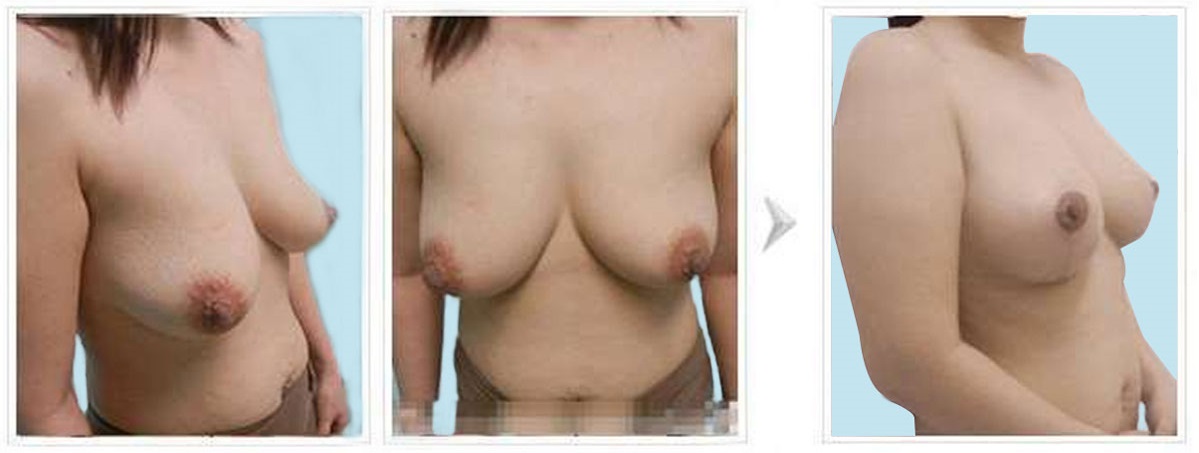
Before-and-after images of a patient with grade 2 breast ptosis, treated using a vertical scar technique.
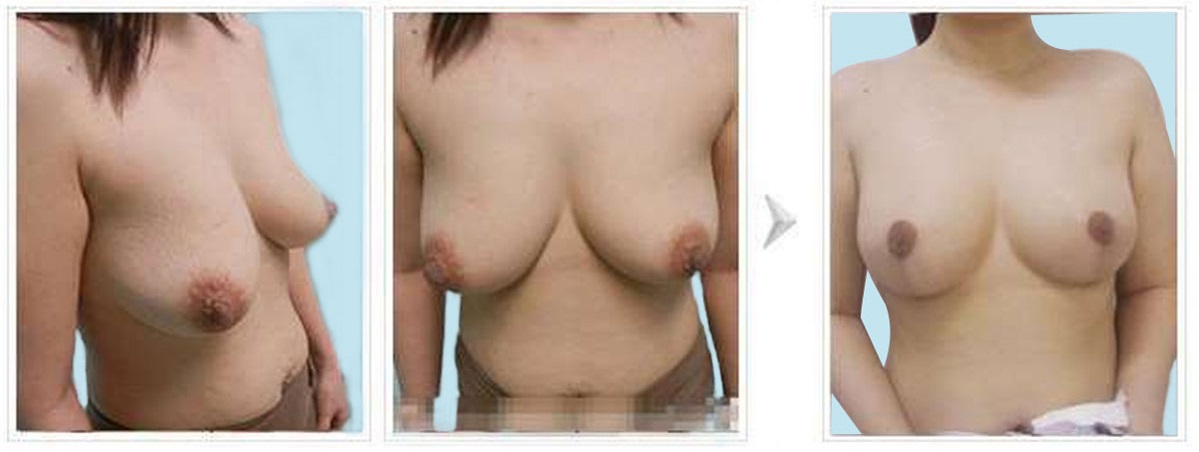
Before-and-after images of a patient with grade 2 breast ptosis, treated using a vertical scar technique.
Anchor-Pattern Technique for Breast Lift or Reduction of Sagging Breasts
This breast lift technique is used for Grade 3–4 breast ptosis. The procedure involves an anchor-shaped incision extending around the areola and downward toward the inframammary fold. Because this technique requires more extensive intervention in the breast tissue, it is generally suitable for patients with larger breasts and significant breast sagging, particularly Grade 3–4 ptosis.
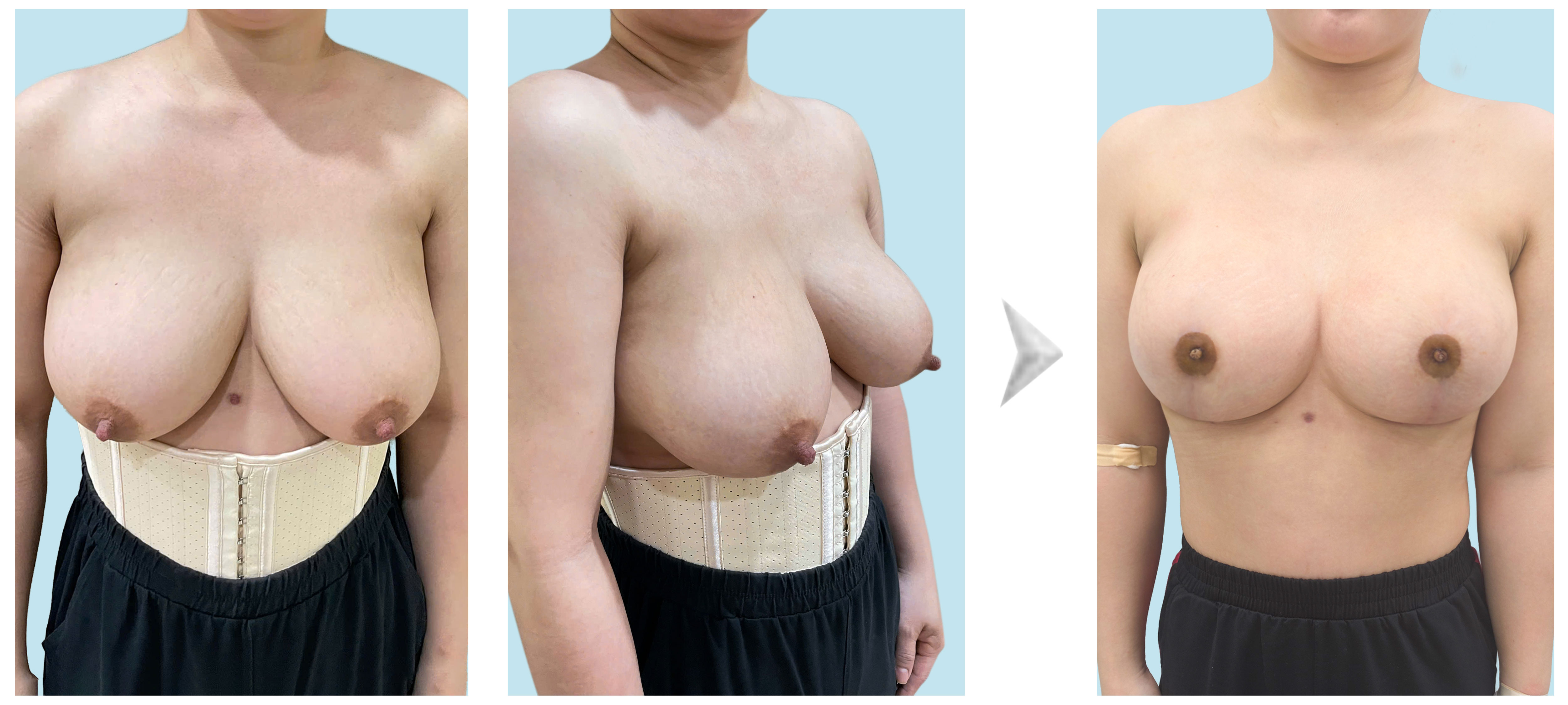
Before-and-after images of a patient who underwent an anchor-pattern skin excision combined with a breast lift.
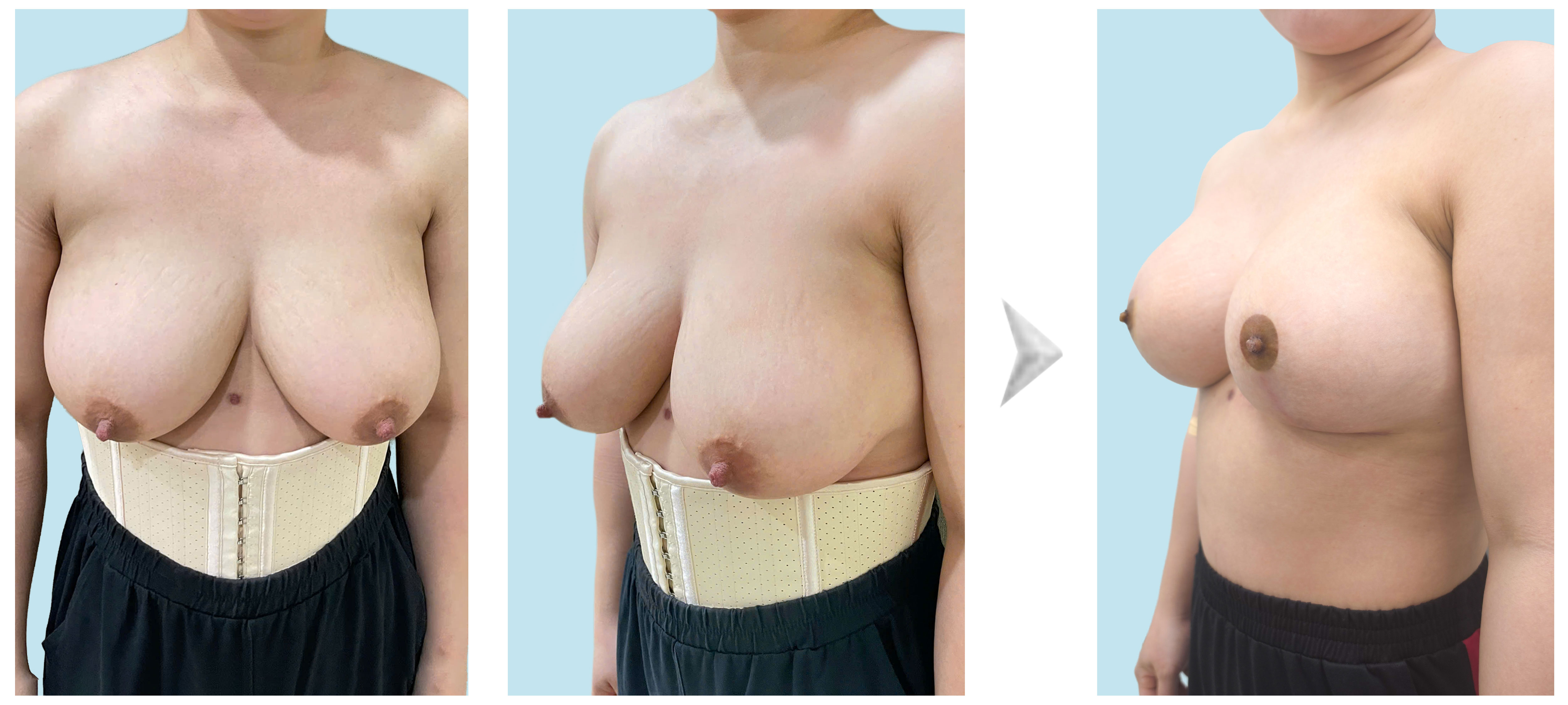
Before-and-after images of a patient who underwent an anchor-pattern skin excision combined with a breast lift.
Inframammary and Periareolar Technique Without a Vertical Scar, Also Known as a Vertical-Scar-Sparing Breast Lift
This technique involves making a circular incision around the areola together with an incision that follows the inframammary fold. The advantage of this method is that it avoids the vertical scar associated with the traditional anchor-pattern technique.
Disadvantage: Only used for breasts with severe sagging, particularly Grade 4 ptosis, and the scar along the inframammary fold may be relatively long.
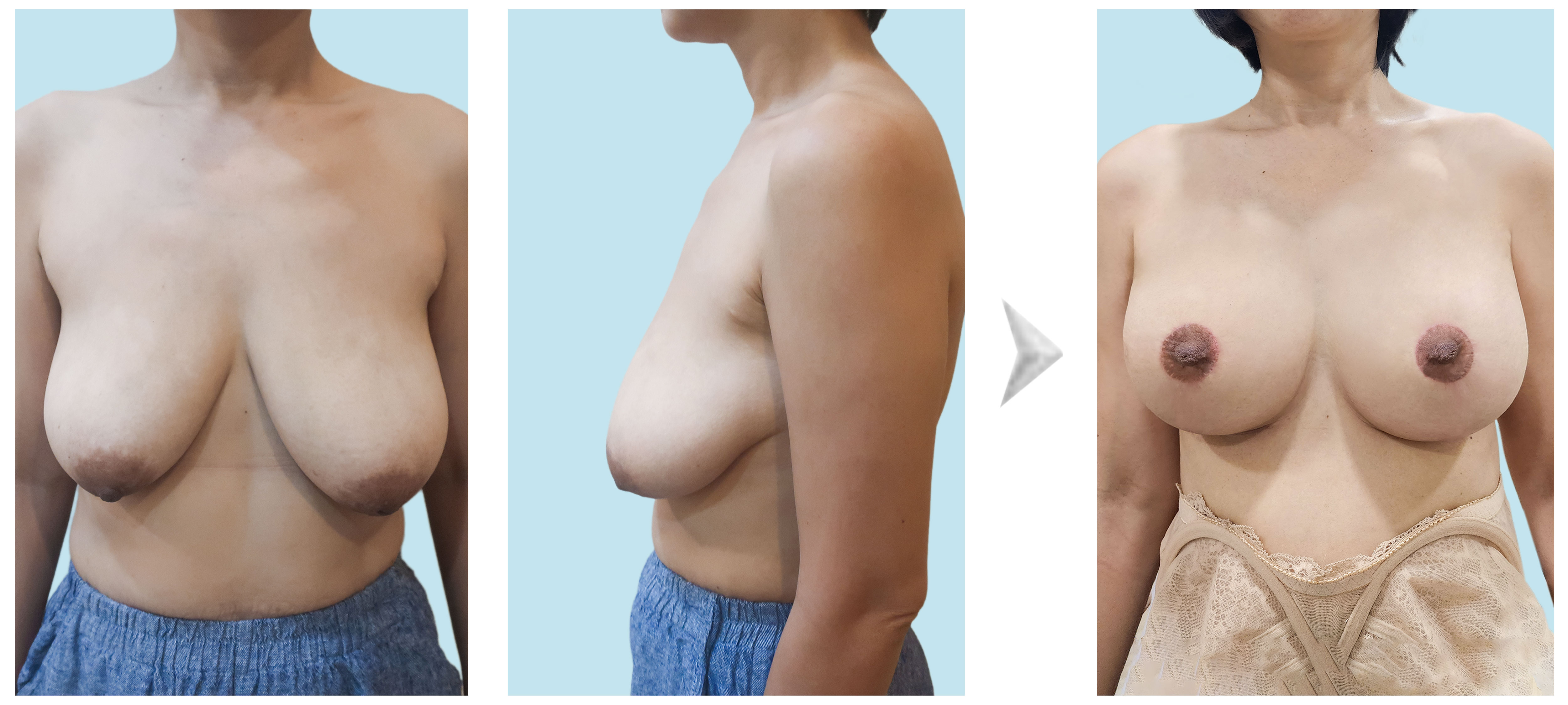
Before-and-after images of a patient with breast ptosis, treated without a vertical scar.
The Anchor Line Incision technique.
This technique make an anchor-shaped incision that extends around the upper part of the nipple and down to the lower part of the breast. Although this procedure involves significant intervention to the breast. Therefore, this technique is suitable for individuals with large and significantly sagging breasts.
Procedure preparation.
Because this is a complex surgery, you need to choose a prestigious cosmetic hospital for the procedure.
The procedure may take between one to four hours, depending on the complexity of the operation. Before starting the surgery, the treatment area will be cleansed. Doctors typically use general anesthesia to make patient sleep through the entire procedure.
Finally, the surgeon will mark the areas of skin that will be removed during the surgery.
Procedure details
The procedures will have multiple steps:
- Create incision: The surgeon carefully uses a scalpel to make an incision along the pre-marked line.
- Remove excess skin: The dissected skin will be separated and removed.
- Lift the breast: The surgeon will lift the breast tissues and fixed them to the higher position.
- Areolar fixation: The areola will be fixed onto the outermost, highest sections of the incisions.
- Incision closure: The surgeon closed the incision and put surgical drain into each breast to help reduce swelling
Post-operative care for breast lift or breast reduction.
You will be required to wear compression garment for 1 to 4 weeks. This helps reduce swelling by preventing fluid build up and provides support during the recovery period. You may experience mild pain, bruising, swelling, or numbness around the areola, but these symptoms should subside in a few weeks.
After a week, you are able to return to work, but you should continuously avoid strenuous activities like exercise for at least three or four weeks after surgery.
Expected outcome.
You will notice a significant difference in the shape and position of your breasts immediately after the procedure. You will continue to see improvements in the appearance of your breasts as the swelling subsides and they settle into their new position. Over time, the scars will fade away.
* The final results also depend on individual physiology.