I. What is FUT Hair Transplantation?.
FUT (Follicular Unit Transplantation) is a surgical hair transplant technique in which the surgeon removes a small strip of scalp containing healthy hair follicles from the donor area (typically the back of the head). These follicles are then carefully dissected into individual follicular units (1–4 hairs each) and transplanted into areas affected by hair loss or thinning.
The FUT method can be combined with the CHOI implanter pen, allowing precise control over the angle, depth, and direction of each graft. With this approach, follicles can be implanted directly into the scalp without pre-made incisions, improving efficiency and accuracy.
1. CHOI Pen in FUT Technique
- The CHOI pen, also known as a CHOI hair implantation pen, is a specialized medical device designed in a pen-like structure, featuring a spring mechanism and a hollow needle tip (0.5–1.5 mm).
- This device allows direct implantation of harvested follicles into the scalp without the need for prior hair follicle incision. As a result, the FUT procedure can be simplified into two main stages: follicle harvesting and implantation.
- The CHOI pen enables surgeons to precisely control each graft, ensuring highly accurate and similar outcomes. Additionally, grafts do not require prolonged storage in solution. Instead, follicles are implanted immediately after harvesting, helping improve graft survival rates and overall successful rate of the procedure.
2. Advantages.
+ FUT technique is a traditional hair transplant method involving the extraction of a small strip of scalp from the donor area.
+ Follicles are divided into small graft units (1-4 hairs) for natural density and appearance.
+ Although the procedure may leave a thin linear scar, recovery is typically fast and results are highly natural-looking.
+ Suitable for patients with dense donor hair and larger transplant areas.
3. Who is Suitable for FUT Hair Transplant?.
- Individuals with thick, healthy donor hair: FUT requires a strong and healthy donor area (back of the head) with good density.
- Those seeking long-term, permanent hair restoration results: FUT ensures long-lasting results with a high success rate.
- Individuals who are not concerned about a small linear scar at the back of the scalp: The procedure may leave a thin linear scar at the donor area (back of the head).
II. Comparison Between FUT and FUE.
FUT Hair Transplant.
|
FUE Hair Transplant.
|
|
- May incorporate the CHOI implantation pen
|
- Uses a micro-motor punch or specialized surgical blade
|
|
- Grafts are implanted immediately after harvesting, helping reduce overall procedure time
|
- Extracted grafts are stored in a specialized preservation solution
|
|
- Achieves approximately 30–45 grafts/cm²
|
- Achieves approximately 45–60 grafts/cm²
|
|
- Maximum grafts per session: around 3,000 grafts
|
- Maximum grafts per session: up to 5,000 grafts
|
|
- Shaving may or may not be required
|
- Shaving is required
|
III. The Procedure of FUT Hair Transplantation.
The FUT hair transplant procedure is performed under local anesthesia and typically takes 6–8 hours for approximately 2,000 grafts.
Step 1: Consultation.
- A dermatologist conducts a comprehensive evaluation, including the cause and pattern of hair loss, progression of hair thinning, hair characteristics (thick or thin), the patient's expectations, age, gender, and medical history.
- The hairline is designed based on natural proportions and aesthetic goals. The recipient area is determined according to the number of grafts required and donor availability. Suitability for FUT depends on the degree or severity of hair loss.
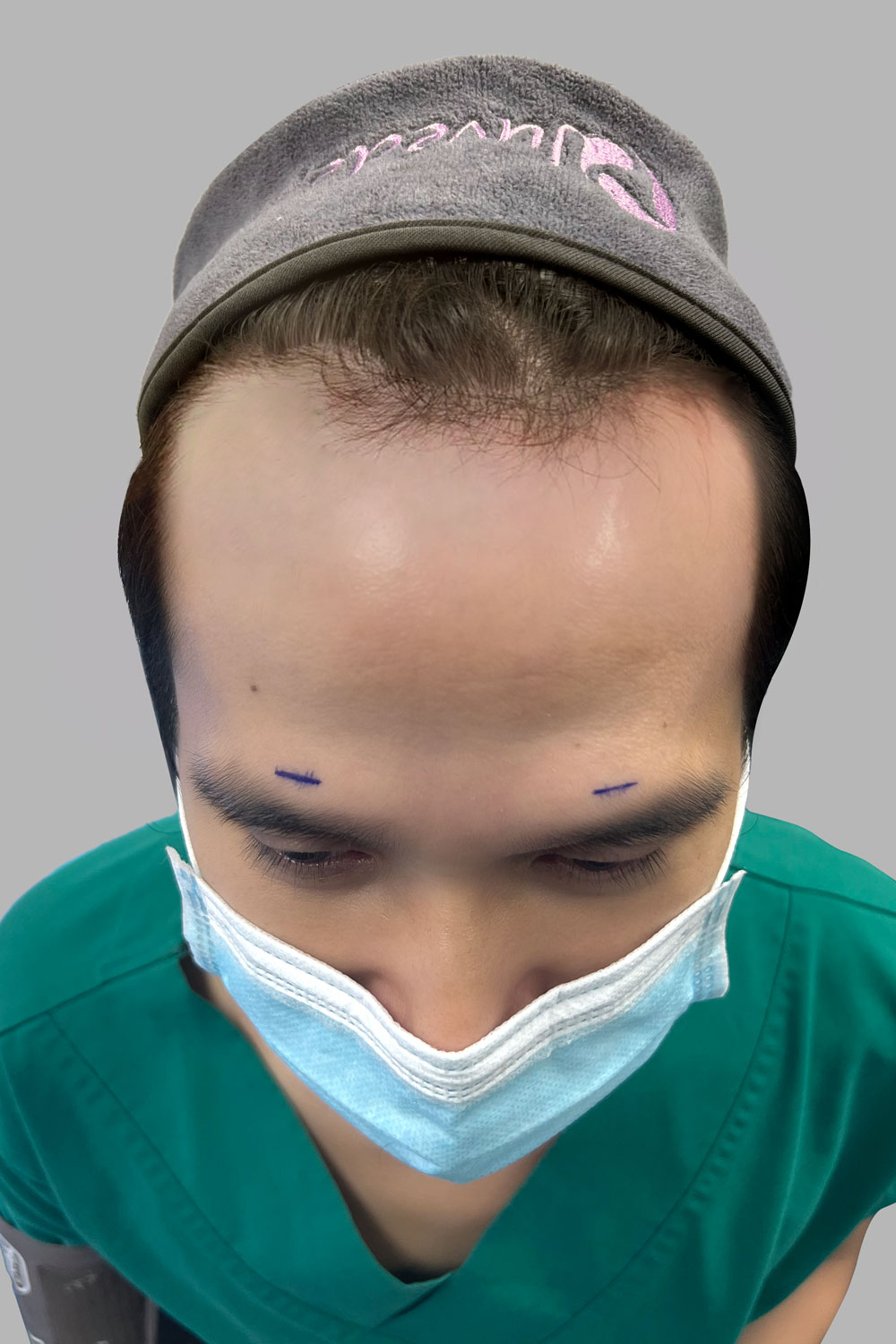
Step 2: Preparation.
- Pre-operative tests such as HIV, Hepatitis B, and Hepatitis C are conducted. Hair may be trimmed or shaved, depending on the number of grafts required. For cases with fewer grafts, shaving may not be necessary. After sterilization, the patient is prepared for local anesthesia.
Step 3: Local Anesthesia.
- Local anesthesia is administered to the donor area to ensure a comfortable, pain-free experience during the procedure.
Step 4: Follicles Harvesting.
- The surgeon makes an incision and extracts a strip of scalp from the donor area. This area is then closed using sutures.
- The scalp strip with hair is divided into small sections to separate into individual hair follicles, and preserved in a special solution.

Step 5: Loading the hair follicles into the pen.
- If the CHOI pen is used, each follicle is carefully loaded into the implantation device. Each graft is inserted into the needle tip individually, eliminating the need for traditional tools such as forceps or tweezers.

Step 6: Implantation into the scalp.
- The surgeon creates recipient sites using a Sapphire blade, helping to achieve an optimal hair density, natural growth direction, and balanced thickness and distribution.
- Each follicle is then implanted according to the pre-designed plan.
- When using the CHOI pen in FUT, follicles can be implanted directly without prior incision creation. The incision and implantation occur simultaneously, helping reduce procedure time and tissue trauma.
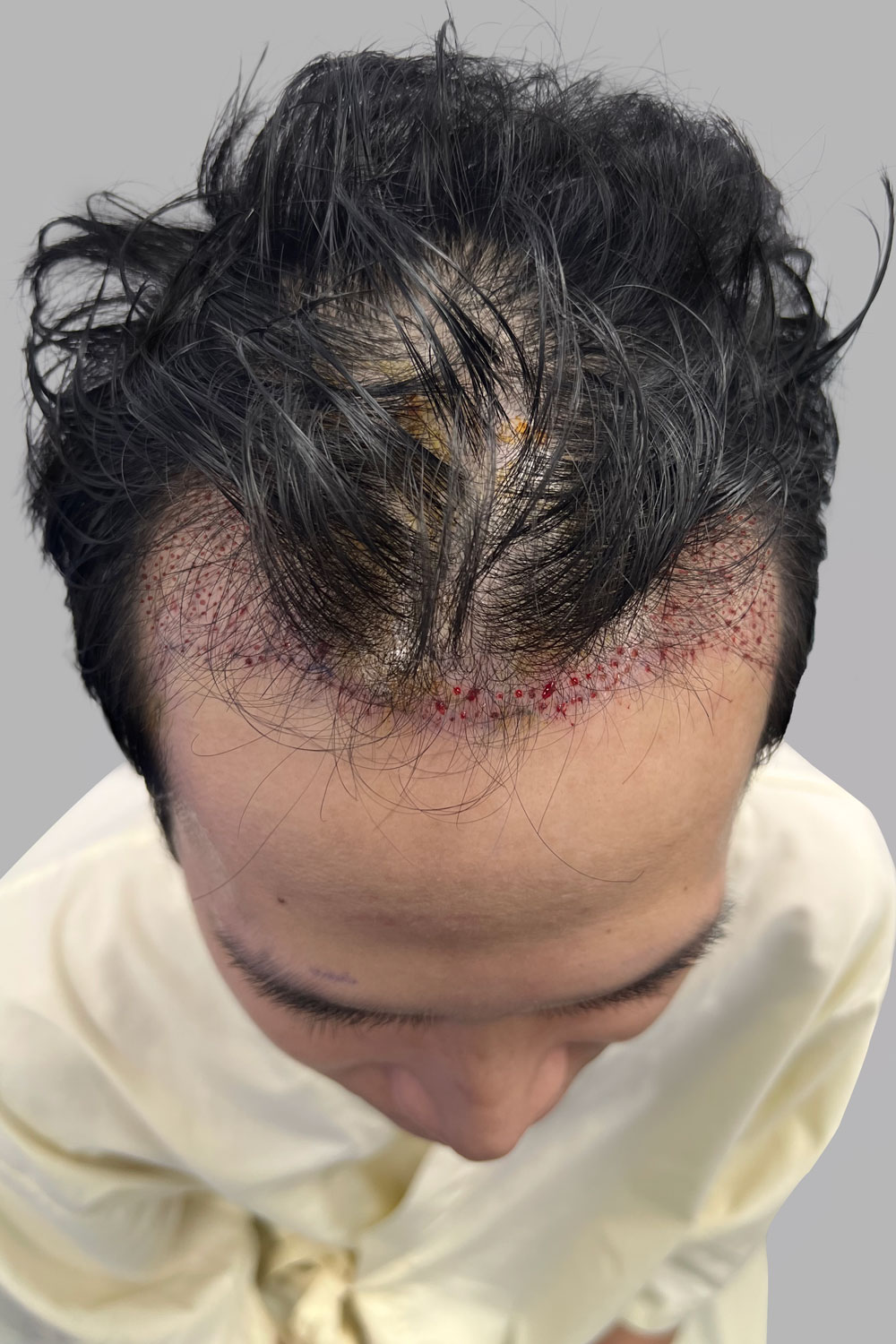
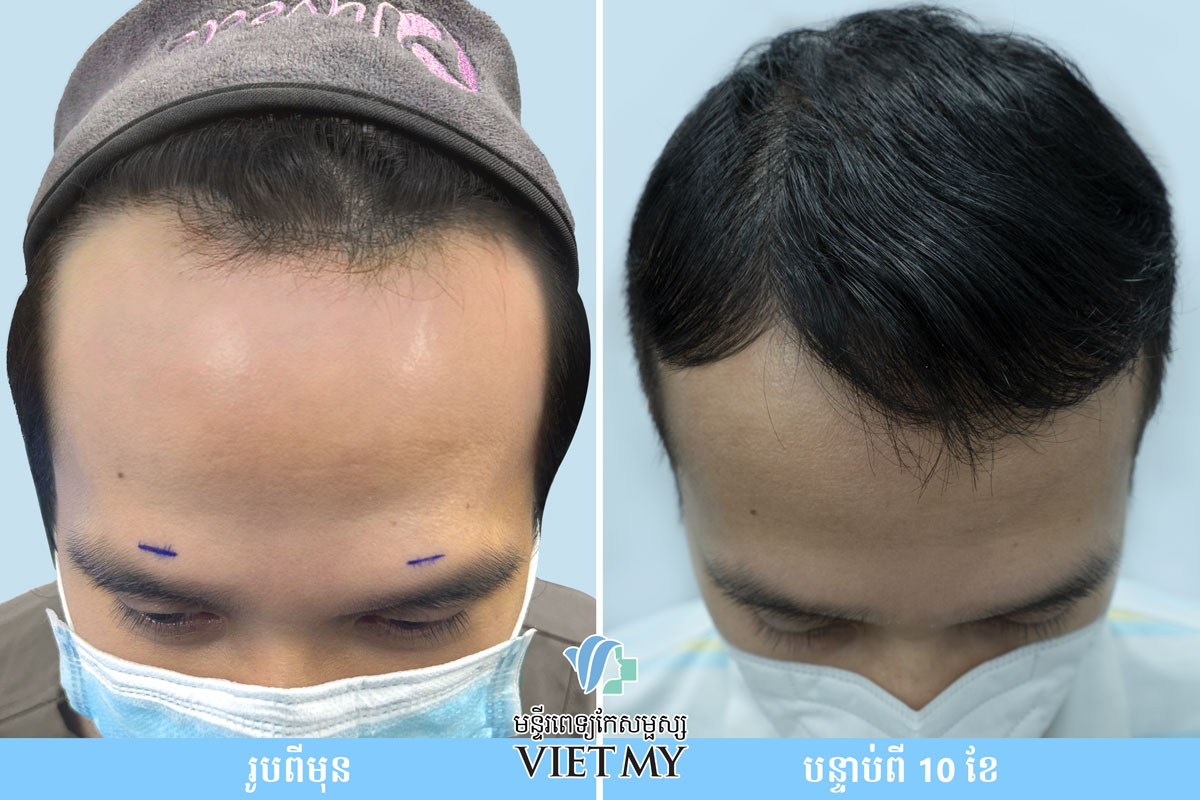
Step 7: FUT Hair Transplant Results.
For individuals experiencing frontal hair loss, the FUT method provides effective, natural-looking, and long-lasting results. The doctor will recommend the most suitable treatment plan based on each individual’s condition to ensure optimal outcomes.
|
Hair Transplant Price
|
|
Manual Direct Hair Implantation (DHI) (40.000vnd/follicle) (50% off)
|
20.000vnd/follicle
|
|
Robotic hair transplant (100.000vnd/follicle) (50% off)
|
50.000vnd/follicle
|
|
Hairline lowering surgery
|
50.000.000vnd
|
|
*Upon arrival at the hospital, clients will undergo a personalized consultation and examination with a specialist. The doctor will then assess the recipient area, evaluate and determine the exact number of grafts required for optimal results.
*The total cost of the hair transplant procedure is calculated based on the number of grafts needed multiplied by the price per follicle.
|
More on this topic:
+ Hair Transplant Using ARTAS Robot
+ AI-Powered Robotic Hair Transplantation
+ Direct Hair Implantation (DHI)
* The final result also depends on each individual's physiology.