I. Scar Treatment Methods
Scar treatment focuses on improving both the appearance and structural quality of scar tissue by addressing issues such as raised or depressed scars, skin contracture, and uneven texture or discoloration.
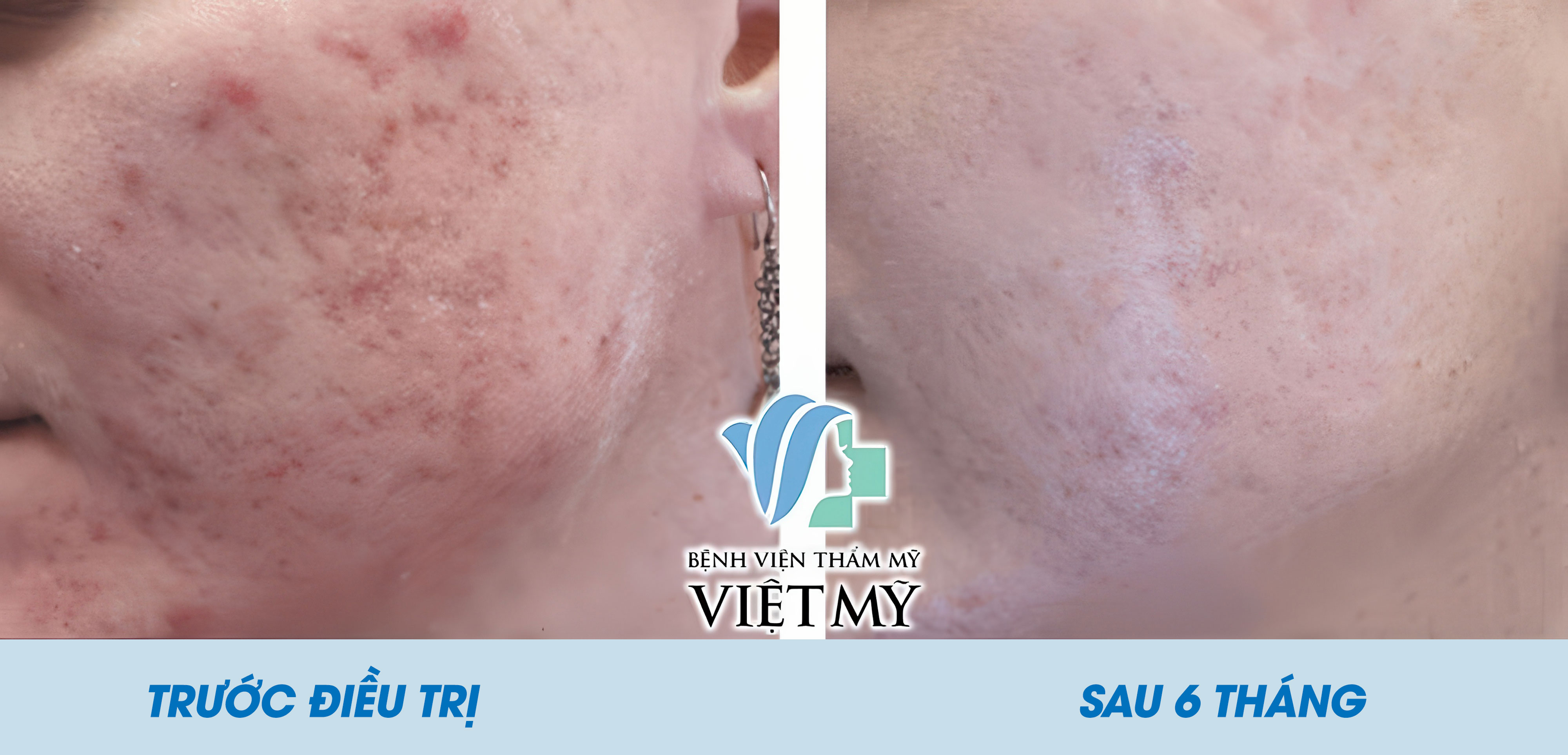
Client before and after undergoing scar treatment.
1. Benefits of Scar Treatment
Scar treatment provides multiple benefits:
- Improved Skin Appearance: Advanced scar treatments enhance skin texture and scar quality, making scars less noticeable, softer, and closer in appearance to normal skin. However, scars cannot be completely eliminated.
- Improved Skin Health: Treatment methods typically stimulate collagen production, helping restore and improve skin structure over time.
- Improved Functional Movement: For certain scars—especially contracture scars, which can create tension across joints, limiting mobility, treatment helps release this tension and restore normal movement.
- Psychological & Emotional Benefits: Reducing visible scars can boost self-confidence and self-image, while reducing anxiety related to unwanted attention about visible scars.
2. Scar Formation
Scars form when the body produces new tissue to repair skin damage caused by injury. Initially, scars are rich in collagen and appear dark red. Over time, they gradually fade but may leave visible discoloration: Hyperpigmented scars (more common in darker skin tones) and hypopigmented scars (common in lighter skin tones).
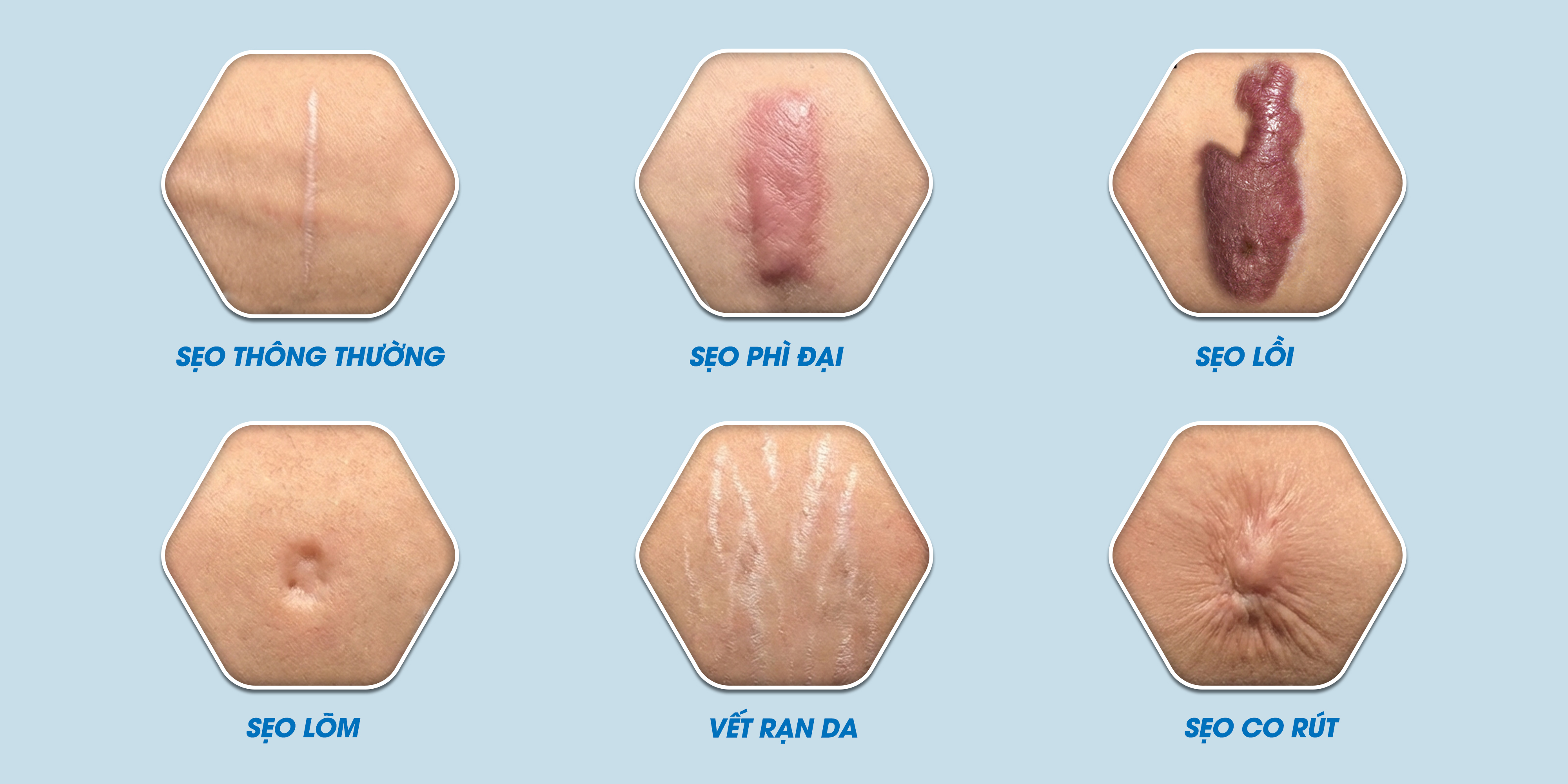
Types of Scar Formation Requiring Treatment
|
Scar Types
|
Characteristics
|
Cause
|
Treatment
|
|
Flat scars
|
|
|
- Laser therapy may help improve pigmentation
|
|
Hypertrophic scars
|
- Develop in injured skin areas or open wounds.
- Remain within the original wound boundaries
- Often occur in high-tension areas (like chest, shoulders, joints)
- Raised, thick, and firm compared to the surrounding skin area
- Initially red or pink.
- Forms about 2 weeks after injury
- Can be uncomfortable.
|
- Excess collagen production during the healing process causing surface unevenness between the scar tissues and surrounding skin
|
- Triamcinolone injections.
- Using silicone gel.
- Laser therapy.
- Surgical revision.
- Mild cases may improve over time.
|
|
Keloid scars
|
- Similar to hypertrophic scars but extend beyond the original wound.
- Do not regress naturally.
- Initial colors range from red to purple.
- Develop over several months to more than a year.
|
- Overproduction of collagen, leading to elevated scars
- New collagen fibers form in an abnormal pattern rather than running parallel to the skin surface.
|
- Similar to hypertrophic scar treatment
|
|
Atrophic scars
|
- Irregular, deeply sunken areas appear on the skin with uneven structure and tone.
- Formed after open wounds, severe acne, chickenpox, or injections
|
- Deep skin damage.
- Loss of underlying tissue
- Insufficient or uneven collagen production.
|
- Dermal fillers to restore volume.
- Skin regeneration–stimulating treatments:
- Chemical peels
- Microneedling
- Surgical scar revision.
|
|
Stretch marks (Striae)
|
- Occur when the body rapidly gains weight or sudden changes in size.
- Common with obesity, pregnancy, or rapid muscle.
|
- The skin does not expand fast enough to accommodate the underlying tissues
|
- Laser therapy.
- Surgical scar revision.
|
|
Contracture scars
|
- Tight, restrictive scars that pull surrounding skin.
- Often occur after severe injuries or burns.
- May limit movement, especially near the joints.
|
- Fibroblasts participate in the scar healing process.
- Fibroblast activity causing excessive contraction.
|
- Limited response to non-invasive methods.
- Skin grafting surgery: Replacing scar tissue with healthy skin
- Flap surgery to release tension and restore mobility.
|
3. When Is Scar Revision Surgery Necessary?
Surgical scar treatment is indicated in the following cases:
- Contracture scars: When scars restrict movement or impair function
- Scars in prominent areas: Large or visible scars (face, neck, hands) affecting aesthetics and psychology
- Scars not aligned with natural skin tension lines: Perpendicular or irregular scars that are not aligned with natural skin tension lines, leading to poor healing and more noticeable.
4. Principles of Scar Revision Surgery
Skin tension lines are natural lines where the skin experiences the most mechanical stress.

Skin tension lines map
In scar revision and aesthetic surgery, incisions are designed along these lines to reduce tension on the wound. This provides several benefits:
- Optimizes the scar formation: Minimizes tension on the surgical incision as the scar heals.
- Minimizes wound contraction: Prevents contracture scars and related complications
- Improves aesthetics: After surgery, the scar is leveled, and blended naturally with the surrounding skin.
Scar revision surgery aims to reposition scars along these natural lines, improving both function and appearance.
II. The Procedure of Scar Revision Surgery
Surgical preparation: Appropriate anesthesia is selected based on scar size, location, and complexity.
Surgical techniques:
1. For simple scars: The doctor utilizes the Z-plasty technique to reorient and reduce tension

Illustration of Zplasty applied to reorientate scars to align with nasolabial folds
2. For more complex or contracture scars: If scar revision by reorientation alone is not feasible, the doctor may fully remove the scar tissue and restore the affected area with flap surgery or a skin graft from another part of the body.
Wound Closure: The incision is carefully sutured to ensure optimal cosmetic results and reduce the risk of new scar formation.
III. Recovery and Post-Operative Care
Full recovery typically takes up to 12 months. Patients must strictly adhere to medical instructions for optimal results.
First 10 days:
- Swelling and bruising are common but improve within 1 week
- Sutures are removed after about 10 days
- Minimize movements that strain the treated area
First 2 months:
- Avoid exercise and heavy lifting
- Light activities may resume after 2 weeks
General Care Guidelines:
- Keep the treated area clean and dry
- Apply prescribed topical medications
- Avoid stretching or stressing the wound
- Protect from sun exposure and dust
- Attend all follow-up appointments
Related topic:
+ Melasma, scars, tattoo removal treatment
+ Non-surgical aesthetic treatment price list
* The result achieved also depends on each individual's physiology.