Over time, the skin and soft tissues of the face gradually lose elasticity, leading to sagging cheeks, deeper nasolabial folds, and a less defined jawline. When these signs of aging become more pronounced, skincare treatments or nonsurgical facial rejuvenation procedures may not provide the desired level of improvement.
Deep Plane Facelift (deep-layer facelift) is a facial rejuvenation surgical technique that addresses deeper tissue structures rather than simply tightening the skin's surface. This approach aims to reposition sagging soft tissues, improve facial contours, and create a more youthful, harmonious appearance.
What Is a Deep Plane Facelift?
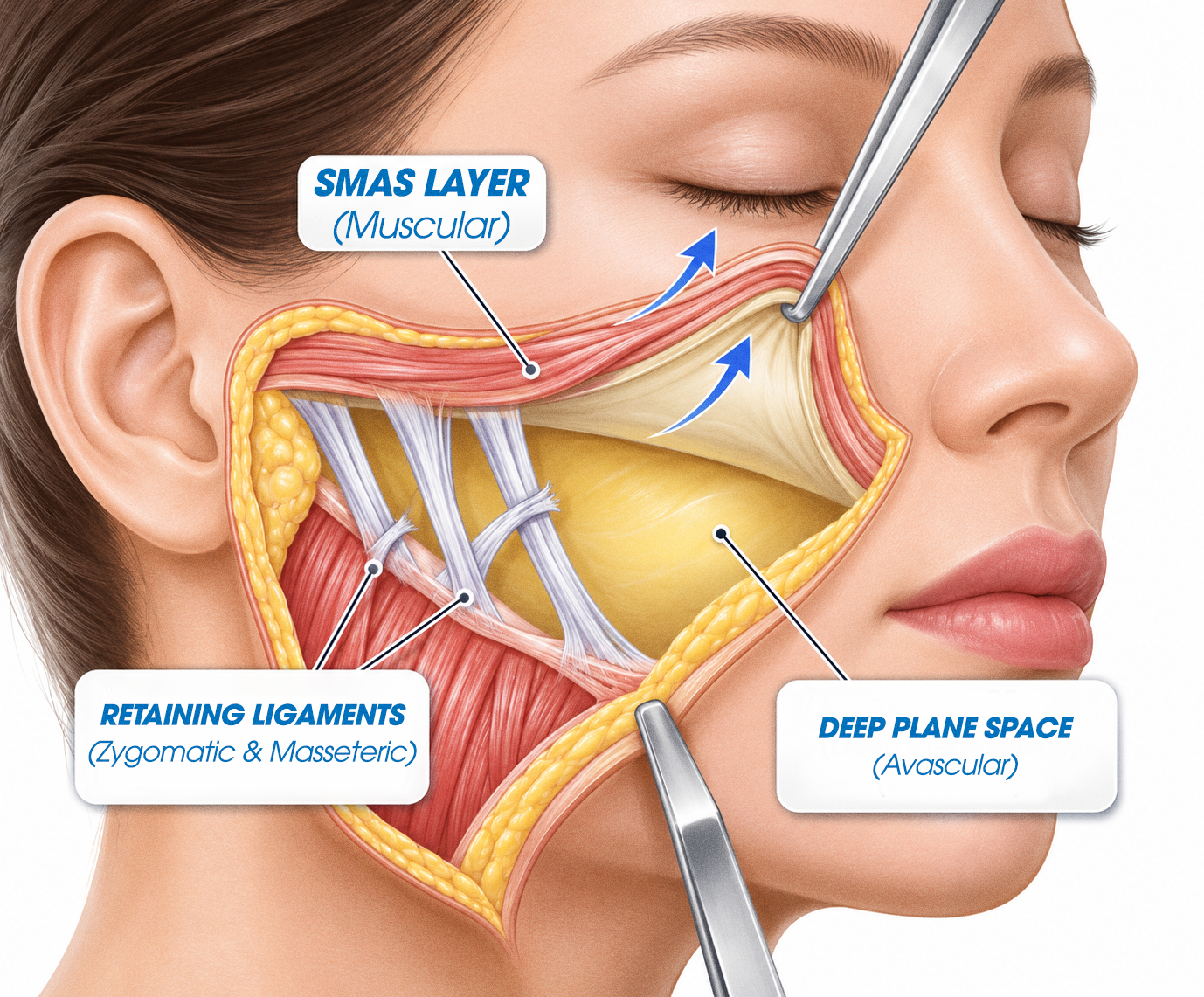
A Deep Plane Facelift is a surgical facelift technique that involves dissecting and lifting tissues in an anatomical plane beneath the superficial musculoaponeurotic system (SMAS).
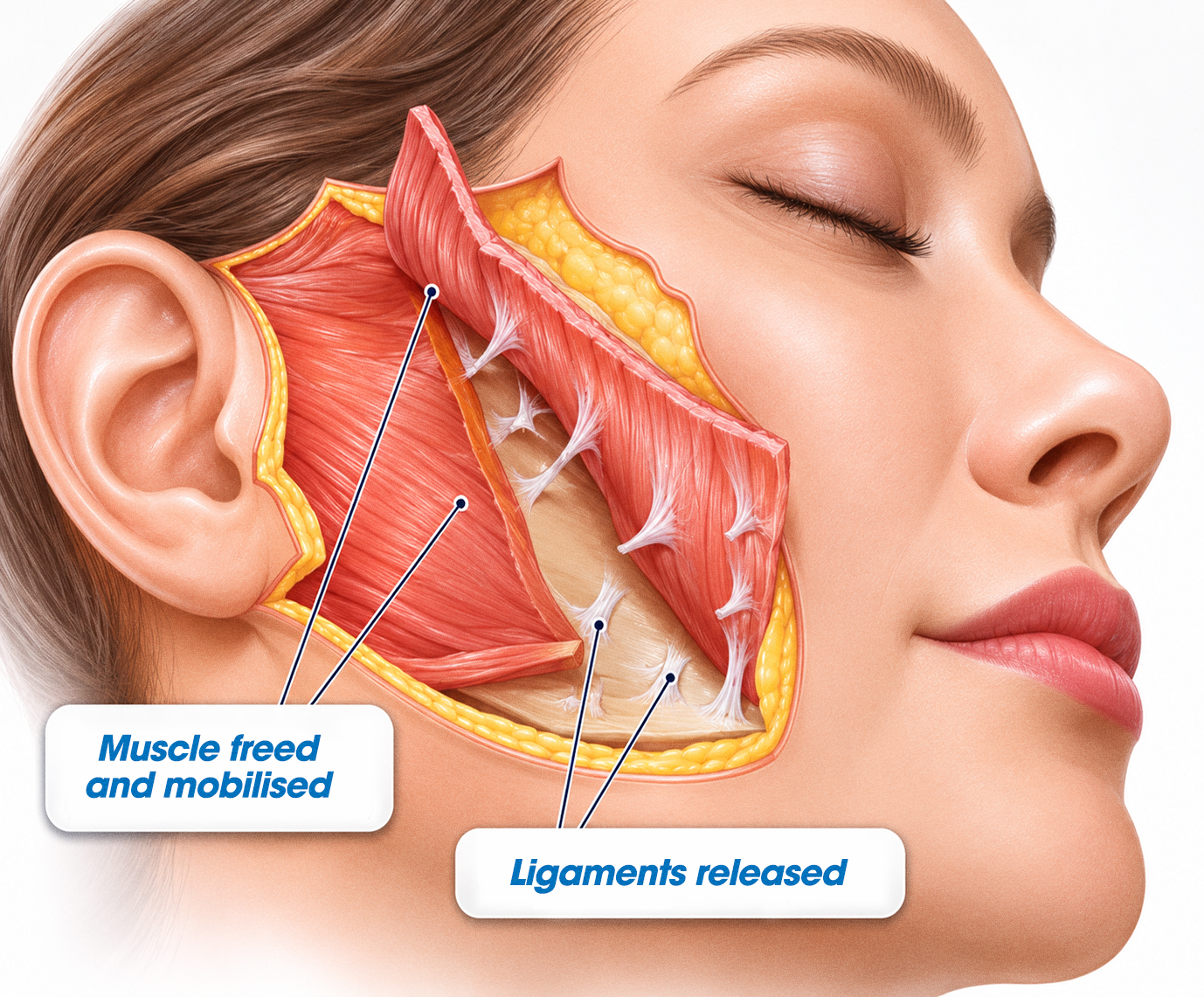
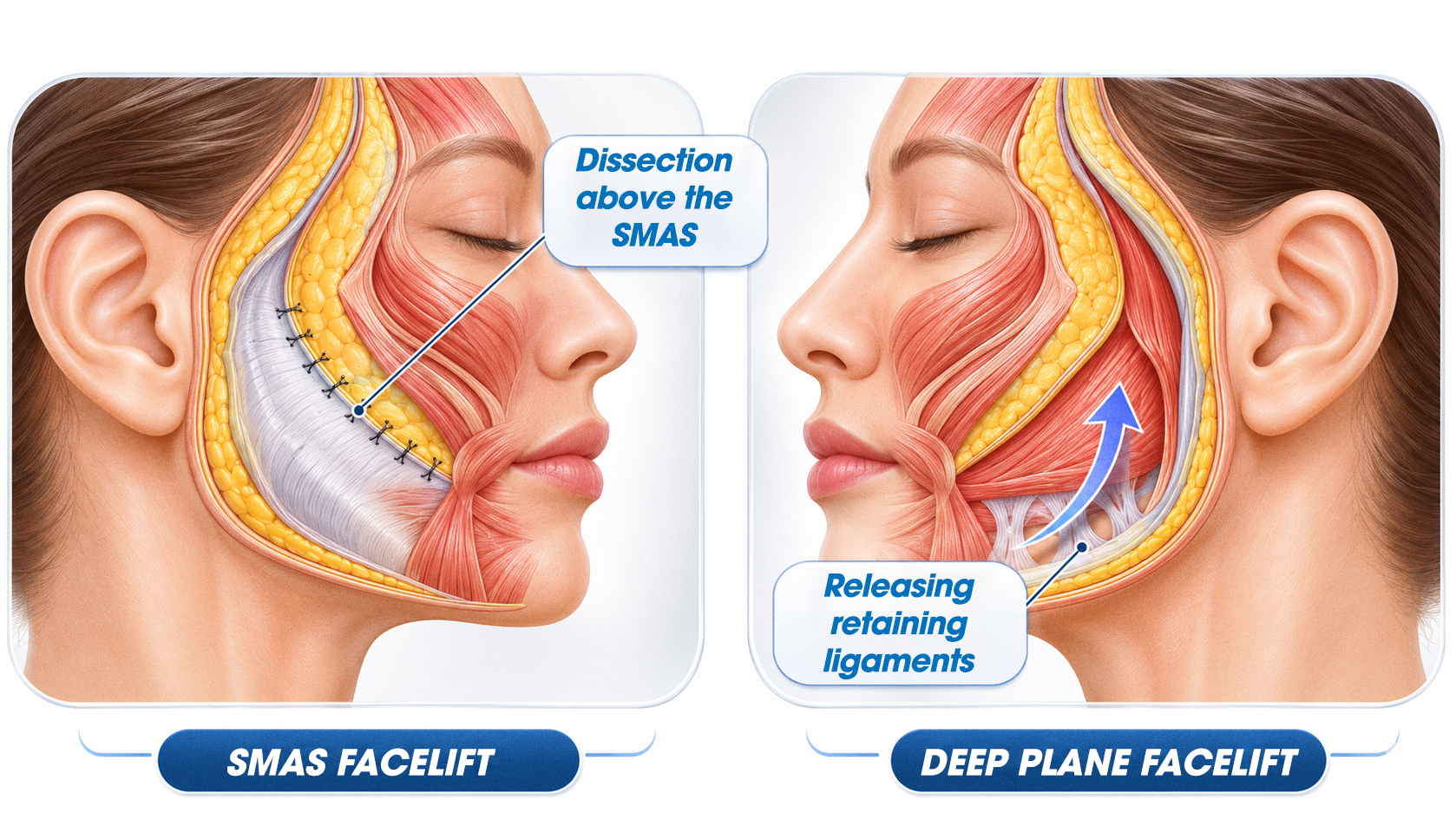
Unlike facelift techniques that primarily focus on suturing and securing the SMAS layer and removing excess skin, the Deep Plane technique allows the surgeon to dissect deeper beneath the SMAS and release retaining ligaments that contribute to tissue sagging. The soft tissue system, including the SMAS layer and related structures, is then lifted, repositioned, and secured in an appropriate position. This helps improve tissue laxity, restore facial contours closer to their natural, youthful appearance, and minimize direct tension on the skin's surface.
The primary goal of the Deep Plane technique is to address age-related sagging of the SMAS layer in the midface, cheeks, jawline, and neck.
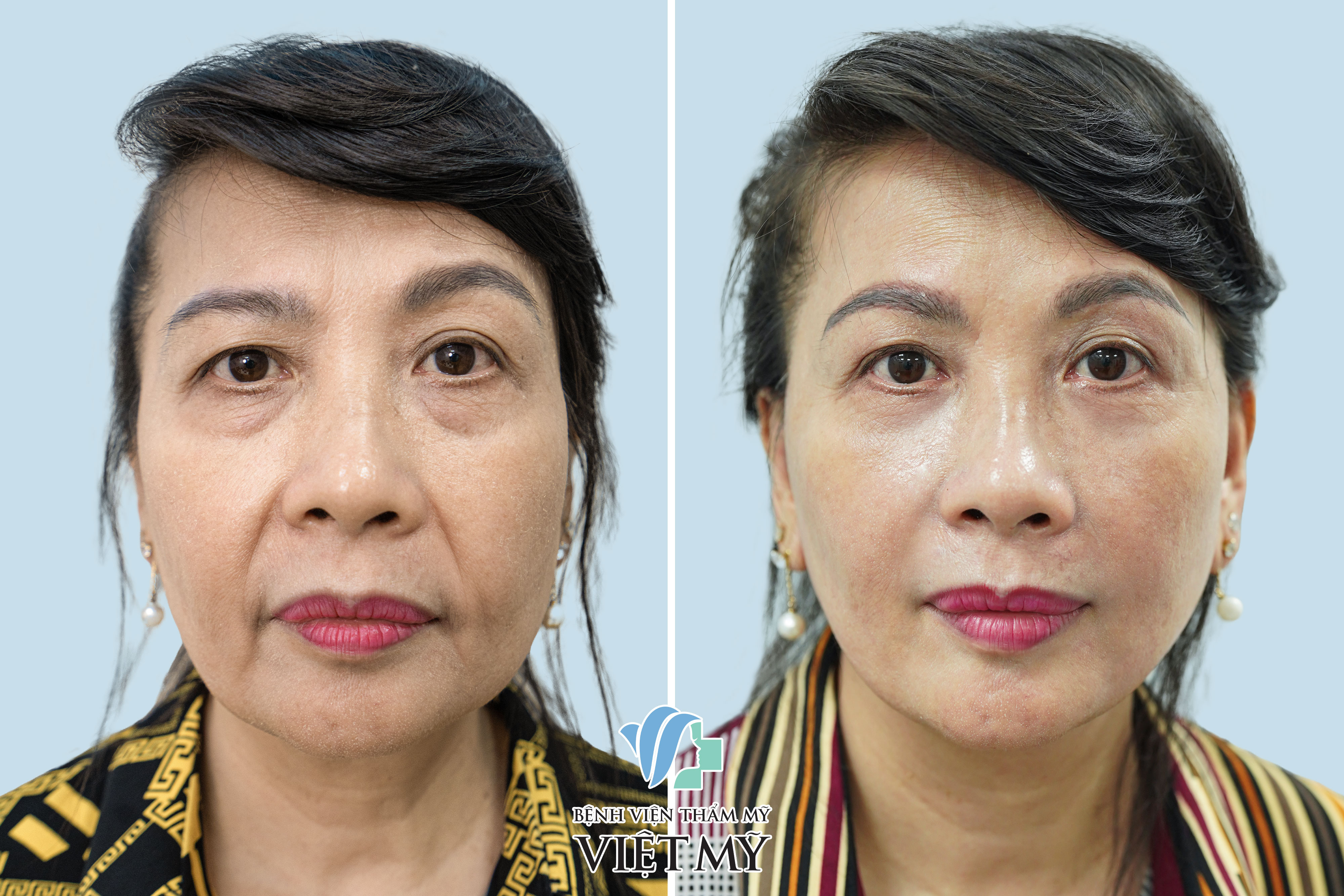
Before-and-after image of patient underwent Deep Plane Facelift and Brow Lift
A patient underwent Deep Plane Facelift and Brow Lift.
A U60 patient undergoes a Deep Plane facelift and endoscopic forehead lift.
A patient traveled all the way from Australia to Vietnam to see Dr. Chiem Quoc Thai for a facelift and forehead lift. What will her results look like?
Signs of Aging That Can Be Improved With a Deep Plane Facelift
Facial aging does not occur only in the outer layer of the skin. It also involves changes in facial fat, retaining ligaments, muscles, and the underlying supporting structures known as the SMAS.
Common signs include:
Sagging cheeks, with soft tissues gradually shifting downward.
More pronounced nasolabial folds and wrinkles around the mouth.
The appearance of jowls along the jawline.
Loss of jawline definition.
Reduced firmness of the skin and soft tissues around the neck.
A heavier or more tired facial appearance caused by changes in soft tissue positioning.
The Deep Plane technique addresses these signs by lifting and repositioning the SMAS layer toward its original, more youthful position. However, the procedure does not completely resolve concerns such as melasma, pigmentation spots, fine wrinkles, or facial volume loss resulting from fat atrophy and changes in bone structure.
Depending on the patient's condition, the surgeon may consider combining the procedure with other rejuvenation treatments, such as fat grafting.
How Does a Deep Plane Facelift Rejuvenate the Face?
The most distinctive and effective feature of the Deep Plane technique is its ability to address the entire underlying facial support system (SMAS).
1. Incision Placement
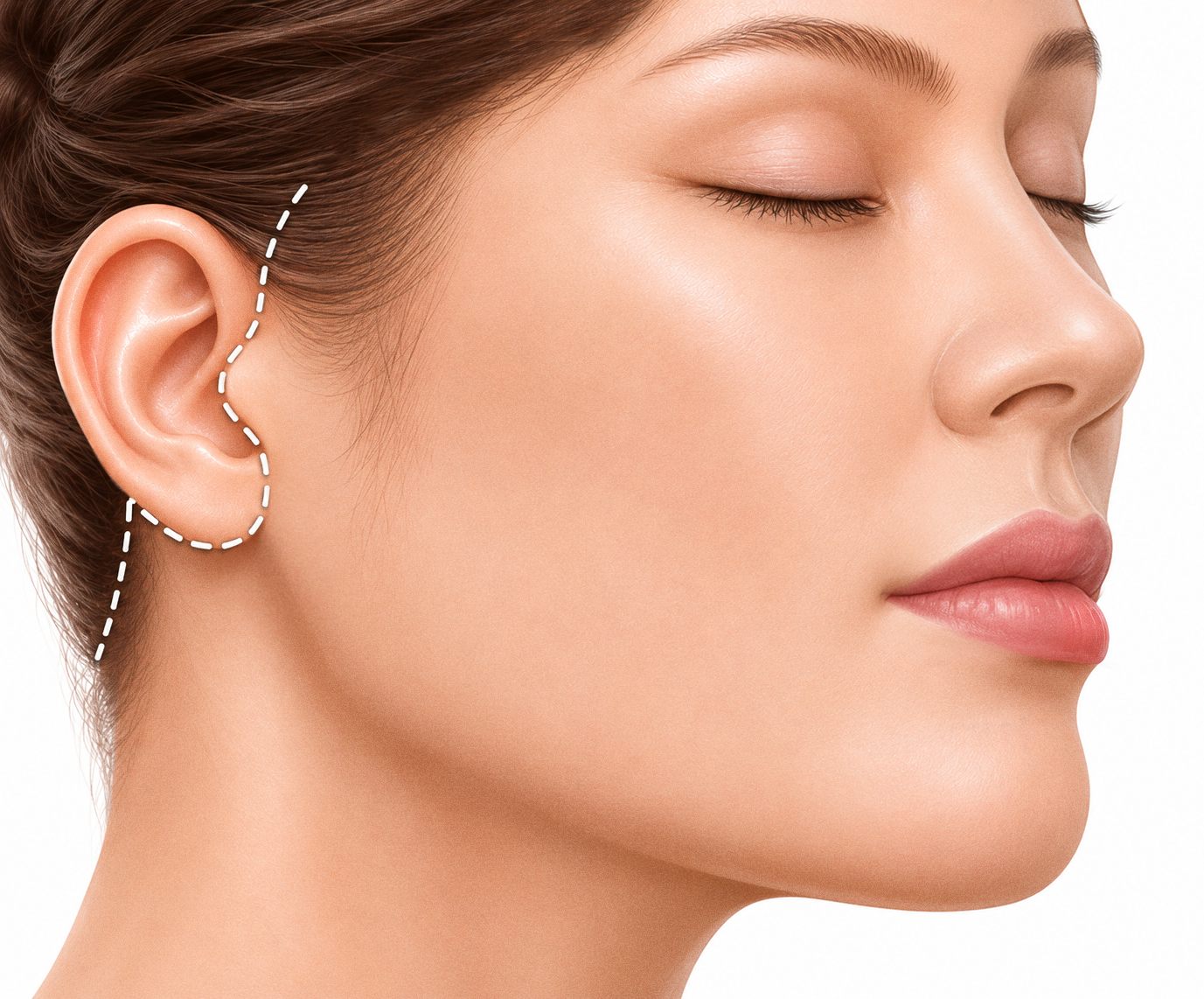
The incisions are positioned along natural anatomical creases around the ears or hairline to minimize scar visibility, although scarring may still occur.
Medical illustration of the incisions used in Deep Plane facelift
2. Accessing the Deep Tissue Plane
During surgery, the surgeon accesses the anatomical plane beneath the SMAS layer in appropriate areas. This allows deeper soft tissues to be repositioned rather than simply applying tension to the skin's surface.
3. Releasing the SMAS Layer and Suturing It Into a Repositioned Position
Certain retaining ligaments that anchor the soft tissues to underlying structures are carefully released. This allows the tissues of the cheeks and lower face to be moved back toward their previous positions and secured with sutures.
4. Adjusting Excess Skin
Once the SMAS layer has been lifted and secured in its new position, the overlying skin is also adjusted and repositioned to follow the underlying SMAS structure. Excess skin is removed before the incisions are closed. Because the lifting force is primarily distributed and maintained by the SMAS layer rather than directly applied to the skin, this technique helps prevent an overly tight or stretched facial appearance. It also reduces tension along the incision lines, thereby helping minimize the risk of widened scars after surgery.
This approach aims to improve several superficial and deep facial tissue layers simultaneously, rather than addressing loose skin alone.
What Is the Difference Between a Deep Plane Facelift and an SMAS Facelift?
Both the SMAS Facelift and Deep Plane Facelift are surgical facial rejuvenation techniques that address the SMAS layer beneath the skin. The main differences lie in the plane of dissection and how the tissues are moved and secured.
SMAS Facelift: The surgeon performs limited dissection of the sagging SMAS tissue and sutures it back toward its original position, lifting the SMAS layer to improve facial sagging.
Deep Plane Facelift: The surgeon performs extensive dissection beneath the SMAS layer and releases certain retaining ligaments, allowing the entire SMAS layer to be moved back toward its original position and secured with sutures. In suitable patients, this technique can significantly improve sagging in the midface and along the jawline.
The Deep Plane technique provides more noticeable improvement in the nasolabial fold area, while both SMAS and Deep Plane facelift techniques can achieve similarly effective facial rejuvenation results in other areas. Ultimately, the outcome depends on the patient's degree of facial aging and the surgeon's skill and expertise.
The choice of surgical technique should be based on each patient's degree of aging, anatomical characteristics, health condition, and aesthetic goals.
Advantages and Limitations of a Deep Plane Facelift
Advantages
Improves Sagging in Multiple Areas of the Face
By addressing deeper facial support structures, the Deep Plane technique can improve sagging in the cheeks, nasolabial folds, and jawline.
Aims to Restore Natural Facial Contours
Lifting and securing the SMAS layer reduces reliance on tension applied to the overlying skin, helping create harmonious facial contours while avoiding an excessively stretched appearance. However, the results still depend significantly on the surgeon's technique and the individual characteristics of each patient.
May Provide Long-Lasting Facial Rejuvenation Results
Because the Deep Plane technique surgically repositions soft tissues, its results may last for many years. Nevertheless, the natural aging process continues after surgery.
Limitations
Deep Plane Facelift is an invasive surgical procedure that requires the surgeon to have advanced anatomical knowledge and experience in facial surgery.
Patients need time to recover after surgery. Swelling, bruising, tightness, or numbness may occur during the early postoperative period.
Additionally, the procedure cannot prevent the aging process or address every concern related to skin quality. Some patients may still require additional treatments to achieve their aesthetic goals.
Who May Be Suitable for a Deep Plane Facelift?
This technique may be considered for patients with moderate to significant soft tissue sagging, particularly in the midface, cheeks, and jawline.
Individuals who are in stable general health, are medically suitable for surgery, and have realistic expectations about the results are generally better candidates for surgical facial rejuvenation.
Conversely, patients with uncontrolled underlying medical conditions, blood-clotting disorders, or those taking medications that affect blood clotting or who smoke require careful medical evaluation before deciding to undergo surgery.
Deep Plane Facelift can be performed on anyone. The decision to use this technique should be based on the actual degree of facial aging.
How Long Does It Take to Recover From a Deep Plane Facelift?
Recovery time varies depending on the extent of surgery, individual healing characteristics, overall health, and whether additional procedures are performed.
During the First 1–2 Weeks:Patients may experience swelling, bruising, tightness, or mild numbness around the surgical area. Many patients can return to light activities within approximately 7–10 days.
After 2–3 Weeks:Swelling and bruising generally decrease significantly. However, mild facial swelling or changes in sensation may still persist in certain areas.
Within 1–3 Months:The aesthetic results usually become more noticeable as the soft tissues continue to settle into their new positions.
How Long Do Deep Plane Facelift Results Last?
A Deep Plane Facelift can provide facial rejuvenation results that last for many years, but it does not permanently stop the facial aging process.
The longevity of the results depends on factors such as age, skin characteristics, the rate of aging, surgical technique, overall health, and lifestyle habits.
Is a Deep Plane Facelift Safe?
Like other cosmetic surgical procedures, Deep Plane Facelift carries potential risks that should be carefully considered before surgery.
Possible complications include hematoma, infection, seroma, abnormal scarring, skin damage, and other complications. However, the complication rate is relatively low and also depends on each patient's individual characteristics.
To minimize risks, patients should undergo a thorough medical examination and health assessment, choose a reputable and licensed surgical facility, and select a surgeon with appropriate qualifications and expertise. Postoperative monitoring and care also play an important role in preventing complications and supporting recovery.
Learn About Deep Plane Facelift at Viet My Plastic Surgery Hospital
Deep Plane Facelift is an advanced surgical facial rejuvenation approach that focuses on repositioning the sagging SMAS layer to improve facial contours.
However, no single facelift technique is suitable for everyone. The choice of surgical method should be based on clinical evaluation, anatomical characteristics, and each patient's aesthetic needs.
If you are experiencing signs of facial aging, sagging cheeks, deep nasolabial folds, or reduced jawline definition, you can contact Viet My Plastic Surgery Hospital for an examination, information about available facial rejuvenation techniques, and personalized recommendations based on your actual condition.
* The results achieved may vary depending on each individual's physiology.