Glabellar lines are common signs of aging that appear between the eyebrows. Although they do not affect physical health, these wrinkles can make the face appear tired, tense, stern, or older than its actual age. For this reason, the demand for glabellar line correction is increasing, especially among individuals who wish to achieve a more natural, youthful, and harmonious appearance.
Understanding the causes of glabellar lines, suitable medical aesthetic treatments, and proper postoperative skincare can help each person choose a safer and more effective solution for improving these wrinkles.
What Are Glabellar Lines?
Glabellar lines are wrinkles or creases that appear in the glabella, the area between the eyebrows and just above the nose. They are often associated with facial expressions such as frowning, concentrating, squinting, or looking worried. Many people also refer to them as forehead furrows, “frown lines,” “worry lines,” or “number 11 lines,” depending on their direction and appearance.
The glabella is a central facial area, so even mild lines in this region can affect how the face is perceived. Some people feel that glabellar lines make them look tired, stressed, angry, or older than they actually feel.
Why Do Glabellar Lines Develop?
Glabellar lines develop due to a combination of muscle activity, skin aging, collagen loss, genetics, and lifestyle factors. Every time you frown, squint, concentrate, or raise your brows, the muscles around the glabella pull on the overlying skin. Over time, repeated movement can cause temporary expression lines to become deeper and more visible.
The glabellar complex includes several muscles, such as the procerus, corrugator supercilii, depressor supercilii, and part of the orbicularis oculi. These muscles help pull the brow downward and inward. When they contract repeatedly, they can create lines and furrows in the skin.
The procerus muscle is more commonly associated with horizontal lines, while the corrugator supercilii muscles tend to create more vertical lines.
As the skin ages, collagen and elastin gradually decrease. These proteins are important for firmness, elasticity, and skin structure. When they decline, the skin becomes less able to “bounce back” after repeated facial movement. This is why glabellar lines may first appear only during expression but later become visible even when the face is relaxed.
Are Glabellar Lines Similar To Frown Lines?
Although the terms are often used interchangeably, there is a slight difference.
Glabellar lines generally refer to lines in the glabella region, while frown lines often describe the vertical lines between the eyebrows. In some cases, patients may develop both glabellar lines and other expression wrinkles, making the face appear more tense and older than it actually is.
In aesthetic consultation, patients may not use precise medical terms. They may simply say they look angry, tired, worried, or older. Therefore, patients should come to Viet My Plastic Surgery Hospital for a proper facial assessment to help determine whether the concern comes mainly from dynamic muscle movement, static skin creasing, volume loss, or overall skin laxity.
Medical Treatments for Glabellar Lines
1. Non-surgical Treatments
B.o.t.o.x Injection
Neuromodulators, commonly known by brand names such as B.o.t.o.x, are among the most widely used treatments for glabellar lines. They work by temporarily relaxing selected facial muscles responsible for repeated contraction. When the glabellar muscles relax, the overlying lines may become less prominent.
The effect is temporary (lasting 6 months). After a period of time, the facial muscles will gradually recover and the grabellar lines may reappear (from 3 to 6 months). For this reason, clients are encouraged to visit Viet My Plastic Surgery Hospital for an in-person consultation, where the doctor can advise them on how long the results may last, how often the treatment should be repeated, and which care plan is most suitable for their condition.
This treatment should be performed only by qualified medical professionals because the glabellar area requires detailed anatomical knowledge. Incorrect injection placement or improper dosage may lead to undesirable effects, such as an unnatural facial expression, brow ptosis, or other unwanted reactions.
Dermal Fillers
For deep glabellar lines, particularly static wrinkles that are clearly etched into the skin even without facial expression, dermal fillers may be considered in selected cases. Fillers are designed to support soft tissue volume and may help soften etched lines.
However, the glabella is a delicate area with important blood vessels, so filler injections in this area should be performed only by experienced doctors who understand facial anatomy and know how to handle possible complications safely.
Skin Rejuvenation Treatments
Depending on the skin condition, treatments that support collagen remodeling may also be recommended. These may include Ultherapy Prime®, resurfacing procedures, or other regenerative aesthetic options.
Treatment aims not only to reduce the appearance of the line but also to enhance skin quality, helping the glabellar and forehead area appear smoother and more youthful.
2. Surgical Options
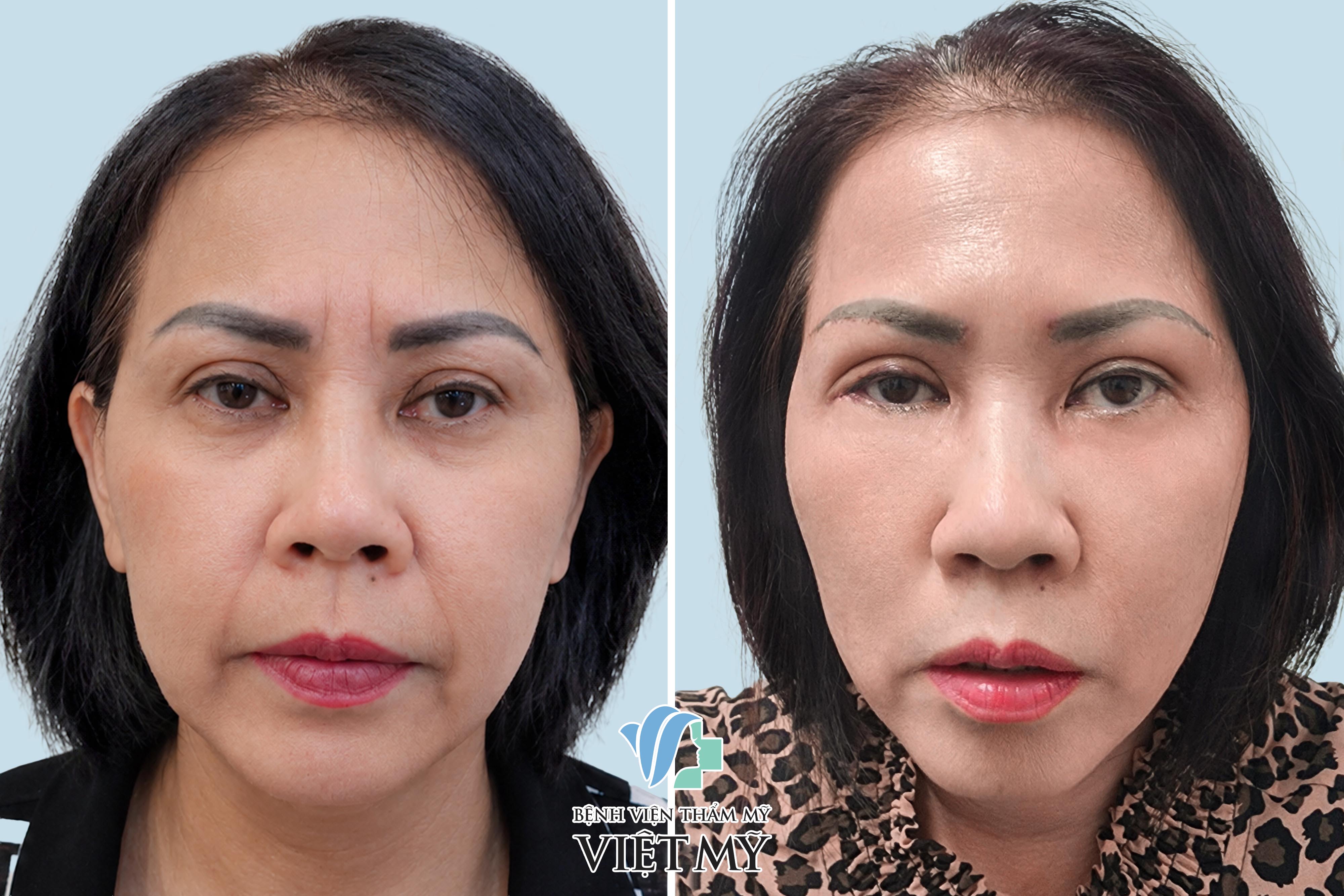
Before and after photos of clients who have undergone procedures such as frown line removal, nasolabial fold filling, facelift, eyebrow lift, and lower eyelid surgery.
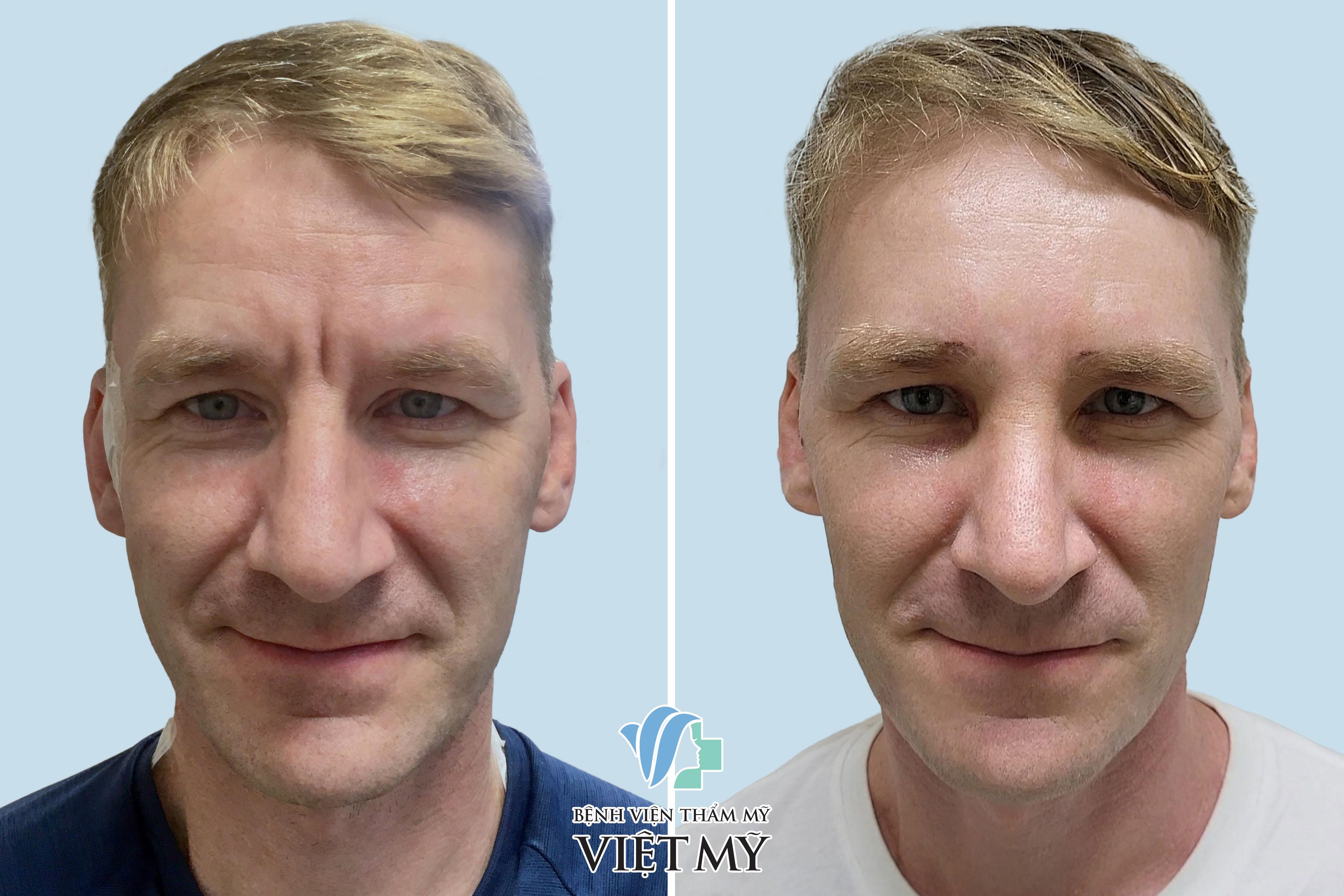
Before and after photos of clients who have undergone procedures such as frown line removal, nasolabial fold filling, facelift, eyebrow lift, and lower eyelid surgery.
2.1 The Procedure for Surgical Glabellar Line Reduction
Step 1: Local anesthesia is administered into two points at both ends of the eyebrows, which have been marked and positioned in advance.
Step 2: The doctor will make a small 0.5 cm incision at each marked point. Since the incisions are located within the eyebrow area, the scars are almost completely hidden.
Step 3: Through the small incisions, the doctor will expose the corrugator muscle and procerus muscle, then remove a portion of these muscles. The incisions will then be closed with non-absorbable sutures.
Advantage: After the procedure, glabellar lines can be permanently improved.
Disadvantage: Since the procedure involves surgically removing part of the corrugator and procerus muscles, the glabellar area may be swollen during the first 3 days.
2.2 Postoperative Care
- Apply cold compresses during the first 48 hours to help reduce swelling.
- After surgery, clients may return to normal work activities, but should limit strenuous movement and heavy work during the first week.
- Sutures will be removed after 7 days.
Who Is a Good Candidate for Treatment?
A good candidate is someone who is bothered by glabellar lines and wants a natural-looking improvement rather than a frozen or overcorrected appearance.
Patients with early dynamic lines may respond well to neuromodulator treatment. Those with deep static lines may need a combination approach because toxin treatment may improve the appearance but may not completely erase lines that are already deeply etched.
However, aesthetic treatments may not be suitable for patients with certain medical contraindications, including hypersensitivity to the product, neuromuscular transmission disorders, active infection or inflammation at the injection site, or unrealistic expectations.
Please contact or visit Viet My Plastic Surgery Hospital for in-depth assessments and consultations.
Can Glabellar Lines Be Prevented?
Glabellar lines cannot always be completely prevented because facial expression, genetics, and aging are natural. However, certain habits may help slow their progression and reduce how prominent they become.
Daily sun protection is one of the most important steps. Ultraviolet exposure contributes to collagen breakdown, uneven skin tone, and premature wrinkles. Applying broad-spectrum sunscreen every morning, wearing sunglasses, and avoiding excessive sun exposure can help protect the delicate skin around the forehead and eyes.
Hydration and moisturization are also important. Well-moisturized skin tends to look smoother and more resilient. Healthline notes that dermatologists often recommend daily moisturizers and overnight creams to help maintain skin hydration and support the skin’s ability to hold its shape over time.
Other supportive habits include avoiding smoking, eating a diet rich in antioxidants, drinking enough water, getting adequate sleep, and reducing repetitive squinting when possible. Sunglasses may help reduce the tendency to squint in bright light, which can indirectly reduce repeated contraction of the glabellar muscles.
Conclusion
Glabellar lines are a normal part of facial expression and aging. They often develop from repeated muscle movement, collagen loss, skin laxity, genetics, and lifestyle factors.
At Viet My Plastic Surgery Hospital, patients can receive direct consultation from qualified doctors to evaluate glabellar lines, forehead furrows, and overall facial aging before choosing the most appropriate rejuvenation method. We offer personalized treatment plans tailored to each patient’s facial anatomy, skin quality, and realistic expectations can help deliver safer, more natural-looking, and harmonious results.
* The result achieved also depends on each individual’s physiology.