Mandibular prognathism - Underbite correction surgery
I. What Is an Underbite (Mandibular Prognathism)?
An underbite, also known as a reverse bite, is a condition where the lower jaw develops excessively compared to the upper jaw, leading to facial imbalance. This condition not only affects facial aesthetics but may also cause functional problems such as difficulty chewing, speech impairment, temporomandibular joint (TMJ) pain, psychological and confidence-related concerns.
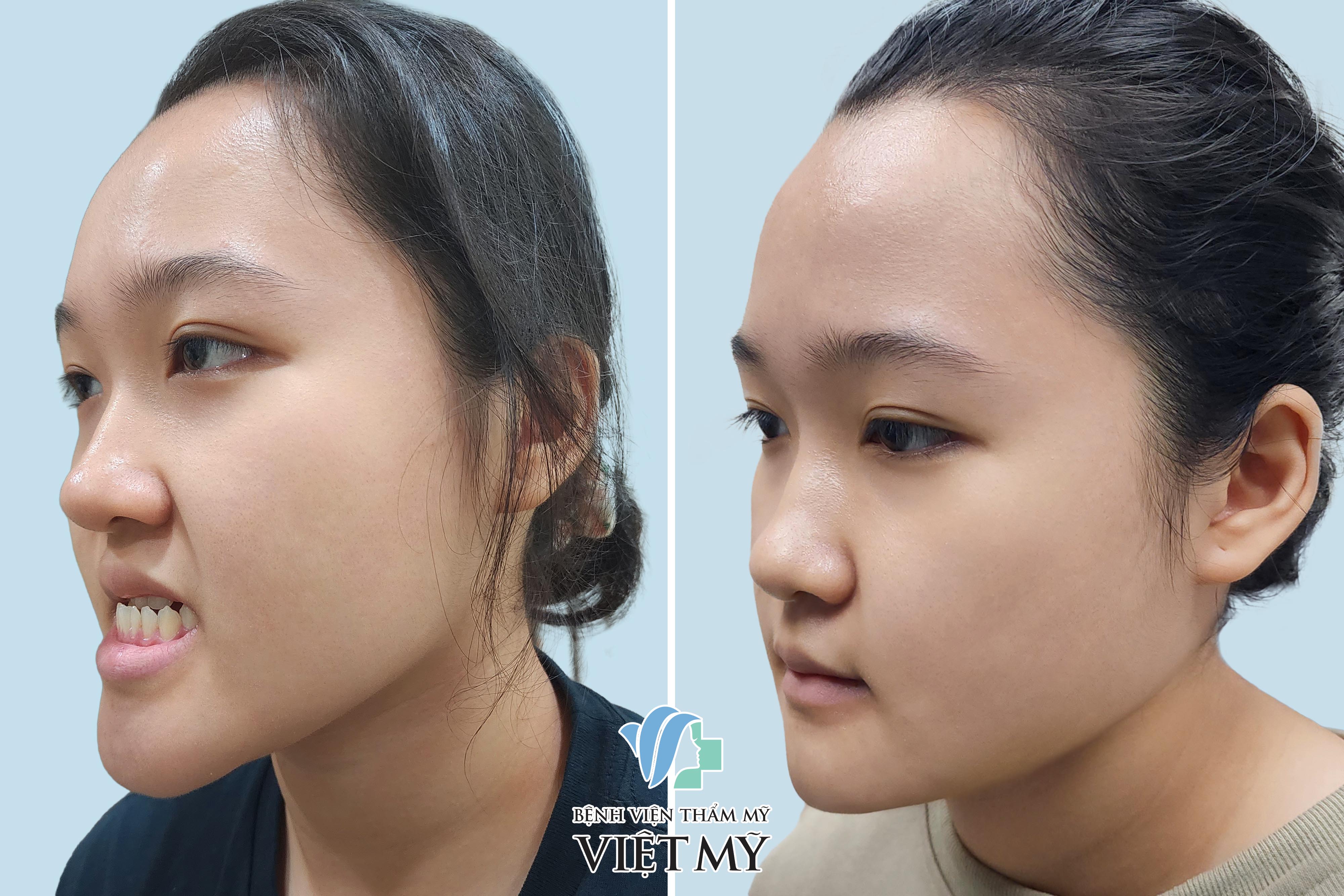
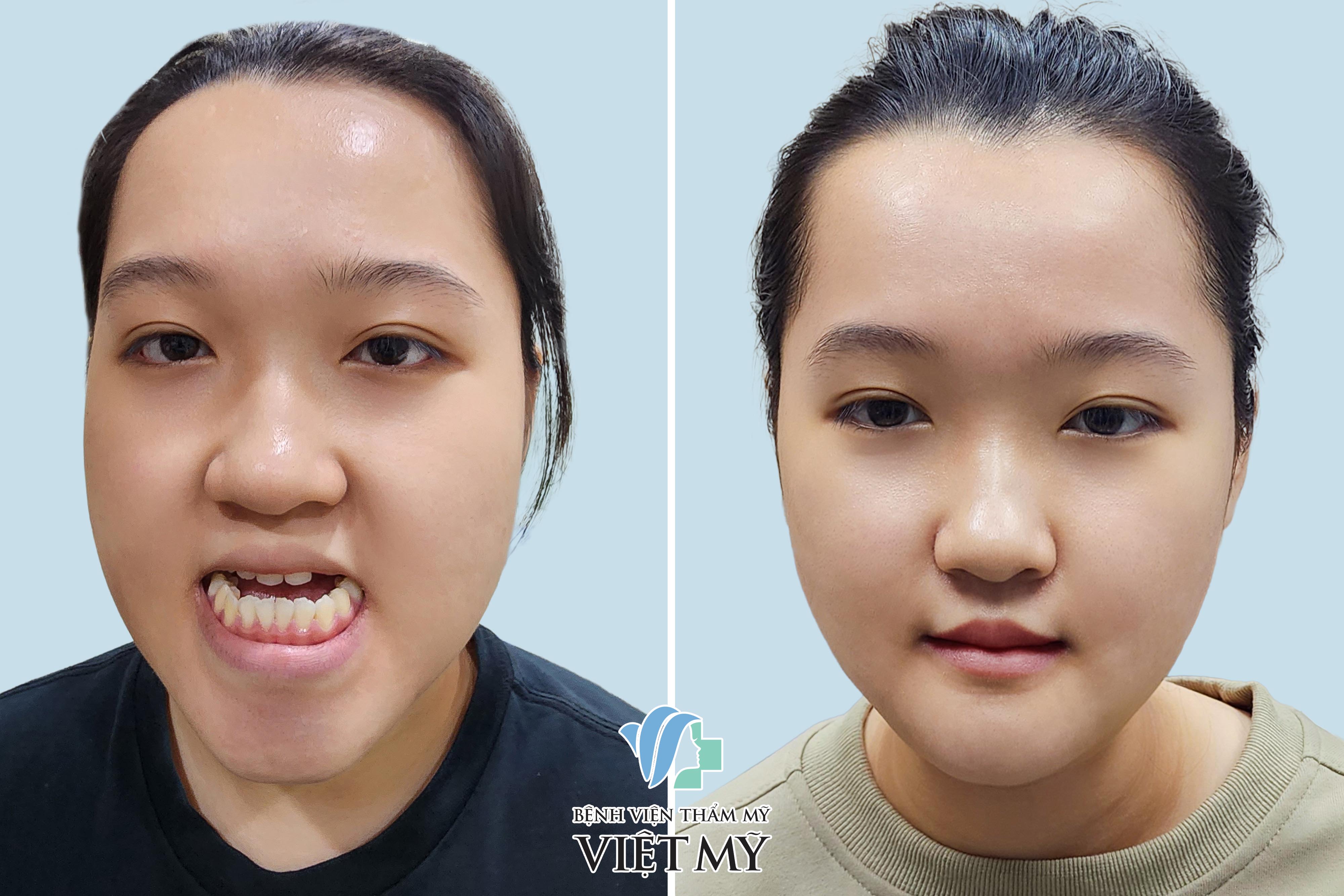
Patient before and after undergoing Underbite Correction Surgery
Restoring self-confidence for a female patient after undergoing underbite correction surgery and sliding genioplasty.
Before/After Photos of Clients Underbite and Chin Sliding Surgery
Underbite correction and sliding genioplasty
II. Causes of Underbite
1. Genetic Factors
Genetics is the most common cause, accounting for the majority of cases. Individuals with a family history of underbite have a higher likelihood of developing this condition.
2. Environmental factors
Certain habits during childhood can contribute to underbite development, including, tongue thrusting, thumb sucking, and biting the lower lip.
3. Imbalanced Jaw Development
Disproportionate growth between the jaws—such as overgrowth of the lower jaw or underdevelopment of the upper jaw—can result in misalignment.
III. Indication of Underbite Surgery.
Surgery for underbite correction is recommended for:
Severe underbite that cannot be corrected with simple orthodontic treatment alone.
Significant jaw misalignment between the upper and lower jaws, affecting both function and facial aesthetics.
Patients seeking to improve appearance and quality of life.
IV. The Procedure of Underbite Correction Surgery.
Underbite correction requires close coordination between maxillofacial surgeons and orthodontists. The process typically includes the following steps:
1. Examination and Treatment Planning
Clinical evaluation: Includes physical examination, X-rays, and dental impressions to assess jaw structure and occlusion.
Facial analysis: Digital simulations allow patients to preview expected post-surgical outcomes.
Detail planning: The surgeon determines the most suitable surgical approach based on anatomy and expectations.
2. Pre-Operation Dental Impressions.
Determine the current bite alignment: assess the misalignment between the upper and lower jaws.
Accurate treatment planning: Create a 3D model for accurate surgical planning.
Assist fabricating orthodontic appliances (if needed): Support orthodontic treatment if required before or after surgery.
3. Jaw (Orthognathic) Surgery Techniques.
Jaw surgery changes your jaw bone structures by altering their shape, position or both. They can be used to treat condition such as temporomandibular joint disorders, malocclusion (under and over bite) and obstructive sleep apnea.
3.1 Lower Jaw Surgery (BSSO – Bilateral Sagittal Split Osteotomy)
Indications:
Forward overgrowth of the lower jaw
Reverse bite with a normally developed upper jaw
Procedure:
Mandibular osteotomy: The doctor performs an osteotomy on both sides of the lower jaw. The jaw is then repositioned backward into proper alignment.
Bone fixation: The jaw bone is stabilized using titanium plates or screws
Advantages:
The incisions are performed intraorally, ensuring no visible external scars.
Relatively short surgery time (approximately 1-2 hours).
3.2 Upper Jaw Surgery (Le Fort I Osteotomy)
Indications:
- The appropriate candidate for this procedure should match at least one of these criteria:
Underdeveloped or retruded upper jaw.
Upper jaw asymmetry, affecting the facial aesthetics and function.
Procedure:
Maxillary osteotomy: The doctor performs a horizontal cut (Le Fort I osteotomy), separating the upper jaw from the skull.
Adjusting the upper jaw: The jaw is repositioned forward or adjusted as needed.
Upper jaw fixation: The bone is fixed using specialized plates and screws.
Advantages:
Improves both facial aesthetics and bite alignment.
Allows adjustment of facial height and width.
3.3 Double Jaw Surgery (Bimaxillary Osteotomy)
Indications:
- The appropriate candidate for this procedure should match at least one of these criteria:
Severe imbalance involving both jaws, greatly affecting the facial aesthetics and function.
Complex cases with asymmetry or chin deviation.
Procedure:
Le Fort I Osteotomy: The upper jaw is brought forward or adjusted in the direction according to the plan.
BSSO Osteotomy: The lower jaw is pushed backward, aligned with the upper jaw.
Detail Adjustment: Simultaneous alignment for optimal facial balance.
Bone fixation: Both jaws are fixed using specialized plates and screws.
Advantages:
Comprehensive improvement of both function and aesthetics.
Ideal for complex or severe conditions.
3.4 Genioplasty (Chin Surgery)
Indications
Prominent or elongated chin with relatively balanced jaws.
Genioplasty can be performed separately or combined with jaw correction surgery.
Procedure:
Chin osteotomy: The doctor cuts through the tip of the chin bone, then repositions it backwards or adjusts it to the desired position.
Chin bone fixation: The bone is fixed using specialized titanium plates and screws, ensuring no misalignment.
Advantages:
Enhances facial contour and harmony.
Less invasive than full jaw surgery.
3.5 Combined Jaw and Facial Contouring Surgery
In some cases, underbite may be associated with facial asymmetry or structural imbalance. A comprehensive approach may include:
Correction of both upper and lower jaws.
Combination with cheekbone reduction, chin reshaping, or other contouring procedures to achieve the most optimal aesthetic results.
4. Post-Operative Care and Recovery:
4.1 Post-Operative Diet
Underbite correction surgery affects the ability to chew and jaw joint function, suitable diets will help you have a better recovery.
Stage 1 (1-2 weeks):
Liquid diet: Only eat liquid food such as soup, diluted porridge, smoothie, milk, sour-free juices. This helps minimize pressure on the jawbone.
Consume slowly to limit jaw movement: Use a small spoon to minimize jaw movements.
Stage 2 (2-4 weeks):
Soft food: Gradually move to softer food such as denser porridge, thin noodles, rice, or mashed potatoes.
Avoid chewing hard: Avoiding hard food such as seeds, crunchy bread, or fried food.
Stage 3 (after 4 weeks):
Practice to chew softly: Gradually return to soft solid foods like stewed meat, steamed fish or boiled vegetables. Remember to chew them thoroughly.
Continue avoiding foods requiring strong chewing: Avoid food that can put pressure on the jaw such as bubble gum, ribs, or dishes that require bite force.
4.2 Rest and Recovery Care
Rest properly:
Avoid strenuous activities: Avoid sport-related activities or strenuous exercising that can affect your face for at least 4 weeks.
Sleep in the right position: Sleep with your head elevated (using a higher pillow than usual) to reduce swellings and improve blood circulation.
Maintain adequate rest: Sleep for 7 to 9 hours every night, avoid stress or overwork during the recovery period.
Jaw care and oral hygiene
Gentle care: Use a soft toothbrush and prescribed mouthwash to keep your mouth clean and prevent infection.
Cold compress for the first 48 hours: Help reduce swelling and discomfort. Then, you can move to warm compress if advised.
Follow medical prescription strictly: Use pain relievers, anti-inflammatory drugs or antibiotics as prescribed by the doctor.
V. Advantages of Underbite Surgery
1. Improve facial aesthetics: Improved facial symmetry and aesthetics.
2. Restore chewing function: Adjustments help chewing more comfortably and easier.
3. Enhance confidence and life quality: Helps boost confidence in day-to-day interaction and daily life.
VI. Important Notes
Monitor abnormal symptoms: If you experience symptoms such as prolonged swelling, fever, excessive bleeding, or numbness that does not subside, contact the doctor immediately.
Avoid moving your jaw spontaneously: Avoid excessive jaw movement during early, affecting the jawbone recovery.
Regular check-ups: Attend all follow-up appointments so that the doctor can monitor your recovery and provide new guidelines if necessary.
* The result achieved also depends on each individual’s physiology.